
Bill Frist Biography Quotes 26 Report mistakes
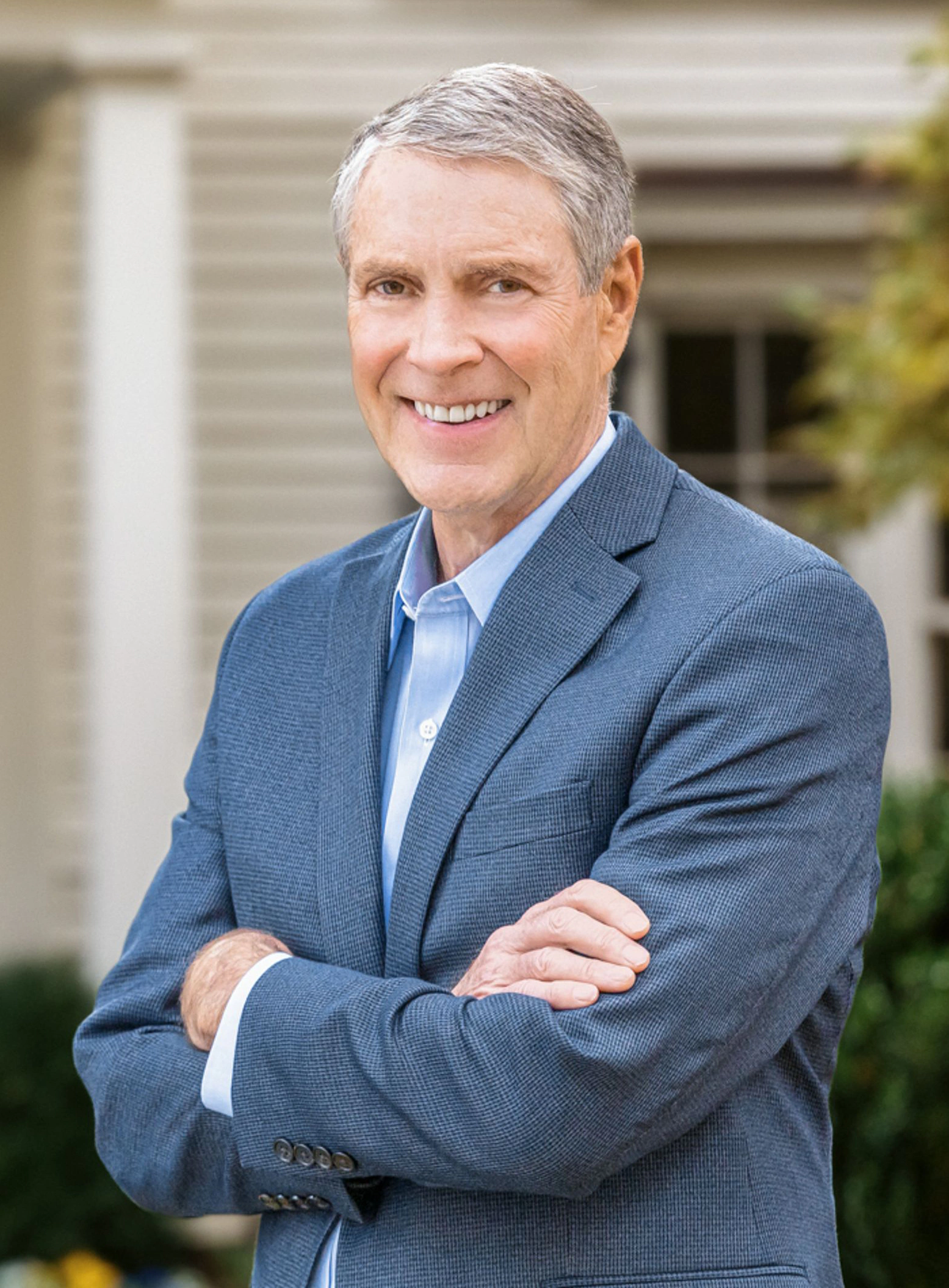
| 26 Quotes | |
| Born as | William Harrison Frist |
| Occup. | Politician |
| From | USA |
| Spouses | Karyn McLaughlin (1981-2012) Tracy Roberts (2015) |
| Born | February 22, 1952 Nashville, Tennessee, USA |
| Age | 74 years |
| Cite | |
Citation Formats
APA Style (7th ed.)
Bill frist biography, facts and quotes. (2026, February 19). FixQuotes. https://fixquotes.com/authors/bill-frist/
Chicago Style
"Bill Frist biography, facts and quotes." FixQuotes. February 19, 2026. https://fixquotes.com/authors/bill-frist/.
MLA Style (9th ed.)
"Bill Frist biography, facts and quotes." FixQuotes, 19 Feb. 2026, https://fixquotes.com/authors/bill-frist/. Accessed 25 Mar. 2026.
Early Life and Background
William Harrison "Bill" Frist was born on February 22, 1952, in Nashville, Tennessee, into a family where medicine, money, and civic expectation braided together. His father, Thomas Frist Sr., and brother, Thomas Frist Jr., were central figures behind Hospital Corporation of America (HCA), the hospital chain that helped corporatize modern American health care. Growing up amid the South's postwar boom and the long aftershocks of segregation, Frist absorbed two powerful, sometimes competing Nashville traditions: pragmatic business-building and a public-service Protestant ethos that prized stewardship.That inheritance shaped both his opportunities and his burdens. From early adulthood onward, he carried a dual identity that would follow him through national politics: physician and policymaker, healer and partisan. The family name opened doors, but it also made him a magnet for suspicion whenever health care policy met private enterprise. Frist's inner life, as associates often described it, leaned toward discipline and controlled intensity - the mindset of someone trained to diagnose quickly, decide, and move on, even when politics demanded lingering ambiguity.
Education and Formative Influences
Frist attended Princeton University, then earned his MD from Harvard Medical School, training in an era when American medicine was becoming ever more technologically advanced while costs climbed and access remained unequal. He completed surgical residency at Massachusetts General Hospital and later specialized in cardiothoracic transplantation, with additional work at institutions including Stanford. The operating room taught him command under pressure and a preference for measurable outcomes; those habits would later shape his legislative style, as would the moral urgency he drew from medicine's daily confrontation with mortality.Career, Major Works, and Turning Points
After practicing as a heart and lung transplant surgeon, Frist entered electoral politics in 1994, winning a U.S. Senate seat from Tennessee and taking office in 1995. He rose rapidly in Republican leadership and became Senate Majority Leader in 2003, a perch from which he helped steer major George W. Bush-era fights: tax policy, judicial confirmations, and post-9/11 national security legislation. He was also closely involved with health policy debates, including the 2003 Medicare Prescription Drug, Improvement, and Modernization Act, which created Medicare Part D - a landmark expansion of prescription coverage paired with market-structured delivery. His tenure saw sharp procedural conflict, including battles over the filibuster and what Republicans called the "nuclear option", and it ended with his decision not to seek reelection in 2006. Outside office, he remained a prominent voice through writing, speaking, and philanthropic work tied to medicine and global development.Philosophy, Style, and Themes
Frist's political psychology is best understood as a physician's worldview carried into the arena: triage, intervention, and an often impatient belief that systems exist to produce outcomes. Health care was never abstract to him; it was a national instrument of security and dignity, but also a complex market of incentives. That tension appears in his own framing: “America enjoys the best health care in the world, but the best is no good if folks can't afford it, access it, and doctor's can't provide it”. The sentence reveals an inner conflict he rarely fully resolved - a conviction that American excellence is real, paired with an anxiety that excellence without access becomes morally hollow and politically unstable.He coupled that clinical pragmatism with a civic idealism shaped by post-Cold War American confidence and the trauma of 9/11. His language often turned outward, treating domestic strength and global freedom as mutually reinforcing: “The survival of liberty in our land increasingly depends on the success of liberty in other lands. The best hope for peace in our world is the expansion of freedom in all the world”. In that vision, Frist sounded less like a Nashville hospital executive than a missionary of institutions - a leader who believed systems could be exported, scaled, and made to work. Education served as the bridge between private uplift and national renewal; “Education brings about opportunity, and in turn inspiration”. For Frist, opportunity was not merely a moral claim but a production line: educate, elevate, stabilize - a policy logic that mirrored the stepwise certainty of surgical training.
Legacy and Influence
Frist's enduring imprint lies in the unusual combination he embodied: a transplant surgeon who helped run the Senate at a moment when health care costs, partisan polarization, and national security anxieties were intensifying together. Medicare Part D remains his most concrete policy-era marker, a program that expanded coverage while entrenching a market-based structure still debated today. His leadership also helped normalize hard-edged procedural escalation in the Senate, contributing to the chamber's modern era of brinkmanship. Yet his biography resists simple labels: he was both a product of American health care capitalism and a critic of its failures, a partisan tactician who spoke in the moral vocabulary of service - a duality that continues to make him a reference point whenever physicians enter politics and promise to make governance operate with the clarity of an operating room.Our collection contains 26 quotes written by Bill, under the main topics: Freedom - Learning - Resilience - Equality - Science.
Other people related to Bill: David Petraeus (Soldier), Zach Wamp (Politician), Tom Daschle (Politician), Mitch McConnell (Politician), John Breaux (Politician), Don Nickles (Politician)
Source / external links