
Bill Rodgers Biography Quotes 20 Report mistakes
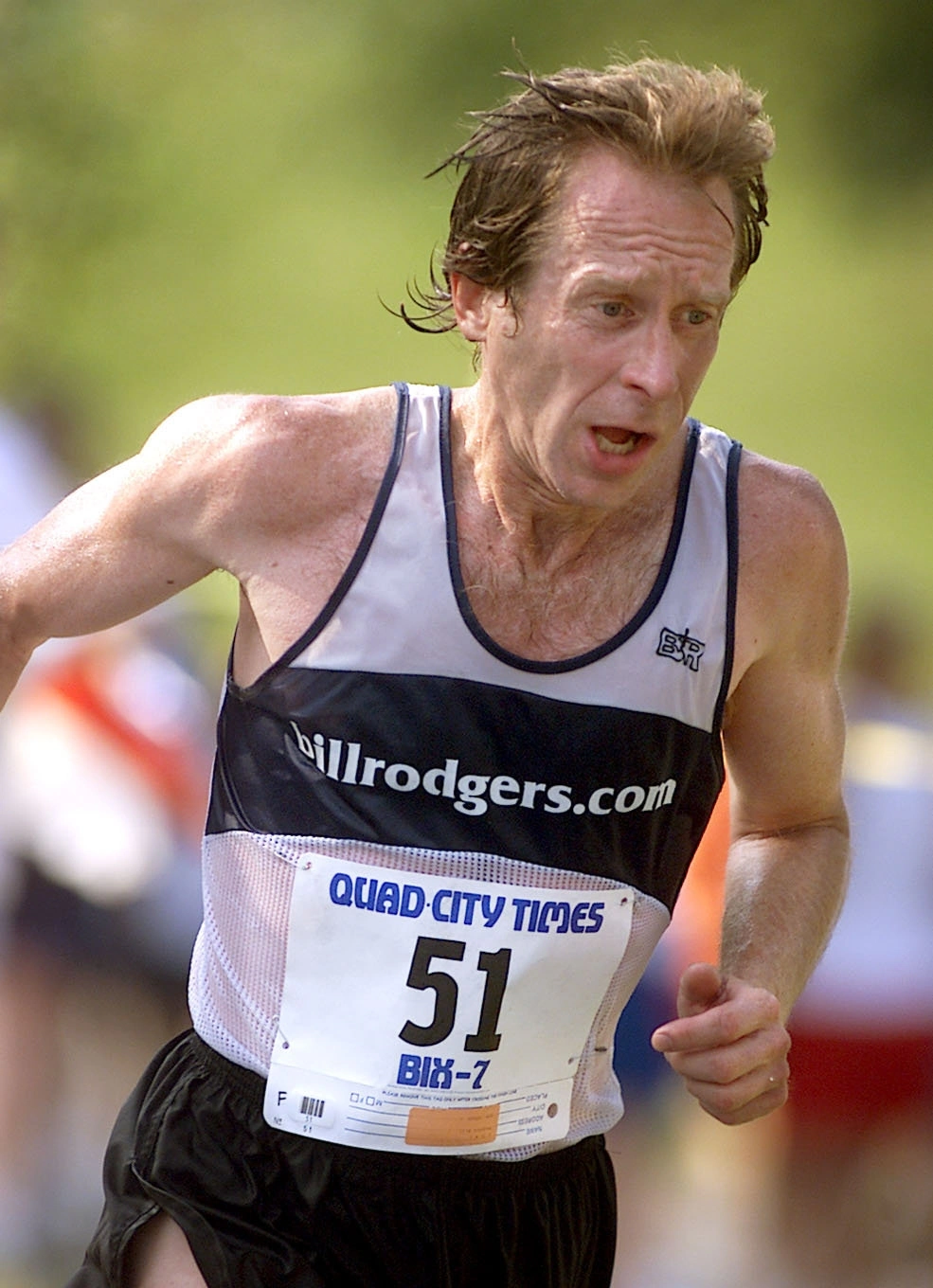
| 20 Quotes | |
| Born as | William Henry Rodgers |
| Occup. | Athlete |
| From | USA |
| Born | December 23, 1947 Hartford, Connecticut |
| Age | 78 years |
| Cite | |
Citation Formats
APA Style (7th ed.)
Bill rodgers biography, facts and quotes. (2026, February 11). FixQuotes. https://fixquotes.com/authors/bill-rodgers/
Chicago Style
"Bill Rodgers biography, facts and quotes." FixQuotes. February 11, 2026. https://fixquotes.com/authors/bill-rodgers/.
MLA Style (9th ed.)
"Bill Rodgers biography, facts and quotes." FixQuotes, 11 Feb. 2026, https://fixquotes.com/authors/bill-rodgers/. Accessed 1 Apr. 2026.
Early Life and Background
William Henry "Bill" Rodgers was born on December 23, 1947, in the United States, a postwar nation newly infatuated with television heroes and, soon enough, with participation sports. He came of age as the country pivoted from the discipline of mid-century institutions to the turbulence of the 1960s - a climate that made both rebellion and self-invention feel plausible. For Rodgers, distance running became a private craft he could control, a way to measure himself with a stopwatch when much else in American life felt noisy and unsteady.Rodgers' later public identity - the Boston-bred icon of the jogging boom, the wire-thin champion who looked like the sport's conscience as much as its winner - rested on an inward temperament. He was drawn to the long effort and the long view, to the idea that a person could build a life out of repeated ordinary days. That psychological preference for process over spectacle would become his competitive advantage, but it also reflected the era's hunger for authentic, do-it-yourself achievement: no special equipment, no team selection, only the runner and the road.
Education and Formative Influences
He attended Wesleyan University in Connecticut, where the campus ethos of intellectual seriousness mixed with the period's questioning of authority. Rodgers ran cross-country and track, learning the rhythm of training cycles and the social ecology of the sport - teammates, coaches, and the quietly radical notion that improvement is earned through unglamorous repetition. The collegiate setting also taught him how endurance intersects with identity: the runner becomes someone who can endure discomfort without needing an audience, and that internalization of effort stayed with him long after graduation.Career, Major Works, and Turning Points
Rodgers emerged as a defining figure of American road racing in the 1970s, the decade when marathoning shifted from a niche pursuit to a mass cultural phenomenon. He won the Boston Marathon four times (1975, 1978, 1979, 1980) and the New York City Marathon four times (1976-1979), setting an American record in the marathon (2:09:27 in 1975) and, just as importantly, modeling what a professional attitude could look like in a sport still half-amateur in its infrastructure. Off the course, he became a teacher-by-example for recreational runners, later channeling that role into speaking, writing, and running retail work that helped normalize running as a lifelong practice rather than a collegiate phase.Philosophy, Style, and Themes
Rodgers' worldview was built on accessibility and accountability. He argued that the sport belongs to ordinary bodies and ordinary schedules: “Anybody can be a runner... We were meant to move. We were meant to run. It's the easiest sport”. The line is both democratic and demanding. It removes excuses - you do not need a stadium or a coach to begin - while also insisting that movement is part of human design. Psychologically, Rodgers used that simplicity to keep himself honest: when motivation wavers, return to first principles, lace up, go out the door.At the same time, his credo was never naive about the cost of mastery. His best-known counsel treats training as a moral contract with the future self: “To be a consistent winner means preparing not just one day, one month or even one year - but for a lifetime”. In Rodgers' mind, consistency is not a streak but a temperament, the willingness to keep showing up when the body feels ordinary and the mind feels restless. Even his racing instincts carried a disciplined edge - boldness as strategy rather than bravado: “My whole feeling in terms of racing is that you have to be very bold. You sometimes have to be aggressive and gamble”. The gamble, for Rodgers, was calculated risk layered on a deep base of work; he could attack late because he had already invested months in being ready to suffer.
Legacy and Influence
Rodgers became an emblem of the modern American marathoner: competitive but relatable, rigorous yet inviting. His Boston and New York victories helped define those races as cultural institutions, and his presence during the running boom gave the movement a credible champion who looked like the people he inspired. Beyond times and titles, his lasting influence is philosophical - the idea that endurance is built through daily choices, that running is a tool for self-knowledge, and that excellence is a long apprenticeship. In a sport where trends change - shoes, training theories, even the economics of elite racing - Rodgers endures as a standard for how to live like a runner: simply, boldly, and for the long run.Our collection contains 20 quotes written by Bill, under the main topics: Motivational - Nature - Victory - Sports - Equality.
Other people related to Bill: Shirley Williams (Politician), Roy Jenkins (Politician)
Source / external links