
Bill Shankly Biography Quotes 12 Report mistakes
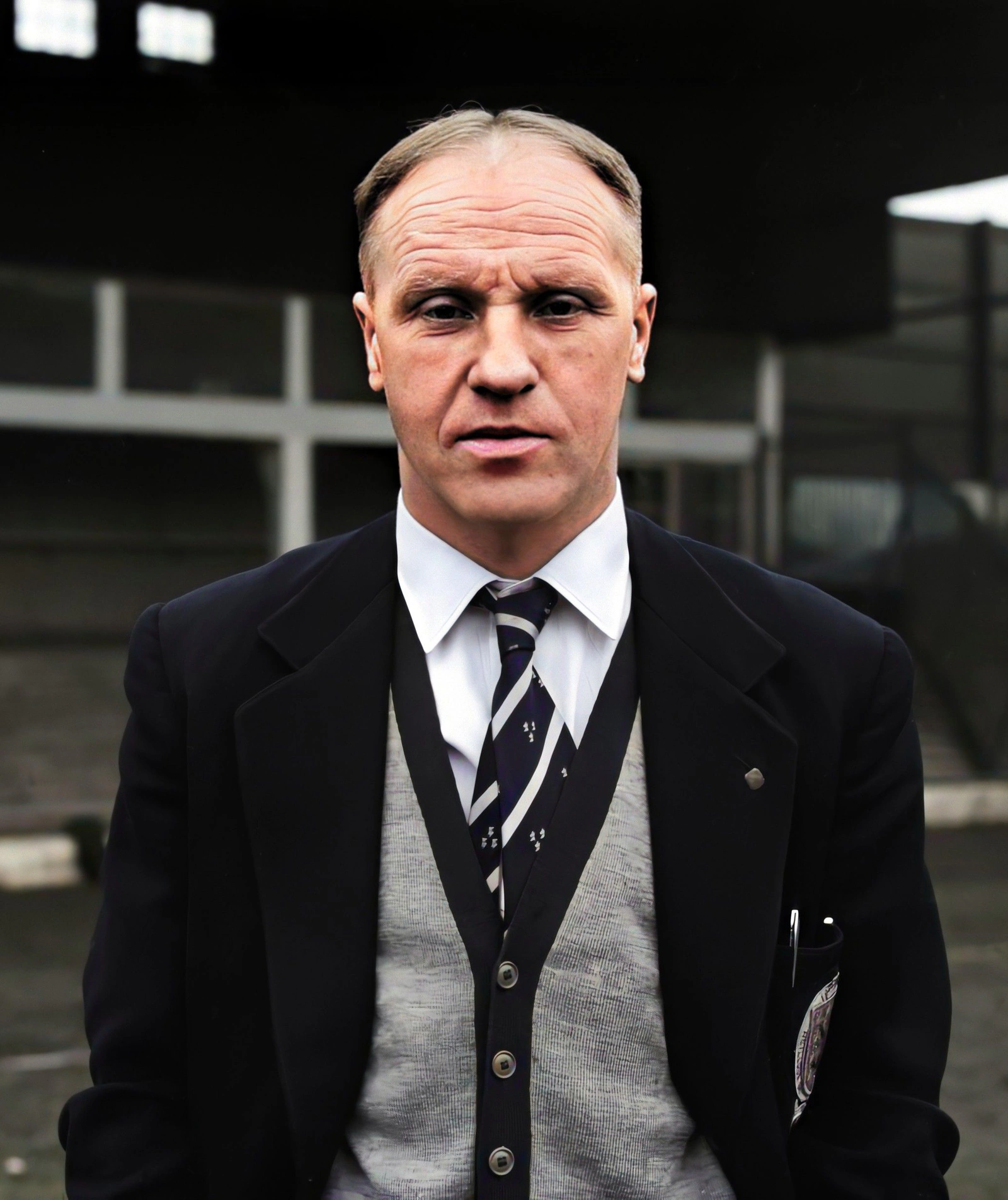
| 12 Quotes | |
| Occup. | Athlete |
| From | Scotland |
| Born | September 2, 1913 Glenbuck, Scotland |
| Died | September 29, 1981 Southport, England |
| Cause | Heart Attack |
| Aged | 68 years |
| Cite | |
Citation Formats
APA Style (7th ed.)
Bill shankly biography, facts and quotes. (2026, February 11). FixQuotes. https://fixquotes.com/authors/bill-shankly/
Chicago Style
"Bill Shankly biography, facts and quotes." FixQuotes. February 11, 2026. https://fixquotes.com/authors/bill-shankly/.
MLA Style (9th ed.)
"Bill Shankly biography, facts and quotes." FixQuotes, 11 Feb. 2026, https://fixquotes.com/authors/bill-shankly/. Accessed 12 Feb. 2026.
Early Life and Background
William Bill Shankly was born on 2 September 1913 in the small Ayrshire coal-mining village of Glenbuck, Scotland, one of a large family raised on the discipline and danger of pit life. Glenbuck produced an improbable stream of professional footballers, and Shankly grew up in a culture where endurance, loyalty, and mutual reliance were not slogans but survival habits. The First World War and its aftermath tightened economic hardship across industrial Scotland, shaping in him a lifelong sympathy for working people and a suspicion of privilege that later surfaced in the way he spoke about clubs, crowds, and community.
Football offered a different kind of labor - public, creative, yet still collective. As a young man he carried the miner's sense that effort had to be visible and shared; even as a player he valued the group over the soloist and learned to treat dressing rooms as miniature societies with codes, obligations, and a need for morale. Those early years gave him the cadence of a natural orator: blunt, rhythmic, and built for terraces as much as team talks.
Education and Formative Influences
Shankly left school early in a world where formal education was secondary to work, but he educated himself through football's practical intelligence: movement, space, and the reading of people. He served in the Royal Air Force during World War II, an experience that reinforced structure and leadership under pressure, and he absorbed the interwar and postwar British belief that institutions could be rebuilt by competence and solidarity. In football he was influenced by the Scottish tradition of passing play and by the manager as organizer - part tactician, part foreman, part psychologist - rather than the distant gentleman-director.
Career, Major Works, and Turning Points
A rugged left half, Shankly turned professional with Carlisle United before joining Preston North End in 1933, winning the FA Cup in 1938 and a First Division title in 1950, and appearing for Scotland. After retirement he apprenticed as a manager at Carlisle, then managed Grimsby Town and Workington, proving he could build order from limited means. The defining turning point came in December 1959 when Liverpool, then in the Second Division and drifting, hired him as manager. He rebuilt the club's standards from the inside out - sweeping away complacency, modernizing training, and, with assistants Bob Paisley, Joe Fagan, and Reuben Bennett, turning the boot room into a planning engine. Liverpool won the Second Division in 1962, the First Division in 1964 and 1966, the FA Cup in 1965, and the UEFA Cup in 1973 and 1976; he retired in 1974, handing over to Paisley and leaving behind a culture so coherent it kept winning for decades.
Philosophy, Style, and Themes
Shankly's football was moral as much as tactical: he demanded courage, work rate, and absolute clarity about roles. He stripped the game to essentials and taught players to trust the pass, the angle, and the next man's availability. "Football is a simple game based on the giving and taking of passes, of controlling the ball and of making yourself available to receive a pass. It is terribly simple". The line was not a simplification of his thinking but a clue to it - he believed anxiety and ego complicated what could be solved by shared responsibility. That belief suited the postwar British stadium, where crowds sought not ornament but proof of collective identity, and it explains why he cherished players who made others better as much as those who scored.
His famous hyperbole was a managerial tool: it dramatized standards and turned pressure into purpose. "A lot of football success is in the mind. You must believe you are the best and then make sure that you are". Shankly treated belief as a discipline, not a mood - cultivated through repetition, honest selection, and the sense that every training session was a vote for or against the group's destiny. Even his humor carried intensity: "Some people think football is a matter of life and death. I assure you, it's much more serious than that". Beneath the joke was a man who understood how working-class communities invested their week, pride, and emotional economy in Saturday afternoon, and he took that investment personally.
Legacy and Influence
Shankly did more than win trophies; he authored a modern idea of Liverpool as a social institution, binding club, city, and supporters into one story of labor and excellence. The infrastructure he built - standards, scouting habits, the boot room culture, and the expectation of European ambition - enabled the dynasties of Paisley and Fagan and helped shape the English game's shift toward more professional coaching and club-wide coherence. In Liverpool he became a secular saint, remembered for charisma, egalitarian instincts, and a relentless insistence that greatness was earned in the daily, communal details of the work. He died on 29 September 1981, but his voice remains in how managers speak about belief, simplicity, and the crowd - not as customers, but as the point of the whole enterprise.
Our collection contains 12 quotes written by Bill, under the main topics: Witty One-Liners - Victory - Sports - Goal Setting - Servant Leadership.
Other people related to Bill: Roy Evans (Athlete), Denis Law (Athlete)
Source / external links