
Bill Shoemaker Biography Quotes 4 Report mistakes
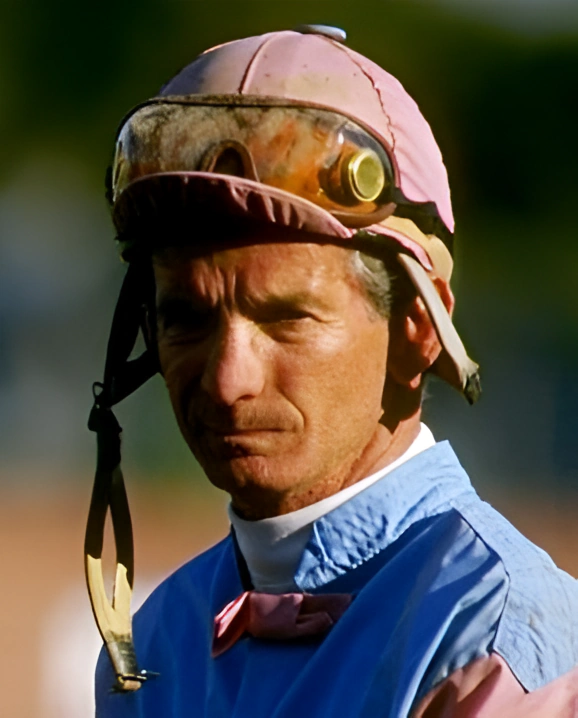
| 4 Quotes | |
| Born as | William Lee Shoemaker |
| Occup. | Athlete |
| From | USA |
| Born | August 19, 1931 Fabens, Texas, U.S. |
| Died | October 12, 2003 |
| Aged | 72 years |
| Cite | |
Citation Formats
APA Style (7th ed.)
Bill shoemaker biography, facts and quotes. (2026, February 11). FixQuotes. https://fixquotes.com/authors/bill-shoemaker/
Chicago Style
"Bill Shoemaker biography, facts and quotes." FixQuotes. February 11, 2026. https://fixquotes.com/authors/bill-shoemaker/.
MLA Style (9th ed.)
"Bill Shoemaker biography, facts and quotes." FixQuotes, 11 Feb. 2026, https://fixquotes.com/authors/bill-shoemaker/. Accessed 5 Mar. 2026.
Early Life and Background
William Lee "Bill" Shoemaker was born on August 19, 1931, in Fabens, Texas, a small agricultural community east of El Paso where the borderland economy and hard work shaped local identity. He was slight in stature from the beginning, an accident of biology that would become destiny in a sport that prizes lightness, balance, and nerve. His family moved west during his childhood, and he grew up largely in southern California, where racetracks and training barns were part of the region's working landscape.As a boy he gravitated to horses with an intensity that bordered on single-mindedness. Stable work offered discipline and a ladder upward: mucking stalls, walking hots, learning the language of tack and temperament. In the racetrack world of the 1940s, ambition often meant escaping poverty through risk, and Shoemaker absorbed the unspoken rules early - do the job, keep quiet, and earn trust. His small frame could have made him vulnerable; instead it became his instrument, and the emotional reserve he cultivated around older horsemen hardened into a professional armor.
Education and Formative Influences
Shoemaker's real education came in the barns and on the track, apprenticed to the daily routines of gallops, workouts, and the precise, sometimes brutal, weight requirements that defined jockey life. Southern California racing at Santa Anita and Hollywood Park exposed him to elite stables and to the idea that brilliance was as much craft as courage. Older riders and trainers taught him pace, patience, and the ethics of the colony - you win on the horse, but you survive on reputation - shaping a rider who would later be praised for judgment as much as hands.Career, Major Works, and Turning Points
He turned professional as a teenager and quickly became a national force, ultimately winning 8, 833 races - for decades the all-time record - across a career that stretched from the late 1940s into the 1990s. He won the Kentucky Derby four times (1955, 1959, 1965, 1986), the Preakness twice, and the Belmont five times, capturing the 1959 Triple Crown on Tomy Lee and later partnering with champions such as Swaps, Damascus, Ferdinand, and Sunday Silence. His 1986 Derby win at age 54 aboard Ferdinand became a cultural moment, proof that feel and timing can outlast youth. A 1991 car accident left him paralyzed and ended his riding life, and he died on October 12, 2003, in San Gabriel, California, closing the arc of a career that had defined modern American jockeyship.Philosophy, Style, and Themes
Shoemaker rode with an economy that looked almost casual until the instant it mattered. He was not a showman; he was a tactician whose calm masked relentless calculation, a psychology built for narrow margins. “When you're riding, only the race in which you're riding is important”. That credo describes not only his focus but his emotional method: he minimized the mental clutter of past mistakes and future stakes, compressing life into two minutes of decision-making where the only acceptable time was now.Beneath the quiet exterior was a fierce internal engine. “Desire is the most important factor in the success of any athlete”. In his case desire did not present as noise but as endurance - making weight year after year, rebuilding confidence after spills, and sustaining competitiveness into middle age. He also understood racing as a game of many variables, yet insisted on a brutally simple outcome: “There are one hundred and ninety nine ways to beat, but only one way to win; get there first”. The line captures his pragmatism. He respected beauty in a ride, but he trusted results, and his best finishes often came from waiting longer than others could bear, then asking a horse for the last ounce with perfect timing.
Legacy and Influence
Shoemaker became a template for the American big-race jockey - disciplined, tactically patient, and psychologically insulated enough to perform under pressure in front of grandstands and cameras. His record-setting volume of wins, his late-career Derby triumph, and his partnerships with Hall of Fame horses shaped how the public imagines mastery in racing: not bravado, but judgment. In biographies, documentaries, and jockey colonies that followed, his influence endures in the emphasis on pace, professionalism, and the idea that greatness can be quiet - a rider so attuned to a horse's rhythm that the decisive move feels inevitable only after it happens.Our collection contains 4 quotes written by Bill, under the main topics: Motivational - Never Give Up - Victory - Live in the Moment.
Source / external links