
Bill Shuster Biography Quotes 20 Report mistakes
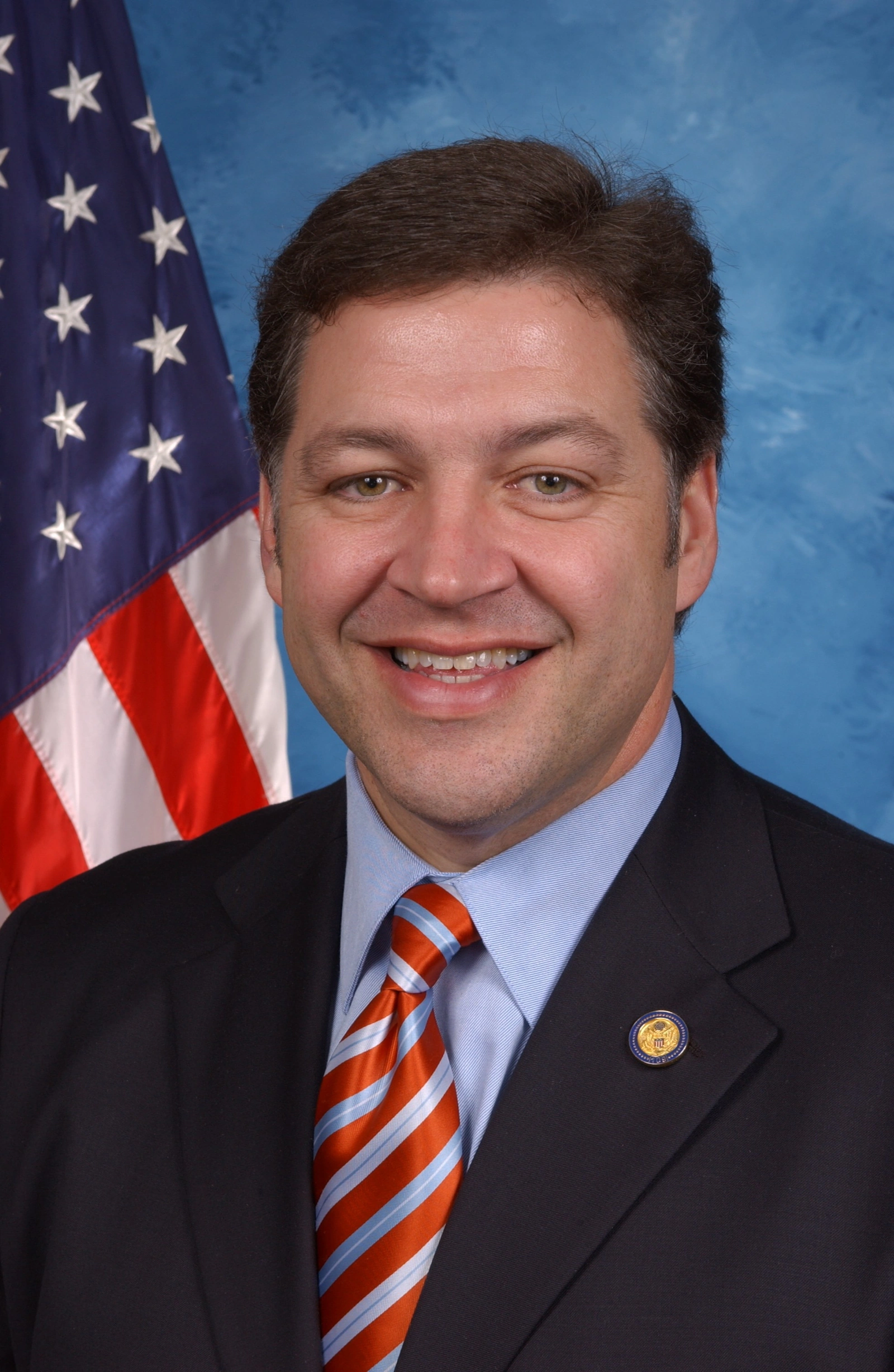
| 20 Quotes | |
| Born as | William Shuster |
| Occup. | Politician |
| From | USA |
| Born | January 10, 1960 McKeesport, Pennsylvania |
| Age | 66 years |
| Cite | |
Citation Formats
APA Style (7th ed.)
Bill shuster biography, facts and quotes. (2026, March 6). FixQuotes. https://fixquotes.com/authors/bill-shuster/
Chicago Style
"Bill Shuster biography, facts and quotes." FixQuotes. March 6, 2026. https://fixquotes.com/authors/bill-shuster/.
MLA Style (9th ed.)
"Bill Shuster biography, facts and quotes." FixQuotes, 6 Mar. 2026, https://fixquotes.com/authors/bill-shuster/. Accessed 27 Mar. 2026.
Early Life and Background
William Lloyd Shuster, known publicly as Bill Shuster, was born on January 10, 1960, into one of Pennsylvania's most durable Republican political families. He grew up in the orbit of his father, Bud Shuster, the formidable congressman who represented a swath of central Pennsylvania for more than a quarter century and became one of Washington's most powerful appropriators and transportation barons. That inheritance mattered. It gave Bill Shuster not only a recognizable name in Blair County and the surrounding region, but also an early education in the rituals of constituency politics: roads, contracts, veterans' issues, local industry, and the art of making federal power feel concrete in small towns.
Yet his beginnings were not those of a prodigy groomed solely for office. His political identity formed in a district shaped by the decline of heavy industry, the stubborn self-respect of Appalachian and central Pennsylvania communities, and a postwar Republicanism that blended defense hawkishness, infrastructure spending, and cultural conservatism. He absorbed a world in which patriotism was not abstract and government was judged less by ideology than by whether it delivered bridges, jobs, and stability. That practical, district-first sensibility would later define both his strengths and his limits: he was often more a steward of a political inheritance and a regional interest than a grand theorist of national change.
Education and Formative Influences
Shuster attended Dickinson College in Carlisle, Pennsylvania, graduating in 1982, and his formative years after college were spent less in intellectual celebrity than in apprenticeship - in business, in political operations, and in observing congressional power at close range. He worked in the private sector, including in the tire business, before serving on the staff of his father's Washington office, where he learned how constituent service, committee assignments, and transportation policy could anchor a career. The period also exposed him to the late Cold War and post-Cold War Republican transition: a party that still valued earmarks and local delivery even as it sharpened its language on national security, taxes, and cultural identity. Shuster's education, in that sense, was institutional and familial. He learned Congress from the inside, and he learned politics as a craft of coalition management rather than ideological purity.
Career, Major Works, and Turning Points
When Bud Shuster retired in 2001, Bill Shuster successfully ran for the U.S. House of Representatives in Pennsylvania's 9th Congressional District and took office in 2001, beginning a congressional career that lasted until 2019. He served through the post-9/11 era, the Iraq and Afghanistan wars, the polarization of the Obama years, and the infrastructure debates that repeatedly elevated his expertise. His most consequential perch was chairman of the House Transportation and Infrastructure Committee from 2013 to 2019, a role that made him one of the central Republican voices on aviation, highways, rail, water resources, and the long struggle to craft bipartisan infrastructure packages in an anti-compromise age. He backed major transportation and water legislation and gained a reputation as a lawmaker willing to negotiate across party lines when the subject was concrete enough to escape ideological theater. But his career also bore the marks of modern Washington's ethical and political strains, including scrutiny over his relationship with a transportation lobbyist and the difficulty of reconciling institutional dealmaking with a Republican base increasingly suspicious of establishment figures. His decision not to seek reelection in 2018 reflected both personal fatigue and a changing party in which old-style committee power no longer carried the same authority.
Philosophy, Style, and Themes
Shuster's political philosophy was an alloy of national-security Republicanism and district pragmatism. He spoke in the language of threat, duty, and material dependence, seeing infrastructure, energy, and military readiness as interconnected rather than separate realms. “Our national security is at risk when we rely on foreign oil to keep our economy moving forward”. That sentence is revealing not only as policy argument but as worldview: vulnerability, in his mind, began wherever dependence began. Energy policy, transportation capacity, and defense posture all belonged to the same map of national resilience. He was similarly drawn to rhetoric that fused patriotism with sacrifice. “Our veterans accepted the responsibility to defend America and uphold our values when duty called”. The moral center of his public language was obligation - service rendered, symbols defended, institutions maintained.
That instinct made him a conventional but sincere post-9/11 Republican. “Especially today, as we fight the war on terror - against an enemy that represents hatred, extremism, and stands behind no flag - we need to remember the sacrifices that have gone into protecting our flag”. The sentence captures both his emotional vocabulary and his psychological cast: politics as guardianship, the nation as something perpetually exposed, and elected office as a trust owed to soldiers, workers, and local communities rather than a platform for self-invention. Even when he dealt in partisan attack or detainee policy, the underlying theme was order against disorder. His style was not lyrical or visionary; it was declarative, managerial, and rooted in the belief that government's legitimacy came from protecting mobility, security, and livelihoods. In committee leadership, that translated into a practical appetite for bipartisan legislative construction, even as his public conservatism remained firmly within the Republican mainstream.
Legacy and Influence
Bill Shuster's legacy lies less in charismatic national leadership than in his role as one of the last important House Republicans shaped by the older congressional system of committee expertise, district delivery, and bipartisan bargaining on physical infrastructure. He represented a lineage in which Pennsylvania Republicans could be both culturally conservative and aggressively pro-public works, and his chairmanship helped preserve the idea that transportation policy remained one of the few areas where Congress could still legislate seriously. His career also illustrates the transition from that older order to a more polarized and personality-driven era, in which inherited power and institutional mastery counted for less than media combat and ideological branding. For students of modern American politics, Shuster stands as a bridge figure - heir to a machine-like congressional tradition, participant in the post-9/11 security consensus, and practitioner of a practical politics increasingly out of fashion even as the nation's need for functioning infrastructure only grew.
Our collection contains 20 quotes written by Bill, under the main topics: Justice - Leadership - Freedom - War - Health.
Source / external links