
Bill Sienkiewicz Biography Quotes 31 Report mistakes
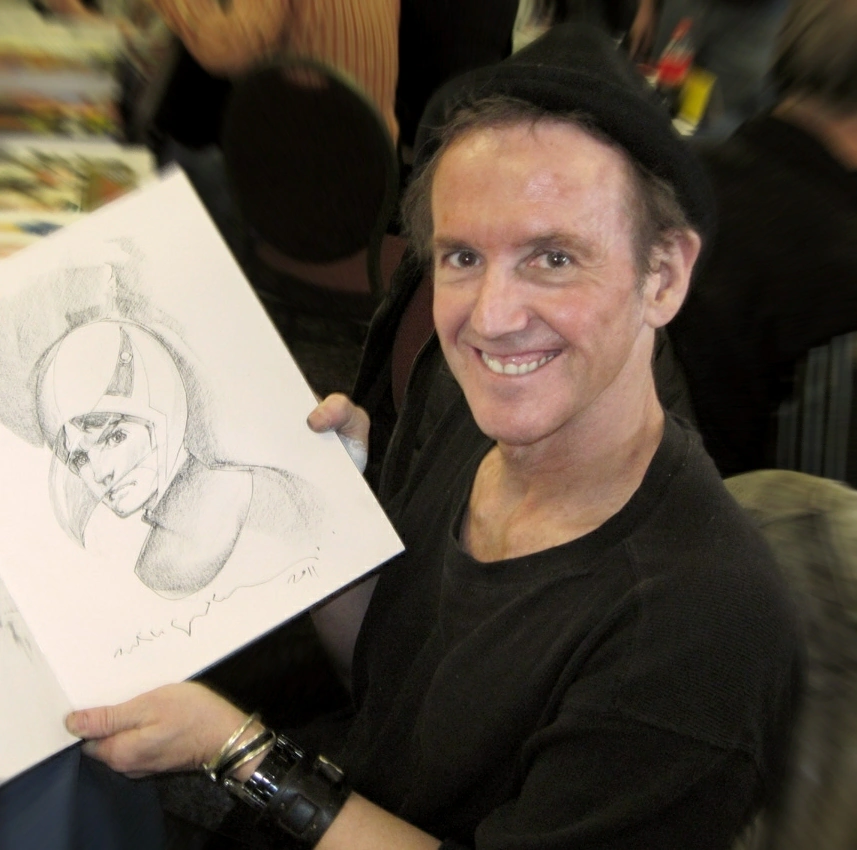
| 31 Quotes | |
| Born as | Boleslav Felix Robert Sienkiewicz |
| Occup. | Artist |
| From | USA |
| Born | May 3, 1958 Blakely, Pennsylvania |
| Age | 67 years |
| Cite | |
Citation Formats
APA Style (7th ed.)
Bill sienkiewicz biography, facts and quotes. (2026, February 11). FixQuotes. https://fixquotes.com/authors/bill-sienkiewicz/
Chicago Style
"Bill Sienkiewicz biography, facts and quotes." FixQuotes. February 11, 2026. https://fixquotes.com/authors/bill-sienkiewicz/.
MLA Style (9th ed.)
"Bill Sienkiewicz biography, facts and quotes." FixQuotes, 11 Feb. 2026, https://fixquotes.com/authors/bill-sienkiewicz/. Accessed 26 Mar. 2026.
Early Life and Background
Bill Sienkiewicz was born Boleslav Felix Robert Sienkiewicz on May 3, 1958, in the United States, into the postwar America that also absorbed new immigrant energies and anxieties. His Polish surname marked him as slightly outside the clean lines of mid-century conformity, a tension he later turned into a visual language of fracture, collage, and emotional dissonance. From the beginning he was less interested in superhero polish than in faces, gestures, and the way memory distorts what the eye thinks it sees.Growing up amid the mass media boom of television and paperback culture, he absorbed both the high-gloss mythology of comics and the rawer charge of illustration, film, and poster art. That dual intake - commercial icons on one hand, experimental imagery on the other - helped form the inner conflict that became a signature of his career: the urge to work inside popular narratives while testing how far the form could bend before it broke.
Education and Formative Influences
Sienkiewicz studied at the Newark School of Fine and Industrial Art (now part of NJIT) and came up during a moment when American comics were beginning to loosen from strict house styles. Early in his career he was visibly influenced by Neal Adams, not as a template to copy but as proof that mainstream comics could carry cinematic realism and psychological intensity; as his confidence grew, he moved past that influence toward a hybrid fed by modern painting, graphic design, and expressionist mark-making.Career, Major Works, and Turning Points
He entered Marvel Comics in the late 1970s, gaining attention on Moon Knight (1980-1984) where his draftsmanship evolved rapidly from clean superhero clarity into more angular, moody experimentation. The decisive turning point came with The New Mutants (especially the mid-1980s run that culminated in "The Demon Bear Saga" with writer Chris Claremont), where watercolor, splatter, mixed media, and aggressive abstraction made interior states as important as plot. In 1987 he co-created, with Frank Miller, the graphic novel Elektra: Assassin, a fever-dream of politics, identity, and hallucination that expanded what the Marvel brand could contain. Across the following decades he became both a sought-after cover artist and a restless formal innovator, working in comics, illustration, and design, moving between corporate characters and idiosyncratic personal approaches without settling into a single look.Philosophy, Style, and Themes
Sienkiewiczs art is best read as an argument with the medium itself: a refusal to treat the panel as a neutral window, and a belief that style is not decoration but meaning. He has said, “And that, to me, is the main attraction to comics. It's an avenue to say what you want to say”. That statement is less a slogan than a psychological key - he approaches comics as confession under mask, using distortion, collage, and abrupt shifts in technique to stage the conflict between what a character performs and what they fear.His working methods also reveal a mind that distrusts confinement. “To me, that's one of the things that I love about doing this stuff. One day I can work on this piece in watercolor, and then work on something else on the computer, or work on something else that's a completely different approach”. The medium-switching is not mere versatility; it mirrors his thematic preoccupation with unstable identity and the way perception changes under stress. Even his desire to escape the expected role of an inker or line artist points to a deeper hunger for painterly immediacy: “I wanted to learn how to paint rather than just doing black-and-white work”. In his best pages, beauty and violence coexist - elegant anatomy interrupted by scratches, stains, and visual noise - as if the image were recording thought in real time rather than illustrating a finished script.
Legacy and Influence
Sienkiewicz helped normalize experimentation in mainstream American comics, proving that superhero and genre work could accommodate fine-art tactics without losing narrative force. His New Mutants and Elektra: Assassin pages became touchstones for later generations of artists interested in mixed media, expressionism, and psychological atmosphere, while his covers and illustrations showed publishers that risk could be marketable. More than any single technique, his enduring influence is permission: the sense that a comics page can hold competing realities at once - corporate iconography and personal vision, clarity and chaos - and still communicate something urgently human.Our collection contains 31 quotes written by Bill, under the main topics: Motivational - Art - Friendship - Writing - Freedom.
Source / external links