
Bill Vaughan Biography Quotes 25 Report mistakes
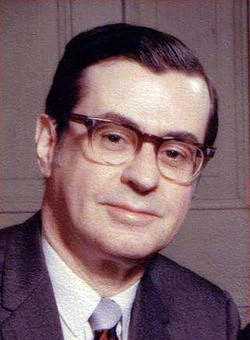
Attr: Find a Grave Memorial
| 25 Quotes | |
| Born as | William E. Vaughan |
| Occup. | Journalist |
| From | USA |
| Born | October 8, 1915 USA |
| Died | February 25, 1977 USA |
| Aged | 61 years |
| Cite | |
Citation Formats
APA Style (7th ed.)
Bill vaughan biography, facts and quotes. (2026, February 11). FixQuotes. https://fixquotes.com/authors/bill-vaughan/
Chicago Style
"Bill Vaughan biography, facts and quotes." FixQuotes. February 11, 2026. https://fixquotes.com/authors/bill-vaughan/.
MLA Style (9th ed.)
"Bill Vaughan biography, facts and quotes." FixQuotes, 11 Feb. 2026, https://fixquotes.com/authors/bill-vaughan/. Accessed 27 Mar. 2026.
Early Life and Background
William E. "Bill" Vaughan was born on October 8, 1915, in the United States, entering adulthood as the country moved from the aftershocks of World War I into the privations and moral arguments of the Great Depression. That era trained a certain kind of American observer: suspicious of grand promises, fluent in everyday improvisation, and alert to the gap between civic ideals and lived reality. Vaughan would become a journalist whose best tool was not the scoop but the steady, amused stare - a voice shaped by hard times that still insisted on finding the human joke inside the human predicament.His sensibility belonged to mid-century America: the rise of mass suburban development, the expansion of consumer life, and the increasing reach of national politics into kitchen-table conversation. He wrote as someone who both liked people and distrusted crowds, a temperament that made him effective at puncturing cant without slipping into contempt. The result was a public persona that felt companionable - a columnist you could argue with - while privately it suggested a craftsman managing anxiety with precision, turning irritation into tight, quotable sentences.
Education and Formative Influences
Details of Vaughan's formal schooling are less securely documented in popular sources than the trajectory of his working life, but his education was unmistakably journalistic: apprenticeship in the discipline of daily deadlines, immersion in the rhetoric of American public life, and constant practice in writing for readers who wanted clarity, not theory. He matured in the long shadow of Depression pragmatism and the wartime demand for shared purpose, and he absorbed the tradition of American newspaper humor - plainspoken, skeptical, and anchored in civic common sense rather than salon wit.Career, Major Works, and Turning Points
Vaughan built his reputation as a journalist and widely syndicated columnist, best known for short, pointed observations that traveled easily from newspaper pages into quotation collections and dinner-table lore. His professional peak coincided with the postwar decades when newspapers were central cultural engines, and when the columnist's job was to interpret an accelerating, bureaucratizing society for ordinary readers. While he also wrote books that gathered and extended his newspaper work, his lasting "major work" was essentially cumulative: a long run of columns that mapped American life from the ground level, focusing less on personalities in power than on the everyday habits - civic, consumer, and moral - that made power possible.Philosophy, Style, and Themes
Vaughan's style was compact and deceptively simple: he favored the clean line over the baroque paragraph, and he treated humor as a form of intellectual hygiene. He wrote as a realist who refused despair, often approaching public questions sideways, through the revealing triviality of a parking ticket, a zoning decision, or an election day excuse. His insights tended to begin with a mild chuckle and end with a wince, the emotional signature of someone who wanted adults to behave like adults but had learned not to bet the mortgage on it.His themes returned to the same psychological knot: Americans profess high ideals while practicing low-effort citizenship, and they soothe the discomfort with slogans. “A real patriot is the fellow who gets a parking ticket and rejoices that the system works”. The line is funny, but it also discloses Vaughan's inner ethic - a preference for functioning institutions over performative outrage, and for responsibility over romance. He was equally attuned to the ironies of conformity masquerading as rebellion: “If there is anything the nonconformist hates worse than a conformist, it's another nonconformist who doesn't conform to the prevailing standard of nonconformity”. That is not merely social satire; it is a warning about identity politics before the phrase existed, about how moral certainty turns quickly into a uniform. And he wrote with an ecological and civic eye for the unintended consequences of progress, capturing the postwar landscape in a single image: “Suburbia is where the developer bulldozes out the trees, then names the streets after them”. Underneath the punchline sits a grief for what gets traded away - memory, place, and responsibility - in exchange for convenience.
Legacy and Influence
Vaughan died on February 25, 1977, but his sentences kept moving, detached from their original columns and reappearing wherever Americans argue about civic duty, hypocrisy, or the costs of "development". His influence is less a school than a standard: the belief that the best political writing can be brief, humane, and unsparing at once. In an age of louder commentary, Vaughan's durability comes from his method - he trusted the reader to recognize themselves in the joke, and then, having laughed, to feel the small pressure of conscience.Our collection contains 25 quotes written by Bill, under the main topics: Witty One-Liners - Freedom - Live in the Moment - Honesty & Integrity - Work Ethic.
Source / external links