
Bill Watterson Biography Quotes 39 Report mistakes
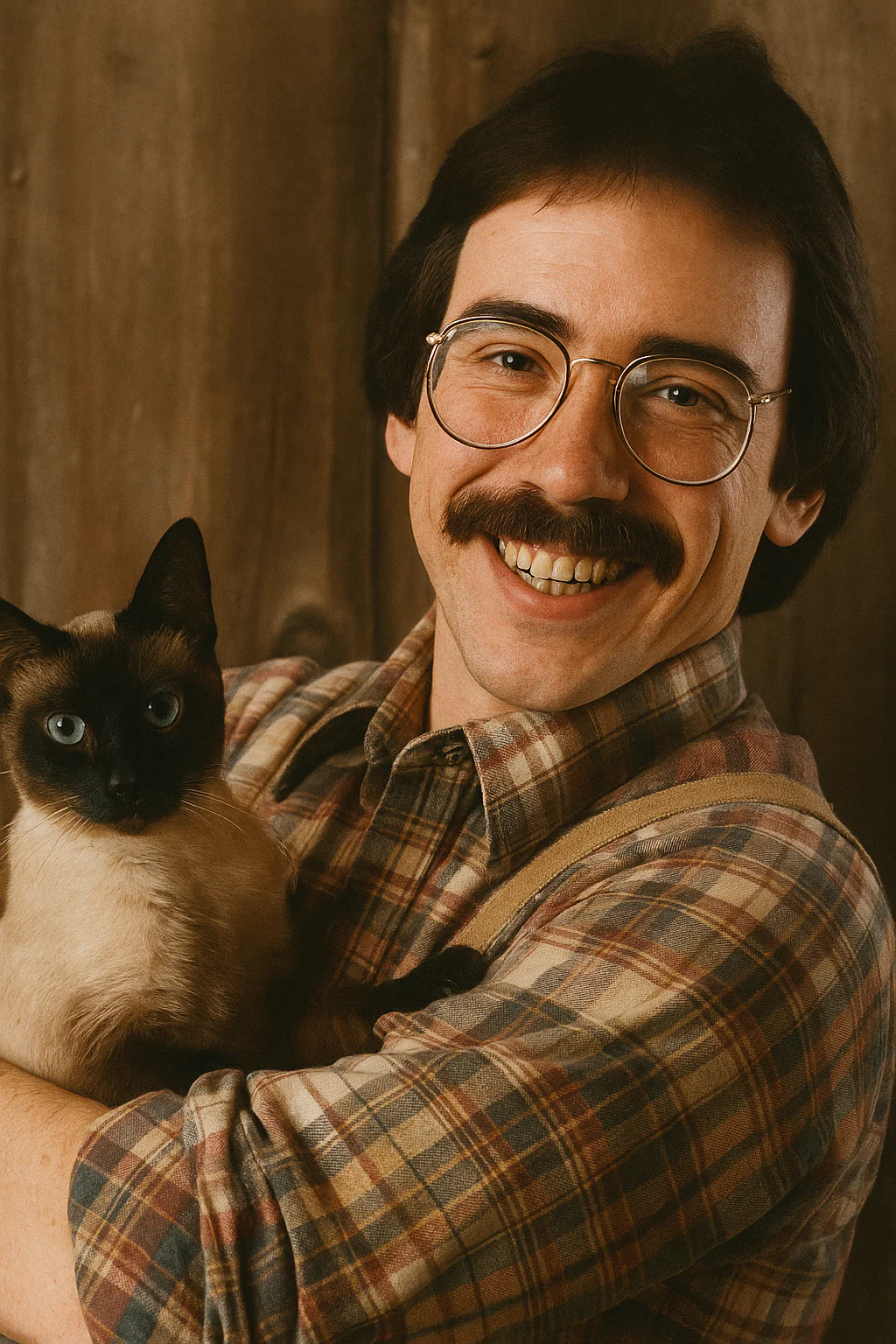
Attr: Kenyon College - Reveille 1980 p. 65, Public Domain
| 39 Quotes | |
| Born as | William Boyd Watterson II |
| Occup. | Cartoonist |
| From | USA |
| Born | July 5, 1958 Washington, D.C., USA |
| Age | 67 years |
| Cite | |
Citation Formats
APA Style (7th ed.)
Bill watterson biography, facts and quotes. (2026, February 1). FixQuotes. https://fixquotes.com/authors/bill-watterson/
Chicago Style
"Bill Watterson biography, facts and quotes." FixQuotes. February 1, 2026. https://fixquotes.com/authors/bill-watterson/.
MLA Style (9th ed.)
"Bill Watterson biography, facts and quotes." FixQuotes, 1 Feb. 2026, https://fixquotes.com/authors/bill-watterson/. Accessed 12 Feb. 2026.
Early Life and Background
William Boyd Watterson II was born July 5, 1958, in Washington, D.C., and grew up primarily in Chagrin Falls, Ohio, a wooded Cleveland suburb whose creeks, snowdrifts, and backyard expanses would later echo in the landscapes of Calvin and Hobbes. His father, James Watterson, worked as a patent attorney; his mother, Kathryn, cultivated a home life attentive to books and drawing, and Watterson and his younger brother, Thomas, absorbed the rhythms of Midwestern domesticity - quiet streets, long winters, and the feeling that imagination could make a small town infinite.From early childhood he drew obsessively, copying cartoons and inventing characters with a craftsman's patience rather than a prodigy's flash. Friends and family often described him as private and wry, more inclined to observe than perform, and that inwardness became a lifelong habit: he learned to trust the page as a place where he could control tone, timing, and truth. The era also mattered - the 1960s and 1970s brought a flood of mass media, commercial mascots, and television satire, all of which sharpened his later suspicion of marketing's grip on childhood.
Education and Formative Influences
Watterson attended Kenyon College in Gambier, Ohio, graduating in 1980 with a degree in political science, but his real education came from absorbing the history of American newspaper cartooning and the visual language of comics. He studied Charles M. Schulz's restraint, Walt Kelly's verbal music, and the formal daring of early 20th-century strips, while also taking in illustration, advertising, and modern art. Kenyon also steeped him in campus politics and the theater of ideology, training him to see how public language disguises private motives - a lens that would later make a six-year-old's tirades feel like miniature editorials.Career, Major Works, and Turning Points
After a brief and unhappy stint as a political cartoonist at the Cincinnati Post, Watterson moved through freelance work and rejection, refining a strip about a boy and his stuffed tiger that editors initially resisted for its ambition and bite. Universal Press Syndicate launched Calvin and Hobbes on November 18, 1985; within a few years it became a phenomenon, praised for its drawing, humor, and emotional range. The major turning point was not only fame but Watterson's fight for the integrity of the strip: he took rare sabbaticals in 1991 and 1994 to avoid creative exhaustion, and he refused licensing and merchandising that would have made him vastly richer. On December 31, 1995, he ended the strip at its artistic peak, choosing privacy and craft over an endless franchise, then largely withdrew from public life, occasionally surfacing through a few interviews, museum contributions, and a 2014 limited collaboration with Stephan Pastis.Philosophy, Style, and Themes
Watterson's work is often mislabeled as merely "kid" humor, but his real subject is consciousness - how a mind edits the world to survive it. Calvin's fantasies are not escapism so much as self-defense, a child's attempt to negotiate adult hypocrisies, school conformity, and the blunt limits of nature. The strip's tension between domestic realism and sudden baroque invention mirrors Watterson's own insistence that imagination is a moral instrument: it can expose what daily language hides. His satire of consumer culture and institutional schooling is tempered by reverence for the outdoors, where wonder interrupts ego. The line "If people sat outside and looked at the stars each night, I'll bet they'd live a lot differently". distills that ethic - perspective as an antidote to petty ambition.Formally, Watterson widened the vocabulary of the daily strip, pushing elastic panel shapes, cinematic pacing, and painterly landscapes into a medium often constrained by layout and deadline. Yet the technical virtuosity serves an intimate psychological comedy: Calvin's bravado masks loneliness, and Hobbes - alternately stuffed toy and living tiger - becomes the ambiguous companion who keeps the child's interior world from collapsing into solipsism. Watterson repeatedly stages the friction between reality and chosen meaning, captured in "It's not denial. I'm just selective about the reality I accept". He also understood time's quiet violence in family life, where routine conceals transformation; "Know what's weird? Day by day, nothing seems to change. But pretty soon, everything's different". In that sentence lies the strip's tenderness: childhood is not a theme but a vanishing.
Legacy and Influence
Calvin and Hobbes reshaped late 20th-century newspaper comics by proving that a mainstream strip could be visually adventurous, philosophically alert, and emotionally true without becoming a product line. Watterson's refusal to merchandise became a touchstone for artists arguing that ownership and restraint can be creative acts, not martyrdom. Generations of cartoonists cite his draftsmanship, timing, and compositional daring, while readers return for something rarer than jokes: a portrait of the mind learning its limits without surrendering its wonder. His influence persists precisely because he stopped - leaving a finished body of work that continues to feel alive, like a snowy hill just before the sled hits the drop.Our collection contains 39 quotes written by Bill, under the main topics: Witty One-Liners - Motivational - Wisdom - Meaning of Life - Live in the Moment.
Other people related to Bill: Berke Breathed (Cartoonist)
Frequently Asked Questions
- Bill Watterson Art: Expressive brush-and-ink style, dynamic Sunday layouts; influenced by Schulz, Kelly, Herriman, McCay; rejected merchandising to protect the art.
- Bill Watterson politics: Keeps his politics private; avoids endorsements; his strip satirized society without partisan aims.
- Bill Watterson now: Lives a very private life in Ohio; no new strip, recently co-authored The Mysteries (2023).
- Bill Watterson: books: Calvin & Hobbes collections, The Calvin and Hobbes Tenth Anniversary Book, The Complete Calvin and Hobbes, and The Mysteries (2023).
- Bill Watterson The Mysteries: A 2023 illustrated fable co-created with John Kascht.
- Bill Watterson movie: No Calvin & Hobbes movie, he refused licensing; he’s the subject of the 2013 documentary Dear Mr. Watterson.
- How old is Bill Watterson? He is 67 years old
Source / external links