
Billie Jean King Biography Quotes 43 Report mistakes
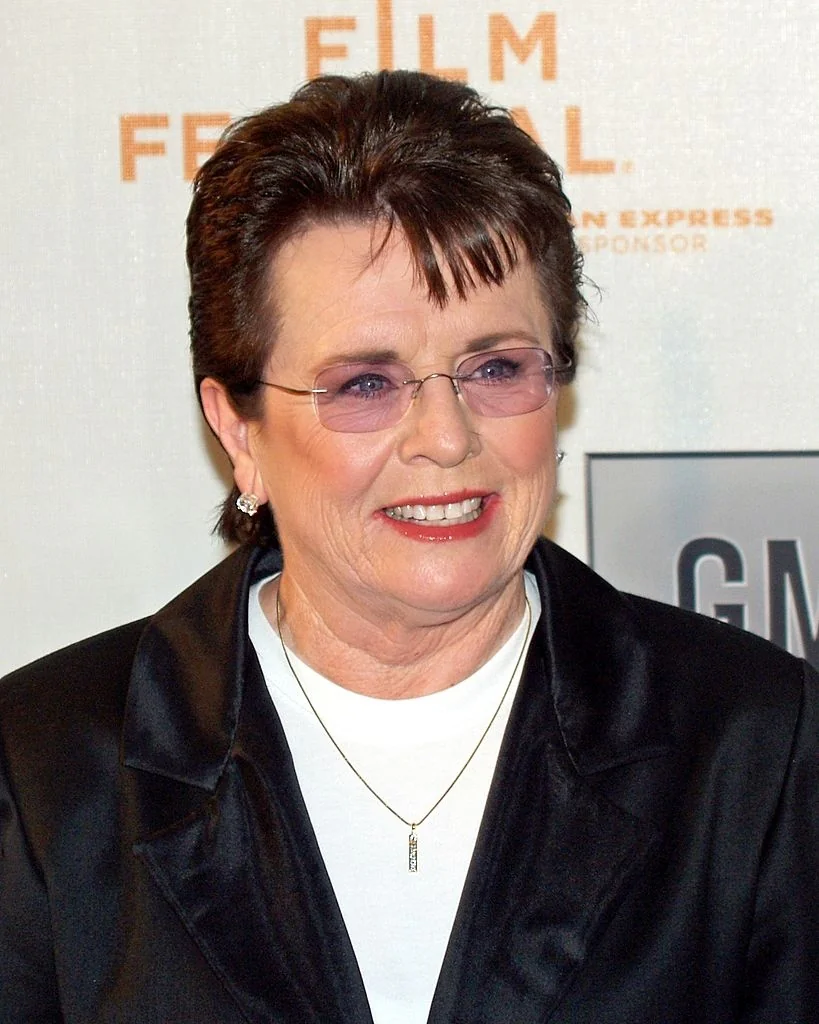
| 43 Quotes | |
| Occup. | Athlete |
| From | USA |
| Born | November 22, 1943 Long Beach, California |
| Age | 82 years |
| Cite | |
Citation Formats
APA Style (7th ed.)
Billie jean king biography, facts and quotes. (2026, February 2). FixQuotes. https://fixquotes.com/authors/billie-jean-king/
Chicago Style
"Billie Jean King biography, facts and quotes." FixQuotes. February 2, 2026. https://fixquotes.com/authors/billie-jean-king/.
MLA Style (9th ed.)
"Billie Jean King biography, facts and quotes." FixQuotes, 2 Feb. 2026, https://fixquotes.com/authors/billie-jean-king/. Accessed 11 Feb. 2026.
Early Life and Background
Billie Jean King was born Billie Jean Moffitt on November 22, 1943, in Long Beach, California, a wartime port city where discipline and thrift were not abstractions but daily habits. Her father, a firefighter, and her mother, a homemaker, raised her in a working-class household shaped by churchgoing respectability and the quiet insistence that girls should be capable, not merely charming. The postwar boom promised mobility, yet women were still trained to ask permission for it. King grew up noticing who got to take up space and who was expected to yield it.Sports became her early language of ambition. She played softball and other neighborhood games, but the pathways for girls narrowed quickly as competition became organized and male-coded. In that narrowing she developed a lifelong sensitivity to structural barriers - not just the loss of a roster spot, but the loss of a future. Tennis, available through public courts and junior programs, offered a ladder that did not require a boys-only gatekeeper, and its individual nature appealed to her fierce self-reliance even as it left her craving the solidarity of team sports.
Education and Formative Influences
As a teenager she gravitated to tennis clubs and junior tournaments around Southern California, absorbing the era's contradictions: country-club polish alongside meritocratic myth, and the constant reminder that women were guests in a sport marketed around male prestige. She attended California State University, Los Angeles, while building her game, but her real education came from travel, match pressure, and a growing awareness that talent alone could not overcome institutional indifference. Early coaches and mentors encouraged aggression at the net and mental toughness, while the broader culture taught her that a woman who wanted too much would be punished - a lesson she would eventually refuse.Career, Major Works, and Turning Points
King turned professional in the 1960s and became one of tennis's defining champions, winning 39 Grand Slam titles across singles, doubles, and mixed doubles, including 12 major singles crowns. She was central to the sport's modern reinvention: a leader of the original "Original 9" who launched the Virginia Slims Circuit in 1970, a key figure in the creation of the Women's Tennis Association in 1973, and an architect of the push for equal prize money, most famously at the US Open. That same year she defeated Bobby Riggs in the "Battle of the Sexes", a spectacle that doubled as a cultural referendum on women's competence and authority. Later, after a 1981 lawsuit exposed her relationship with Marilyn Barnett, she became one of the first prominent athletes to be publicly outed, enduring tabloid scrutiny while continuing to work, coach, and build institutions, including World TeamTennis.Philosophy, Style, and Themes
King's tennis style mirrored her psychology: attacking, improvisational, and built on taking time away from opponents. She played serve-and-volley with quick hands and sharper angles than her era expected from women, turning points into sprints rather than negotiations. The deeper engine was introspection - a belief that performance begins with accurate self-reading. "I think self-awareness is probably the most important thing towards being a champion". In her case, self-awareness meant naming fear, then acting anyway, and it also meant understanding the social theater around matches, where confidence could be a political statement.Her public themes - equality, opportunity, and the material realities behind "choice" - came from living through legal and economic dependency that limited women far beyond sport. "In 1973, a woman could not get a credit card without her husband or father or a male signing off on it". That context made her activism less slogan than strategy, a campaign to convert visibility into leverage: better pay, better governance, and conditions where women's excellence could sustain a life. She also insisted that winning was a practice, not a personality trait: "Champions keep playing until they get it right". The line captures her blend of patience and defiance - improvement as repetition, and repetition as refusal to be dismissed.
Legacy and Influence
King's enduring influence is both athletic and civic. She helped professionalize women's tennis, proved that women could command mass audiences without being ornamental, and modeled athlete-led labor politics decades before it became common. After the trauma of being outed, she remained a crucial figure for LGBTQ visibility and for the idea that institutions - leagues, prize structures, media habits, corporate sponsorships - determine whose talent becomes history. The Billie Jean King National Tennis Center, awards bearing her name, and generations of players who treat equal pay as a baseline rather than a dream all trace back to her central insight: that sport is never just sport, and that changing the rules off the court can be the most decisive victory.Our collection contains 43 quotes written by Billie, under the main topics: Motivational - Wisdom - Never Give Up - Learning - Sports.
Source / external links