
Billy Martin Biography Quotes 6 Report mistakes
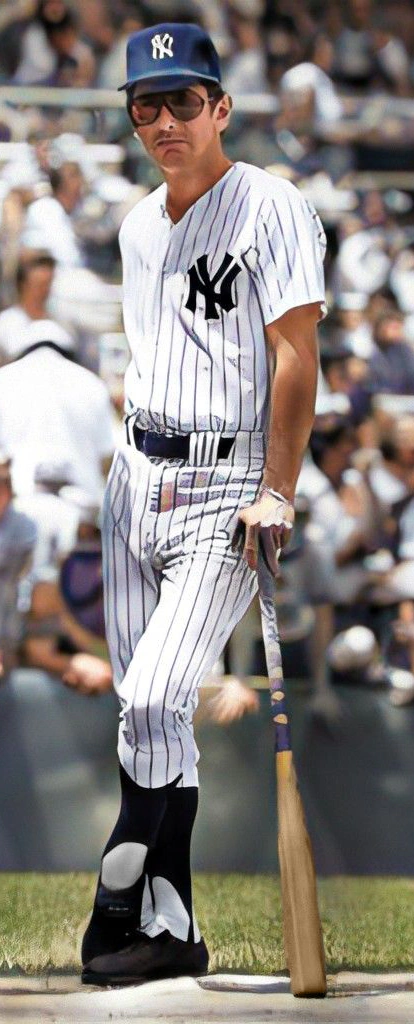
| 6 Quotes | |
| Born as | Alfred Manuel Martin Jr. |
| Occup. | Athlete |
| From | USA |
| Born | May 16, 1928 Berkeley, California, USA |
| Died | December 25, 1989 Johnson City, New York, USA |
| Aged | 61 years |
| Cite | |
Citation Formats
APA Style (7th ed.)
Billy martin biography, facts and quotes. (2026, March 19). FixQuotes. https://fixquotes.com/authors/billy-martin/
Chicago Style
"Billy Martin biography, facts and quotes." FixQuotes. March 19, 2026. https://fixquotes.com/authors/billy-martin/.
MLA Style (9th ed.)
"Billy Martin biography, facts and quotes." FixQuotes, 19 Mar. 2026, https://fixquotes.com/authors/billy-martin/. Accessed 27 Mar. 2026.
Early Life and Background
Billy Martin was born Alfred Manuel Martin Jr. on May 16, 1928, in Berkeley, California, and grew up in a working-class, often unstable world shaped by the Depression, migration, and family strain. His father, of Portuguese extraction, and his mother, whose roots were Italian, moved through the hardscrabble economies of the West Coast before the family settled for long stretches in Oakland. The household was noisy, emotional, and combative, and Martin absorbed from it a lifelong instinct to answer disrespect with force. Small in stature but fiercely proud, he learned early that intimidation could be resisted through nerve, wit, and a readiness to fight. Baseball became both escape and proving ground.
The Bay Area of Martin's youth was rich in sandlot and semi-pro baseball, and he came of age in a culture where the game rewarded cunning as much as raw gifts. He was never the prototype star - not tall, not physically overwhelming, not blessed with the easy grace of a Joe DiMaggio or Willie Mays - but he was quick, alert, and consumed by competition. Those who knew him as a boy saw traits that would never leave him: suspicion of authority, devotion to teammates he trusted, a hair-trigger temper, and a near-total inability to separate professional conflict from personal honor. The contradictions that later defined him - loyalty and volatility, strategic brilliance and self-destruction - were visible almost from the start.
Education and Formative Influences
Martin's real education came on diamonds rather than in classrooms. He attended Berkeley High School but was formed more decisively by American Legion ball, local semi-pro competition, and the rigorous minor-league culture of the New York Yankees organization, which signed him in the 1940s. Military service during and just after World War II also shaped his discipline and hardness. In the Yankees' system he learned under the shadow of Casey Stengel, whose comic surface masked a deep tactical mind, and alongside veterans who treated baseball as a relentless contest of nerves. Martin studied pitchers, bunting angles, defensive positioning, and the emotional temperature of games. He discovered that his comparative advantage was not beauty but pressure: forcing mistakes, reading situations one pitch ahead, and turning baseball into a psychological duel.
Career, Major Works, and Turning Points
As a second baseman, Martin reached the majors with the Yankees in 1950 and quickly became emblematic of their ruthless winning culture. He was central to multiple pennant and World Series clubs in the early 1950s and delivered one of the signature performances of the era in the 1953 World Series, when he was named MVP after tormenting Brooklyn. Yet his playing career was repeatedly disrupted by off-field violence, most famously a 1957 nightclub fight involving teammates, after which the Yankees traded him to Kansas City. He later played for Detroit, Cleveland, Cincinnati, and Milwaukee, but his body and temperament were better suited to command than longevity. As a manager he became one of baseball's great turn-around artists: Minnesota, Detroit, Texas, and especially the Yankees improved quickly under his intensity. He managed New York in five separate terms, a statistic that captures both owner George Steinbrenner's dependence on him and the chaos he generated. His 1977 Yankees won the World Series, and his 1980 Oakland Athletics, driven by overworked starting pitchers and all-out urgency, reflected his creed in pure form. But public feuds, drinking, player alienation, and repeated resignations or firings kept triumph entangled with collapse. He died on December 25, 1989, in a truck accident in upstate New York, ending a life that had burned with almost theatrical ferocity.
Philosophy, Style, and Themes
Martin's baseball philosophy began with effort but did not end there. He believed games were won by attention, nerve, and shared emotional voltage. “Most people miss the great part mental outlook plays in this game”. That was not cliche in his mouth; it was biography. As a player too small to dominate physically, he survived by anticipation and will, and as a manager he demanded the same heightened consciousness from everyone around him. His teams bunt, hit-and-run, stole bases, changed pitchers aggressively, and played as if every inning carried a grievance. He wanted opponents rushed into discomfort and his own players sharpened by urgency. Winning, for Martin, was not merely result but atmosphere - vindication, beauty, sensual relief. “Everything looks nicer when you win. The girls are prettier. The cigars taste better. The trees are greener”.
Yet the deepest current in Martin's psyche was not swagger but hunger for belonging. Beneath the belligerence stood a man who idealized clubhouse fraternity and the moral meaning of a team. “There's nothing greater in the world than when somebody on the team does something good, and everybody gathers around to pat him on the back”. That sentiment explains both his gifts and his disasters. He could inspire fierce loyalty because he treated baseball as intimate collective struggle, but he also felt betrayal with unusual intensity, whether from owners, umpires, reporters, or players he thought insufficiently committed. His famous identification with the Yankees was less institutional than emotional - less about brand than tribe. Even his recurring exits from New York carried the anguish of a man who kept wounding the family he most wanted to defend.
Legacy and Influence
Billy Martin remains one of the most vivid and divided figures in American sports history: a championship Yankee, a combustible celebrity, and a tactician whose influence outlasted the tabloid caricature. He helped define the postwar Yankees' hard edge and later anticipated the modern manager as both strategist and public drama. Admirers remember his baseball intelligence, his ability to transform sleepy clubs into contenders, and his ferocious insistence that details matter. Critics point to the damage done by his temper, his alcohol abuse, and the authoritarian pressure he placed on players and pitchers. Both views are true. Martin's enduring significance lies in the way he embodied baseball's old creed that games are won through preparation, nerve, and collective pride, while also exposing the emotional costs of living permanently at competitive full boil. He remains, in memory and myth, a man who could see the game more clearly than most and manage himself less successfully than almost anyone.
Our collection contains 6 quotes written by Billy, under the main topics: Victory - Teamwork - Coaching - Pride.
Other people related to Billy: Mickey Mantle (Athlete), Gaylord Perry (Athlete), Rod Carew (Athlete), Rickey Henderson (Athlete), Harmon Killebrew (Athlete), Poppy Z. Brite (Author)
Frequently Asked Questions
- Billy Martin teams managed: Yankees, Twins, Tigers, Rangers, A's
- Does Billy Martin have a son? Yes, Billy Martin Jr.
- What nationality was Billy Martin? American
- What was Billy Martin height? 5'11" (180 cm)
- How did Billy Martin die? Car accident
- How old was Billy Martin? He became 61 years old
Source / external links