
Billy Sunday Biography Quotes 43 Report mistakes
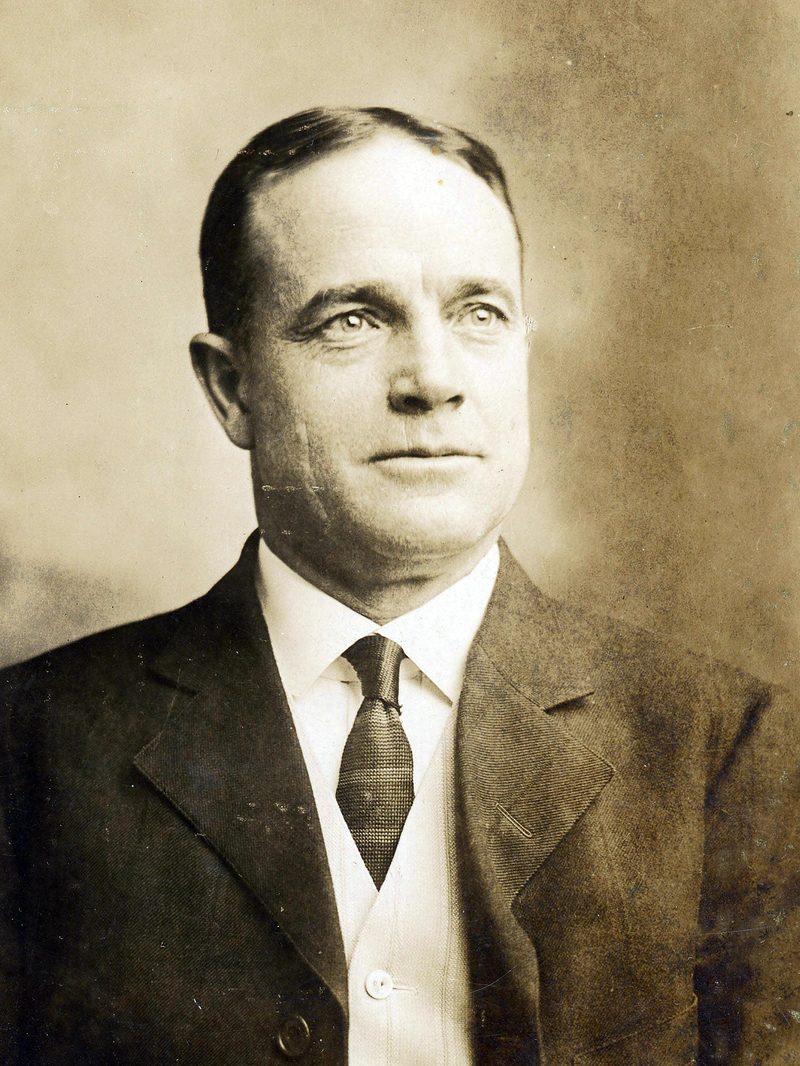
| 43 Quotes | |
| Born as | William Ashley Sunday |
| Occup. | Clergyman |
| From | USA |
| Born | November 19, 1862 |
| Died | November 6, 1935 Chicago, Illinois, United States |
| Aged | 72 years |
| Cite | |
Citation Formats
APA Style (7th ed.)
Billy sunday biography, facts and quotes. (2026, February 11). FixQuotes. https://fixquotes.com/authors/billy-sunday/
Chicago Style
"Billy Sunday biography, facts and quotes." FixQuotes. February 11, 2026. https://fixquotes.com/authors/billy-sunday/.
MLA Style (9th ed.)
"Billy Sunday biography, facts and quotes." FixQuotes, 11 Feb. 2026, https://fixquotes.com/authors/billy-sunday/. Accessed 5 Mar. 2026.
Early Life and Background
William Ashley "Billy" Sunday was born on November 19, 1862, near Ames, Iowa, into the raw aftermath of the Civil War. His father, William Sunday, a Union soldier, died of disease in 1862 before his son could know him, leaving the family with grief and precarity that would later surface in Sunday's lifelong insistence on self-discipline, thrift, and moral boundaries. He grew up amid prairie hardship, where survival depended on labor, community reputation, and an almost physical sense of right and wrong.In the 1870s the Sundays fell into deeper poverty; Billy and an older brother spent time at the Iowa Soldiers Orphans Home in Davenport. That institutional childhood - equal parts shelter and abandonment - shaped the adult evangelist who could move easily between tenderness and hard-edged rebuke. The boy learned to perform for attention, to compete, and to read a crowd's mood, skills that later translated into the kinetic platform style that made him the most famous revivalist of his generation.
Education and Formative Influences
Sunday's formal schooling was limited, but his education in American life was expansive: farm work, small-town baseball, and the moral language of Midwestern Protestantism. As a young man he became a professional ballplayer, developing speed, stamina, and showmanship; baseball also immersed him in the traveling culture of late-19th-century cities where saloons, gambling, and celebrity blurred into temptation. A decisive turning point came in Chicago in the mid-1880s, when a street-corner gospel mission and the YMCA offered him a conversion experience and a new social world - one where manhood meant sobriety, restitution, and public witness rather than mere endurance.Career, Major Works, and Turning Points
After playing in Major League Baseball for teams including the Chicago White Stockings and Pittsburgh, Sunday left the sport in 1891 to work for the YMCA and soon began preaching. By the mid-1890s he was a full-time evangelist, and in the 1900s-1910s his campaigns became a national phenomenon: temporary wooden tabernacles, mass choirs, organized "trail-hitting" invitations, and sermons that fused Bible citation with slang, jokes, and athletic pantomime. His revivals in cities such as Philadelphia (1915-1916) drew enormous crowds and produced widely reported conversion totals, while his political intensity aligned him with Progressive Era reform, especially temperance; by World War I he was a patriotic pulpiteer as well as a revivalist, though critics charged him with simplification, sensationalism, and a revival industry that looked uncomfortably modern.Philosophy, Style, and Themes
Sunday's inner life was driven by a fear of wasted grace and a hunger for moral clarity - understandable in a man who had watched family stability dissolve and then rebuilt himself through public conversion. He preached a stark anthropology: people were not merely mistaken but endangered by habits that could harden into fate. “Temptation is the devil looking through the keyhole. Yielding is opening the door and inviting him in”. The metaphor is domestic and intimate, revealing how he imagined sin: not abstract philosophy, but a threshold moment where willpower either protects the home or lets darkness cross the sill.His theology was old-fashioned evangelical Protestantism delivered in the idiom of mass culture. “I believe the Bible is the word of God from cover to cover”. That sentence explains both his confidence and his combativeness: certainty made him persuasive, but it also narrowed his tolerance for nuance, turning sermons into verdicts. Yet he was not merely railing at outsiders; he distrusted respectability that masked spiritual inertia. “Going to church doesn't make you a Christian any more than going to a garage makes you an automobile”. It is a comedian's line with a diagnostician's purpose - Sunday knew how easily institutions substitute for inner change, and he built an altar-call culture to force decision, public commitment, and a felt break with the past.
Legacy and Influence
Billy Sunday died on November 6, 1935, after the peak years of his influence had waned in the Depression era, when radio, new entertainment forms, and changing religious sensibilities altered the revival landscape. Still, his imprint on American evangelicalism endured: he helped standardize the big-city campaign as an organized machine, modeled a muscular, masculine piety for an age anxious about urban vice, and linked personal conversion to public reform in ways that shaped Prohibition-era activism. Later evangelists inherited his stagecraft, his certainty, and his talent for translating doctrine into street language - along with the controversy he never escaped, the question of whether mass revivalism deepened faith or merely counted it.Our collection contains 43 quotes written by Billy, under the main topics: Witty One-Liners - Motivational - Ethics & Morality - Justice - Sarcastic.