
Bishweshwar Prasad Koirala Biography Quotes 5 Report mistakes
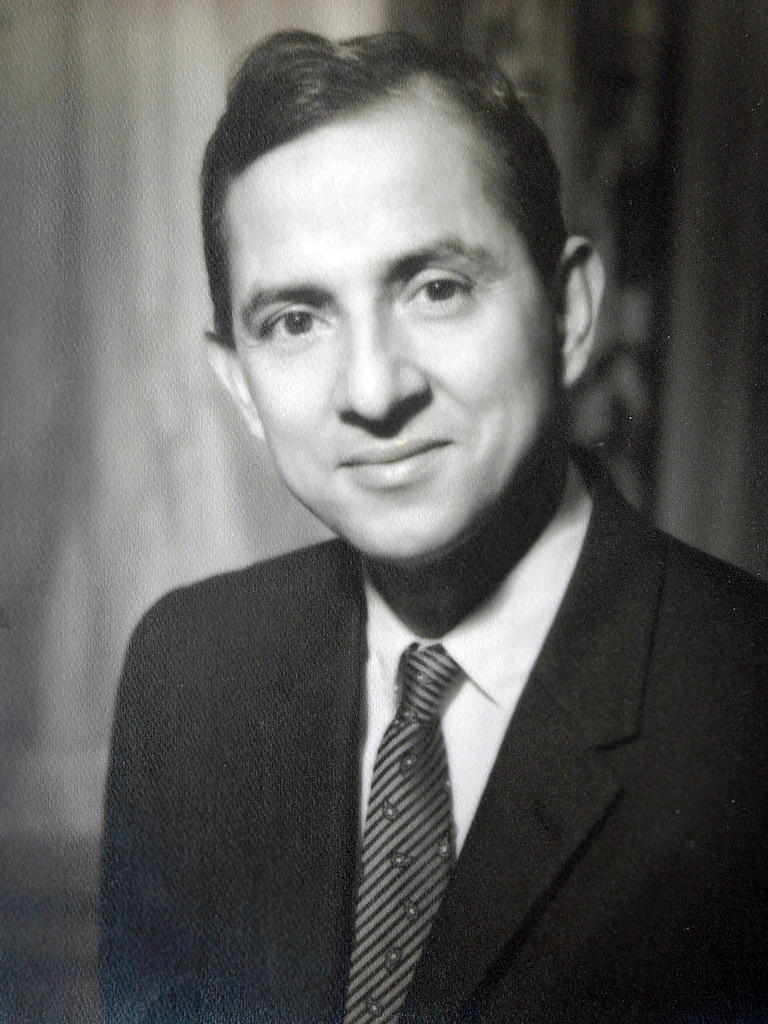
| 5 Quotes | |
| Known as | B. P. Koirala |
| Native name | विश्वेश्वरप्रसाद कोइराला |
| Occup. | Politician |
| From | Nepal |
| Spouse | Sushila Koirala |
| Born | September 8, 1914 Benares (Varanasi), United Provinces, British India (now Uttar Pradesh, India) |
| Died | July 21, 1982 Kathmandu, Nepal |
| Cause | Throat cancer |
| Aged | 67 years |
| Cite | |
Citation Formats
APA Style (7th ed.)
Bishweshwar prasad koirala biography, facts and quotes. (2026, February 15). FixQuotes. https://fixquotes.com/authors/bishweshwar-prasad-koirala/
Chicago Style
"Bishweshwar Prasad Koirala biography, facts and quotes." FixQuotes. February 15, 2026. https://fixquotes.com/authors/bishweshwar-prasad-koirala/.
MLA Style (9th ed.)
"Bishweshwar Prasad Koirala biography, facts and quotes." FixQuotes, 15 Feb. 2026, https://fixquotes.com/authors/bishweshwar-prasad-koirala/. Accessed 30 Mar. 2026.
Early Life and Background
Bishweshwar Prasad (B.P.) Koirala was born in 1914 in Banaras (Varanasi), British India, into a Nepali family whose political imagination was already sharpened by exile and censorship. His father, Krishna Prasad Koirala, a merchant-turned-dissident, had been pushed out of Nepal after clashing with the Rana oligarchy that ruled the kingdom through a hereditary prime ministership. Growing up among Nepali diasporic networks in India, B.P. absorbed an early lesson that Nepali identity could be both intensely local and unavoidably transnational - shaped as much by Kathmandu as by the migrant corridors of the Ganges plain.The world of his childhood was one in which Nepal remained formally sovereign yet politically frozen: the Shah monarchy stood, but power lay with the Ranas, and modern parties, unions, and a free press were treated as threats. The Banaras milieu exposed Koirala to anti-colonial ferment, Congress-era mass politics, and a cosmopolitan literary culture. That mixture - Nepali grievance, Indian democratic experimentation, and a keen sensitivity to ordinary lives - became the emotional bedrock of a leader who would later argue that Nepal could not modernize by decree alone.
Education and Formative Influences
Koirala studied in India, completing higher education in Banaras and then Calcutta, where he encountered socialist and democratic currents and the disciplined techniques of underground politics. He was influenced by the Indian independence movement and by thinkers who linked civil liberties to economic justice; in practice, he learned organization through student circles, labor contacts, and the rough ethics of activism under surveillance. These years also formed his dual vocation: politics as a fight for institutions, and literature as a way to record the inner cost of history on individual bodies and families.Career, Major Works, and Turning Points
In the 1940s Koirala emerged as a principal organizer of Nepal's democratic movement, helping found the Nepali Congress (1947) and building a party capable of joining street agitation to international diplomacy. After the 1950-51 revolution that ended Rana rule, he served in government and gradually became the most persuasive voice for constitutional democracy under King Tribhuvan and then King Mahendra. The high point came with Nepal's first parliamentary elections in 1959, when the Nepali Congress won and Koirala became prime minister; he pursued land reform, administrative modernization, and development planning while trying to tether the palace to democratic norms. The turning point arrived in December 1960 when Mahendra dissolved parliament, banned parties, and jailed Koirala, inaugurating the partyless Panchayat system. Much of Koirala's later life was defined by imprisonment, periodic exile in India, and renewed attempts at negotiation and resistance until his return to Nepal in 1976 and his death in 1982 in Kathmandu - a life arced between electoral legitimacy and the long shadow of royal autocracy.Philosophy, Style, and Themes
Koirala's politics fused democratic procedure with a moral claim: freedom had to deliver dignity. He argued that elections without social improvement would not survive the pressure of hunger and humiliation: “If the countries that have only recently embraced democratic systems fail to solve the problem of poverty in time, freedom and sovereignty will have no meaning”. For him, development was not an authoritarian shortcut but the very test of democratic credibility, a view he condensed into a campaign-ready formulation: "So our slogan is "Democracy for development“.” The psychology behind these lines is pragmatic rather than utopian - a leader who knew how quickly popular hope curdles into cynicism when institutions feel ceremonial and the poor experience liberty as merely rhetorical.His temperament also carried an internationalist nerve and a novelist's sensitivity to fracture. He saw Nepal's democratic struggle as part of a larger moral ecology: “Democracy is indivisible; if you want democracy at home, you cannot afford to neglect all struggles for it”. That belief reflected his own biography, forged in a cross-border world where Nepali politics depended on Indian refuge, global attention, and the circulation of ideas. In his fiction - including stories and novels such as Sumnima and Modiaain - he explored desire, caste and ethnic boundaries, gendered constraint, and the loneliness of modern subjectivity, often with psychological realism rare in Nepali prose of his time. The statesman and the writer were not competing identities: his literary inwardness helped him grasp that political systems fail not only from flawed constitutions but from wounded human relations, fear, and the seductions of power.
Legacy and Influence
Koirala endures as the emblematic democrat of modern Nepal: the first elected prime minister, a party builder, and a dissident who treated imprisonment as a continuation of politics by other means. His life set a template for later movements that challenged the Panchayat order and eventually restored multiparty democracy in 1990, even as subsequent decades revealed how hard it is to reconcile royal authority, party competition, and equitable development. As a writer he helped legitimate the idea that Nepali literature could probe interior life with modern psychological depth, making his cultural influence extend beyond party history. In memory he remains both a promise and a warning - proof that democratic legitimacy can be won, and that it can be revoked when institutions are thin and power is personalized.Our collection contains 5 quotes written by Bishweshwar, under the main topics: Freedom - Kindness - Tough Times.
Source / external links