
Bjørnstjerne Bjørnson Biography Quotes 7 Report mistakes
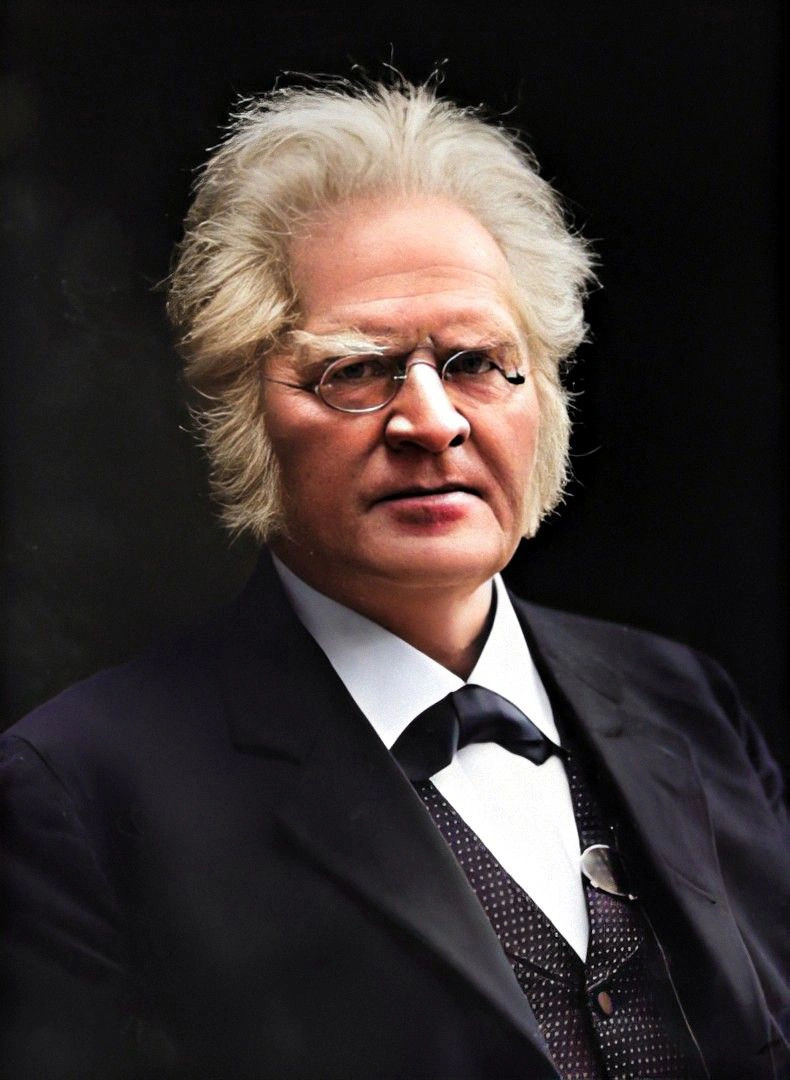
| 7 Quotes | |
| Born as | Bjørnstjerne Martinius Bjørnson |
| Occup. | Poet |
| From | Norway |
| Born | December 8, 1832 Kvikne, Norway |
| Died | April 26, 1910 Paris, France |
| Aged | 77 years |
| Cite | |
Citation Formats
APA Style (7th ed.)
Bjørnstjerne bjørnson biography, facts and quotes. (2026, February 11). FixQuotes. https://fixquotes.com/authors/bjornstjerne-bjornson/
Chicago Style
"Bjørnstjerne Bjørnson biography, facts and quotes." FixQuotes. February 11, 2026. https://fixquotes.com/authors/bjornstjerne-bjornson/.
MLA Style (9th ed.)
"Bjørnstjerne Bjørnson biography, facts and quotes." FixQuotes, 11 Feb. 2026, https://fixquotes.com/authors/bjornstjerne-bjornson/. Accessed 12 Feb. 2026.
Early Life and Background
Bjoranstjerne Martinius Bjornson was born on 8 December 1832 in Kvikne, in the Orkdal valley of central Norway, the son of a Lutheran pastor. The parsonage world gave him both a moral vocabulary and a panoramic view of rural life - farm labor, seasonal hardship, and the stubborn dignity of small communities - that later became the emotional engine of his early "peasant tales". When the family moved to Nesset in Romsdal in 1837, the fjord landscape and the speech of the countryside deepened his sense that a national culture could be built from local voices.He came of age as Norway stirred with nineteenth-century nation-building after the 1814 constitution and in uneasy union with Sweden. The era prized public speech, newspapers, and associations, and Bjornson absorbed the conviction that literature should not merely mirror society but help make it. Even as a young man he carried an outward-facing temperament: quick to admire, quick to argue, and drawn to the idea that a writer could function as a tribune - a role he would embrace, sometimes at personal cost, for the rest of his life.
Education and Formative Influences
In the early 1850s he went to Christiania (Oslo), where he moved through student circles, journalism, and theater work rather than a settled academic path, reading widely in Scandinavian romantic nationalism and contemporary European realism. He learned the craft of address - how a poem, a speech, or a stage scene could rally a room - and he studied the new public sphere of the press, which rewarded forceful clarity and punished hesitation. The example of Henrik Wergeland's civic lyric, the ferment around Norwegian language and identity, and the discipline of theatrical rehearsal all pushed him toward an art that was meant to act on living audiences, not only on silent readers.Career, Major Works, and Turning Points
Bjornson broke through in the late 1850s and early 1860s with the rural narratives that made his reputation - Synnove Solbakken (1857), Arne (1859), and En glad gut (1860) - works that romanticize the countryside while insisting on moral choice and social responsibility. He became closely tied to the theater as director and critic and later widened his range into historical drama and then the contemporary problem play, most famously the social drama En fallit (A Bankruptcy, 1875), which helped usher Scandinavian literature toward modern realism. Alongside fiction and drama ran a parallel public career: he wrote the lyrics that became Norway's national anthem, "Ja, vi elsker dette landet" (1864), and spent decades as an outspoken liberal voice on parliamentary reform, education, and the rights of the individual. In 1903 he received the Nobel Prize in Literature, an international confirmation of what Norway already knew - that his pen and his platform had become inseparable.Philosophy, Style, and Themes
Bjornson's inner life was a tension between lyrical idealism and a hardening insistence on actuality. He could be sentimental about the nation and the home, yet he distrusted mere rhetoric when it became self-serving. That impatience surfaces in his blunt reminder that "Life does not consist of words. Life is reality". It reads like a rebuke to his own gift: the orator-poet policing himself, determined that language earn its keep through ethical consequence - in family decisions, in economic truth, and in civic courage.His style moved from folklike clarity toward debate on the page: characters speak as if before a community, testing each other's motives under social light. He admired fellowship as a practical force - "Two people shorten the road". - and his plots often turn on whether solidarity becomes responsibility or mere comfort. Yet he was also alert to the evasions of moral posturing, captured in the sardonic observation, "Nothing is impossible for the man who does not have to do it himself". That sting helps explain his recurring targets: hypocrisy in public life, the easy virtue of spectators, and the gap between national ideals and the personal labor required to fulfill them.
Legacy and Influence
Bjornson died on 26 April 1910, after a final period spent partly abroad, and was honored as a national figure whose funeral became a civic event. His legacy lies in the fusion he modeled: the poet as institution-builder, the dramatist as social diagnostician, the celebrity intellect willing to risk popularity for reform. While later writers often resisted his grand rhetoric, they inherited his demand that Norwegian literature engage the living questions of its time, and they continued to measure public conscience against the standard his best work set - that art, to be worthy, must become a form of action.Our collection contains 7 quotes written by Bjørnstjerne, under the main topics: Witty One-Liners - Friendship - Life - Kindness - Self-Improvement.
Frequently Asked Questions
- Bjornson pronunciation: Bjørnson is pronounced 'Byurn-son'.
- Bjornson meaning: The surname 'Bjørnson' means 'son of Bjørn' in Norwegian.
- Bjornson The Mountain: Bjørnstjerne Bjørnson wrote a story called 'The Mountain Maid' which explores themes of nature and Norwegian rural life.
- Over Ævne Bjørnstjerne Bjørnson: 'Over Ævne' is a two-part drama series by Bjørnstjerne Bjørnson, focusing on themes of faith and human limitations.
- Bjørnstjerne Bjornson pronunciation: Pronunciation: 'Byurn-styer-neh Byurn-son'.
- Bjørnstjerne Bjørnson poems: Bjørnstjerne Bjørnson's notable poems include 'Ja, vi elsker dette landet,' which is the national anthem of Norway, and 'En Ballade om Kongen,' among others.
- How old was Bjørnstjerne Bjørnson? He became 77 years old
Bjørnstjerne Bjørnson Famous Works
- 1895 Beyond Our Powers II (Play)
- 1889 In God's Ways (Novel)
- 1883 Beyond Our Powers (Play)
- 1875 The Bankrupt (Pocket book)
- 1872 Sigurd Jorsalfar (Play)
- 1868 The Fisher Maiden (Novel)
- 1860 A Happy Boy (Novel)
- 1858 The Heritage of the Kurts (Novel)
- 1857 Synnøve Solbakken (Novel)
Source / external links