
Black Kettle Biography Quotes 9 Report mistakes
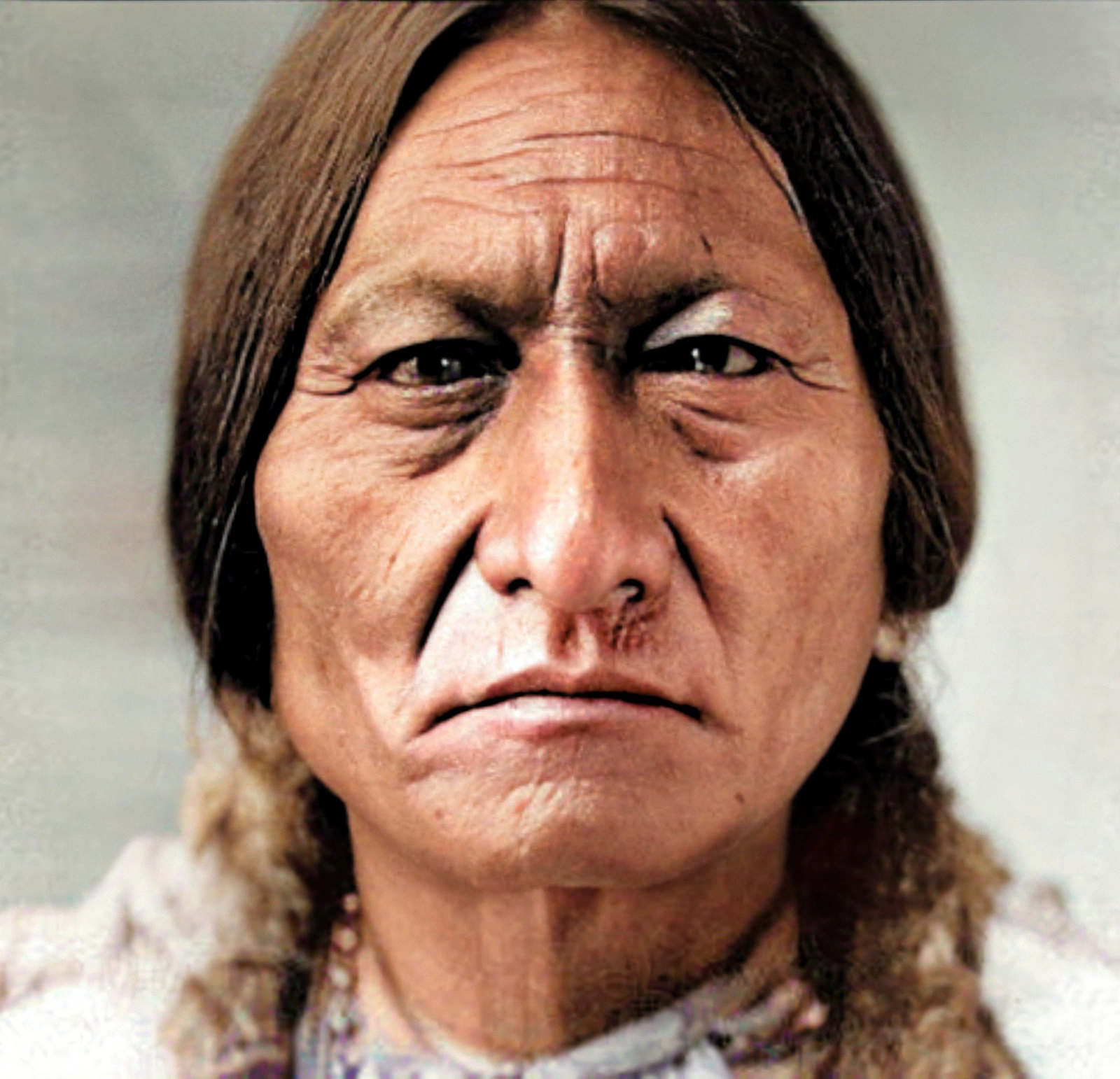
| 9 Quotes | |
| Born as | Mo'ohtavetoo'o |
| Occup. | Leader |
| From | USA |
| Born | 1803 Black Hills, French Louisiana (now South Dakota) |
| Died | November 27, 1868 Washita River (now Cheyenne, Oklahoma) |
| Cause | Killed in battle |
| Cite | |
Citation Formats
APA Style (7th ed.)
Black kettle biography, facts and quotes. (2026, March 3). FixQuotes. https://fixquotes.com/authors/black-kettle/
Chicago Style
"Black Kettle biography, facts and quotes." FixQuotes. March 3, 2026. https://fixquotes.com/authors/black-kettle/.
MLA Style (9th ed.)
"Black Kettle biography, facts and quotes." FixQuotes, 3 Mar. 2026, https://fixquotes.com/authors/black-kettle/. Accessed 7 Mar. 2026.
Early Life and Background
Mo'ohtavetoo'o, known to Americans as Black Kettle, was born around 1803 into the Southern Cheyenne world of the central Plains, a mobile society organized around extended families, council leadership, and the reciprocal obligations of the warrior societies. His youth unfolded on the buffalo range that stretched across what are now Colorado, Kansas, and the Oklahoma Panhandle, where wealth was measured in horses and kinship, and survival depended on seasonal movement, trade, and diplomacy as much as on battle.By the time he reached adulthood, the Plains were already tightening around the Cheyenne. Smallpox waves, the accelerating hide trade, and the growing traffic of the Santa Fe Trail pushed new goods and new dangers into camp life. Intertribal conflict and raids were constants, yet so were negotiated access to hunting grounds and the ritual work of restoring balance after violence. Black Kettle emerged from that world as a man marked less by swagger than by steadiness - a temperament shaped by the Cheyenne expectation that leaders absorb strain for the people, even when the horizon darkens.
Education and Formative Influences
Black Kettle did not receive schooling in the Euro-American sense; his education was the Cheyenne education of attention and responsibility. He learned governance through councils, persuasion through patient speaking, and courage through the discipline of the warrior societies that upheld order within camp as much as they defended it from enemies. He also learned, early, the hard arithmetic of frontier power: traders, soldiers, and federal agents did not merely arrive - they redrew boundaries, redefined "peace", and demanded signatures that carried consequences far beyond a single season.Career, Major Works, and Turning Points
Black Kettle became one of the principal peace chiefs of the Southern Cheyenne during the era when the United States shifted from overland passage to territorial control. In 1861 he was among those associated with the Fort Wise Treaty, a controversial agreement that shrank Cheyenne and Arapaho land to a small reservation along the Arkansas River and split opinion within the tribes. He then sought to keep his band out of the widening Civil War-era violence on the Plains, traveling to councils and military posts to secure recognition as "friendly" even as settler panic and militia politics erased distinctions. His strategy collapsed in November 1864 at Sand Creek in Colorado Territory, where Colonel John M. Chivington's troops attacked a village that believed itself protected; Black Kettle survived, but the massacre radicalized many and made his commitment to negotiation appear tragically naive. Still he persisted through the 1865 councils and the 1867 Medicine Lodge negotiations, trying to anchor his people to promised provisions and safety. On November 27, 1868, during General Philip Sheridan's winter campaign, Lieutenant Colonel George A. Custer's 7th Cavalry struck Black Kettle's camp on the Washita River in Indian Territory; Black Kettle and his wife were killed as they tried to flee, and the attack became a template for coercing Plains peoples through destruction of villages and food.Philosophy, Style, and Themes
Black Kettle's inner life is best approached through the posture he repeatedly assumed in public: not submission, but an insistence that language could still restrain power. He spoke as a leader who believed that clarity and ritualized relationship might prevent catastrophe, telling officials, “I want you to give all these chiefs of the soldiers here to understand that we are for peace, and that we have made peace, that we may not be mistaken by them for enemies”. The phrasing is defensive and weary - a man trying to build a verbal fence around noncombatants in a landscape where uniforms and newspapers often collapsed all Cheyennes into "hostiles". His diplomacy was a form of guardianship, an attempt to make his village legible to an enemy bureaucracy.Yet his peace was never sentimental. It was a strategy of survival rooted in the Cheyenne duty of leaders to secure the camp's continuity, even when pride had to be swallowed. When he addressed American authorities with kinship language - “All we ask is that we have peace with the whites. We want to hold you by the hand. You are our father”. - he was translating Cheyenne expectations of reciprocal obligation into terms officials claimed to understand. The tragedy is that the translation was rarely honored. After Sand Creek, his public words also reveal the psychological cost of persevering through betrayal: “I once thought that I was the only man that persevered to be the friend of the white man... it is hard for to believe the white man any more”. That sentence holds the biography in miniature - a conscience trained toward accommodation, forced to confront the erosion of trust as policy and profit outran promises.
Legacy and Influence
Black Kettle endures as a symbol of peace pursued under impossible conditions, and as a witness to how the United States often treated negotiation as a stage prop rather than a binding covenant. In Cheyenne memory and in the broader American reckoning with Sand Creek and Washita, his life complicates the frontier myth that divides the Plains into "war chiefs" and "peace chiefs" as if either role guaranteed safety. His influence is less a program than a moral record: that diplomacy can be brave, that restraint can be a form of leadership, and that the language of peace - repeatedly offered, repeatedly ignored - becomes, over time, an indictment written in the very words meant to prevent bloodshed.Our collection contains 9 quotes written by Black, under the main topics: Peace - Native American Sayings - War - Betrayal.
Source / external links