
Blanche Lincoln Biography Quotes 19 Report mistakes
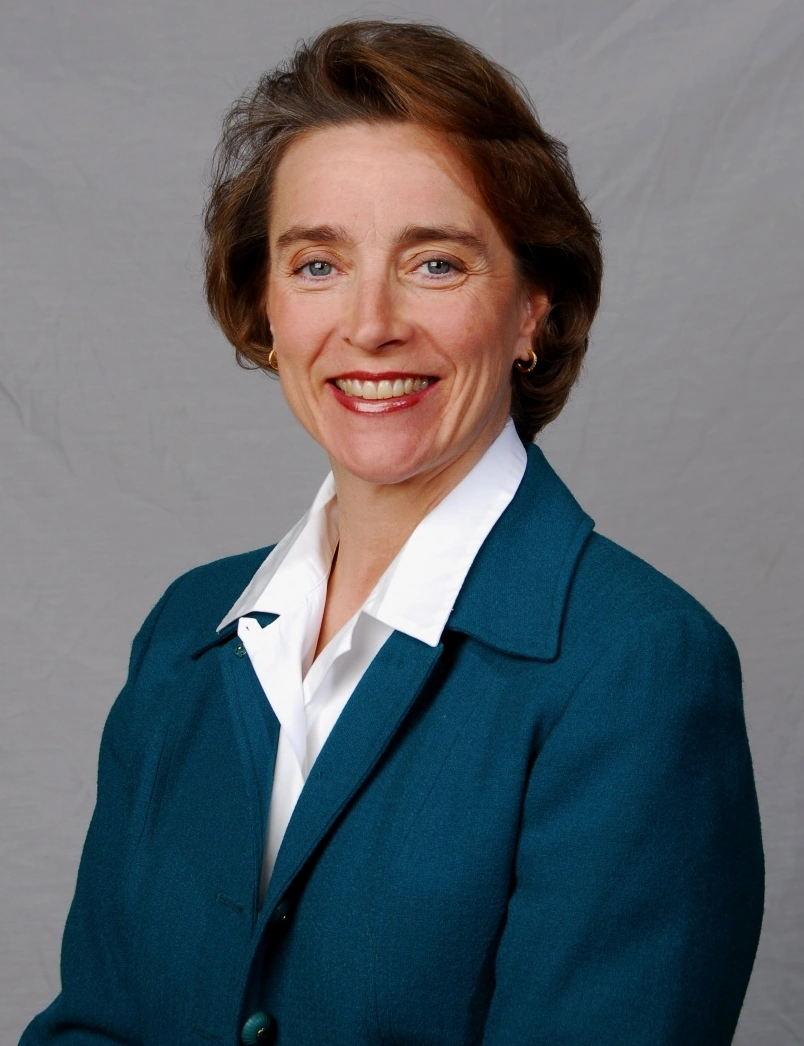
| 19 Quotes | |
| Born as | Blanche Meyers Lambert Lincoln |
| Occup. | Politician |
| From | USA |
| Born | September 30, 1960 Helena, Arkansas |
| Age | 65 years |
| Cite | |
Citation Formats
APA Style (7th ed.)
Blanche lincoln biography, facts and quotes. (2026, February 11). FixQuotes. https://fixquotes.com/authors/blanche-lincoln/
Chicago Style
"Blanche Lincoln biography, facts and quotes." FixQuotes. February 11, 2026. https://fixquotes.com/authors/blanche-lincoln/.
MLA Style (9th ed.)
"Blanche Lincoln biography, facts and quotes." FixQuotes, 11 Feb. 2026, https://fixquotes.com/authors/blanche-lincoln/. Accessed 12 Feb. 2026.
Early Life and Roots in Arkansas
Blanche Meyers Lambert Lincoln was born in 1960 in Helena, Arkansas, in the heart of the Mississippi Delta. The region's agricultural economy shaped her early outlook and later priorities in public service. Growing up amid farms and small businesses, she developed an appreciation for the challenges faced by producers, rural health providers, and working families. Those formative experiences in Phillips County anchored a pragmatic approach that would define her career: a focus on agriculture, job creation, and the social safety net that rural communities often rely upon.Entry into Public Service
After college, she moved to Washington to work on Capitol Hill, joining the staff of U.S. Representative Bill Alexander of Arkansas. The experience gave her an inside view of federal policymaking on trade, farm policy, and rural development. It also introduced her to the coalition-building necessary to advance legislation. Mentors and colleagues from that period, including senior Arkansas Democrats and committee staff, encouraged her interest in running for office at a moment when change was sweeping through the House in the wake of ethics controversies and demands for reform.U.S. House of Representatives
In 1992, Blanche Lambert (as she was then known) mounted a primary challenge to her former boss, Bill Alexander, in Arkansas's 1st Congressional District. Running as a fresh voice focused on accountability and economic development, she won the nomination and the general election, entering the 103rd Congress in 1993. In the House, she affiliated with centrist Democrats and the Blue Dog Coalition, reflecting the preferences of a district that mixed farm towns, river ports, and small manufacturing centers. She worked on issues that mattered to the Delta: crop insurance reliability, disaster assistance, rural hospital stability, and infrastructure along the Mississippi. After two terms, she chose not to seek reelection in 1996, stepping away to begin a family.
Journey to the United States Senate
In 1998, with Senator Dale Bumpers retiring, she returned to politics, running statewide as Blanche Lambert Lincoln. She won the open seat, defeating Republican nominee Fay Boozman, and became one of the youngest women ever elected to the U.S. Senate. Her victory extended the Arkansas Democratic tradition associated with figures such as Dale Bumpers and David Pryor while reflecting the centrist, pro-growth orientation that had helped Bill Clinton win the presidency earlier in the decade. She was reelected in 2004, signaling broad support from farm counties and suburban voters who viewed her as a pragmatic voice.Committee Work and Leadership
Lincoln served on several influential committees, most notably the Senate Committee on Agriculture, Nutrition, and Forestry and the Senate Finance Committee. Those assignments positioned her at the crossroads of farm policy, trade, tax, and health care. When Tom Harkin shifted committee responsibilities in 2009, she became chair of the Agriculture Committee. As chair, she worked closely with ranking member Saxby Chambliss, a Republican from Georgia, reflecting her belief that complex farm, forestry, and nutrition issues required bipartisan solutions. She also collaborated with Senate leaders, including Max Baucus on Finance and Chris Dodd on banking and financial reform, to align agriculture and financial market oversight.Policy Focus and Key Legislation
Agriculture and nutrition were central to Lincoln's agenda. She pressed for a safety net that balanced price supports with conservation, crop insurance, and disaster relief. She advocated for nutrition programs that responded to both rural and urban food insecurity, and she helped steer a child nutrition reauthorization through the Agriculture Committee, updating standards and strengthening access for low-income families. Her background from the Delta informed her defense of the Supplemental Nutrition Assistance Program while also insisting on accountability in program administration.In the aftermath of the financial crisis, Lincoln led the Agriculture Committee's work on derivatives oversight as Congress debated comprehensive financial reform. The derivatives title associated with her name sought to push opaque swaps markets toward central clearing and exchange trading, increase capital and margin requirements, and reduce systemic risk in institutions whose activities could threaten the broader economy. Working with Chris Dodd in the Senate and counterparts of Barney Frank in the House, she negotiated provisions that affected major banks, end users, and agricultural hedgers. The result was a tougher, more transparent framework folded into what became the Dodd-Frank Act, reflecting her view that properly functioning commodity and derivatives markets are essential for farmers, merchandisers, and consumers.
Health care was another crucible. As a Finance Committee member during the Affordable Care Act debate, Lincoln opposed a government-run public option while supporting insurance reforms, coverage expansion, and deficit-conscious financing. Her votes helped initiate debate and pass the final package, a stance that required careful navigation between her party's leadership, including President Barack Obama, and a conservative-leaning electorate at home.
2010 Campaign and Political Crosscurrents
By 2010, the political environment in Arkansas had shifted markedly. Lincoln faced a high-profile primary challenge from Lieutenant Governor Bill Halter, backed by national labor and progressive organizations. With strong support from Arkansas allies and prominent Democrats such as President Barack Obama and former President Bill Clinton, she won a hard-fought runoff. The general election, however, unfolded amid a Republican wave. Congressman John Boozman, a Republican from northwest Arkansas and the brother of her 1998 opponent Fay Boozman, defeated her in November. The loss highlighted the state's realignment and the difficulty centrist Democrats faced in the South during that period.Later Career
After leaving the Senate in 2011, Lincoln remained active in public policy. She founded a Washington-based consulting and government relations practice, advising clients on agriculture, nutrition, trade, and small business concerns. Drawing on relationships built over years with colleagues such as Saxby Chambliss, Tom Harkin, and Chris Dodd, she worked to translate complex regulatory and legislative changes into practical guidance for producers, food companies, rural health providers, and community organizations. She also lent her voice to bipartisan efforts aimed at strengthening the rural economy, expanding broadband, and modernizing workforce training in small towns.Personal Life and Legacy
Blanche Lincoln married Steve Lincoln, and the couple's decision to start a family in the mid-1990s shaped her political trajectory as much as any campaign. She often cited parenthood and her Delta roots to explain why she prioritized child nutrition, rural health access, and pragmatic budgeting. Her career is marked by consequential committee leadership, especially on agriculture and financial market oversight; by a centrist approach that sought common ground with Republicans and conservative Democrats; and by resilience during the bruising 2010 cycle, when the support of Arkansas figures like Bill Clinton and national leaders like Barack Obama could not fully offset the state's shifting political winds.For Arkansans who farm, process food, ship commodities, or depend on nutrition programs, Lincoln's tenure left a lasting imprint. Her legislative work on agriculture and derivatives reshaped the rules of markets that touch everything from the price of bread to the stability of small-town banks. And for women in public life, her trajectory from the Delta to the Senate demonstrated how experience rooted in a rural community can drive national policy debates, even in periods of rapid political realignment.
Our collection contains 19 quotes written by Blanche, under the main topics: Witty One-Liners - Ethics & Morality - Justice - Learning - Parenting.
Other people related to Blanche: Marion Berry (Politician), Vic Snyder (Politician)
Source / external links