
Bob Ehrlich Biography Quotes 10 Report mistakes
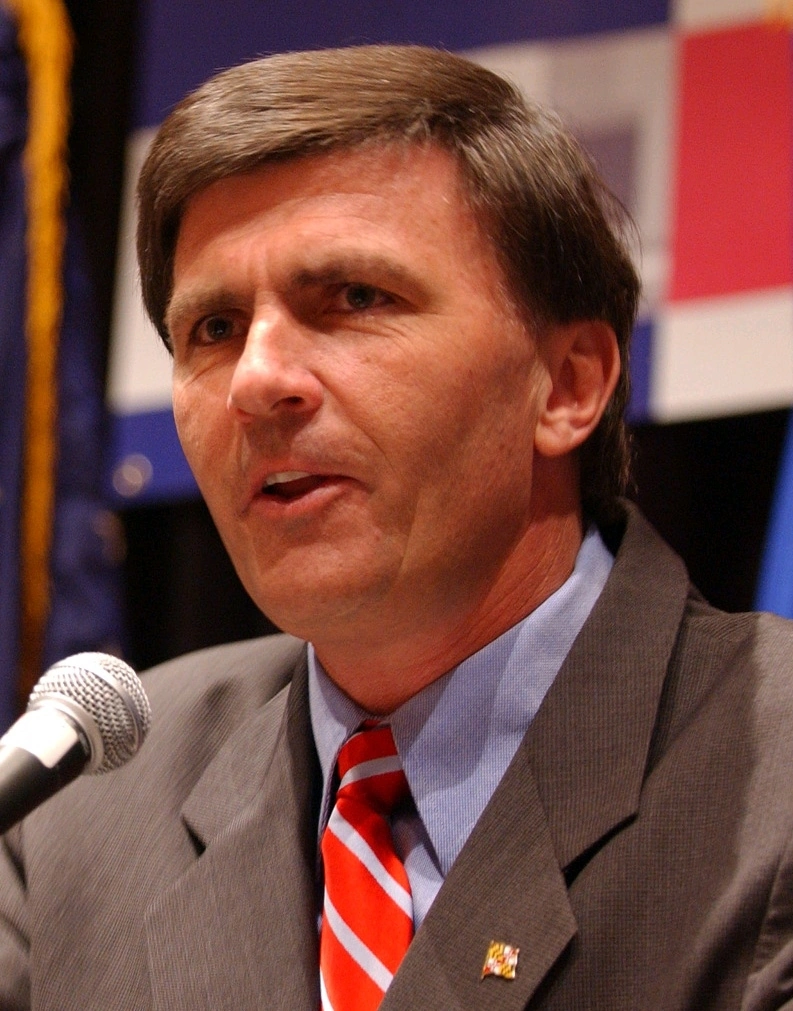
| 10 Quotes | |
| Born as | Robert Leroy Ehrlich, Jr. |
| Occup. | Politician |
| From | USA |
| Born | November 25, 1957 Arbutus, Maryland |
| Age | 68 years |
| Cite | |
Citation Formats
APA Style (7th ed.)
Bob ehrlich biography, facts and quotes. (2026, February 11). FixQuotes. https://fixquotes.com/authors/bob-ehrlich/
Chicago Style
"Bob Ehrlich biography, facts and quotes." FixQuotes. February 11, 2026. https://fixquotes.com/authors/bob-ehrlich/.
MLA Style (9th ed.)
"Bob Ehrlich biography, facts and quotes." FixQuotes, 11 Feb. 2026, https://fixquotes.com/authors/bob-ehrlich/. Accessed 26 Mar. 2026.
Early Life and Background
Robert Leroy Ehrlich, Jr. was born on November 25, 1957, in Baltimore, Maryland, into a city shaped by postwar industrial muscle and the slow re-sorting of American politics after the New Deal. His father, Robert L. Ehrlich, Sr., built a local reputation as a prosecutor and judge, and the household carried the cadences of courthouse talk - rules, argument, and consequences. Growing up amid Baltimore's rowhouse neighborhoods and county suburbs, Ehrlich absorbed both the optimism of the late-1960s boom and the anxieties that followed: crime, inflation, and a distrust of distant government that was beginning to rebrand Republicanism for the Reagan era.Family life became his first political laboratory. The dinner table, in particular, functioned as a training ground where debate was welcomed but accountability mattered - a sensibility that later showed up in his emphasis on responsibility and order rather than ideology for its own sake. Maryland was, and remains, a heavily Democratic state; for a young Republican, ambition required comfort with being outnumbered and an ability to persuade across tribal lines. That early experience of living in the minority helped form Ehrlich's instinct for coalition-building and for presenting himself less as a partisan warrior than as a practical, reform-minded competitor.
Education and Formative Influences
Ehrlich attended Princeton University and later earned his law degree at Wake Forest University, taking shape during a period when politics turned increasingly media-driven and litigation-centered. He entered adulthood as conservatism was moving from movement to governing philosophy, yet Maryland's political culture rewarded moderation and an ability to speak to suburban, union, and urban voters at once. His legal training reinforced habits that would define his public style: narrowing issues, arguing from facts, and using negotiation as a tool rather than a concession. The combination of elite schooling and a Baltimore legal-political lineage gave him both confidence and a sense that public life was an arena with rules - and penalties for those who broke trust.Career, Major Works, and Turning Points
Ehrlich built his early career in Maryland politics before winning a seat in the U.S. House of Representatives from the 2nd District, serving from 1995 to 2003 in the Republican congressional majority era that followed the 1994 "Contract with America" realignment. In Congress he cultivated a brand as a centrist Republican with interest in public safety, economic growth, and pragmatic governance, positioning himself for a larger bet in a state that rarely rewarded his party. That bet paid off in 2002, when he won the governorship as Maryland's first Republican governor in decades (serving 2003-2007), a victory that functioned as both personal breakthrough and case study in how a minority-party candidate can win by stressing competence and change over ideological purity. His governorship was marked by high-visibility fights over taxes, state spending, education, and development, as well as the perennial Maryland challenge of balancing suburban demands with urban needs. Defeated for re-election in 2006, he later sought a comeback, returning to the political stage in a state whose demographics and partisan lean were tilting even more sharply Democratic.Philosophy, Style, and Themes
Ehrlich's political psychology is driven by competition and the belief that politics is a practiced craft, not a mystical calling. “I'm a competitive person”. That simple self-description explains his comfort with adversarial arenas - campaigns, legislative bargaining, and media scrutiny - and it clarifies how he could remain resilient after setbacks. Yet his competitiveness is paired with a surprisingly reflective view of authority: he treats "leadership" less as a slogan than as a quality that must be demonstrated under pressure, observed by voters, and earned repeatedly rather than claimed once. “I don't know what leadership is. You can't touch it. You can't feel it. It's not tangible. But I do know this: you recognize it when you see it”. That line reveals a politician attentive to perception and performance, but also wary of self-mythologizing - a useful posture for a Republican trying to govern a skeptical, Democratic-leaning electorate.His themes consistently return to civic participation and the moral habits that precede policy. “Politics is a contest among people of diverse backgrounds and philosophies, advocating different solutions to common problems. The system only works when principled, energetic people participate”. In practice, this translated into an appeal to independents and soft Democrats: not "join my team", but "join the process". It also hints at the formative family ethos he often invoked - the idea that character and follow-through matter as much as legislation, and that persuasion works best when disagreement is treated as normal rather than sinful. As governor and candidate, he also framed himself as an agent of renewal in a long one-party environment, a message calibrated to Maryland's appetite for reform without revolution. “We're betting, at this place and this time, we have people ready for change in the state of Maryland”. The emphasis is less on ideology than on timing, mood, and the collective "we" - a coalition strong enough, briefly, to disrupt the state's default alignment.
Legacy and Influence
Ehrlich's enduring significance lies in proving that a Republican could still win statewide in modern Maryland by combining personal accessibility, disciplined messaging, and a moderate governing posture, even as national polarization hardened partisan identities. His career became a reference point for later candidates studying coalition politics in deep-blue states: how to speak to suburban concerns, how to frame "change" without threatening the state's civic identity, and how to govern when the legislature is controlled by the other party. Though his tenure did not permanently reorder Maryland's partisan map, it left a durable lesson about political possibility - that personality, positioning, and a credible argument for competence can sometimes overcome registration numbers, at least for one consequential election cycle.Our collection contains 10 quotes written by Bob, under the main topics: Motivational - Leadership - Reason & Logic - Honesty & Integrity - Science.
Source / external links