
Bob Gibson Biography Quotes 4 Report mistakes
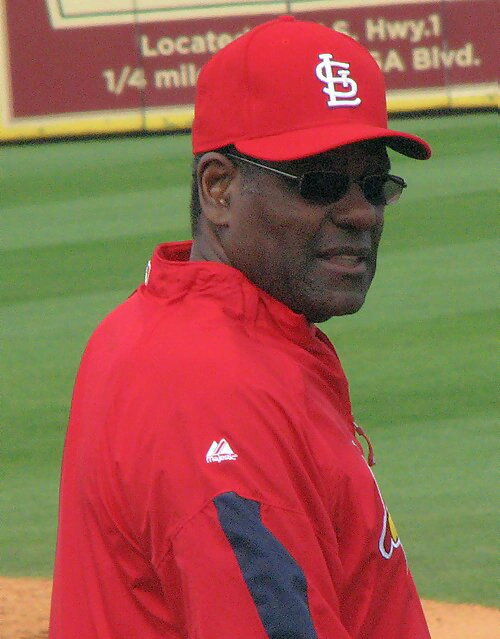
Attr: Monowi, CC BY-SA 3.0
| 4 Quotes | |
| Born as | Robert Gibson |
| Occup. | Athlete |
| From | USA |
| Born | November 9, 1935 Omaha, Nebraska, United States |
| Died | October 2, 2015 Omaha, Nebraska, United States |
| Cause | pancreatic cancer |
| Aged | 79 years |
| Cite | |
Citation Formats
APA Style (7th ed.)
Bob gibson biography, facts and quotes. (2026, February 11). FixQuotes. https://fixquotes.com/authors/bob-gibson/
Chicago Style
"Bob Gibson biography, facts and quotes." FixQuotes. February 11, 2026. https://fixquotes.com/authors/bob-gibson/.
MLA Style (9th ed.)
"Bob Gibson biography, facts and quotes." FixQuotes, 11 Feb. 2026, https://fixquotes.com/authors/bob-gibson/. Accessed 27 Mar. 2026.
Early Life and Background
Robert "Bob" Gibson was born in 1935 in Omaha, Nebraska, and came of age in a community shaped by both economic hardship and segregation. The youngest in a large family, he grew up with the steadying presence of his mother and older siblings, who encouraged his ambitions and helped him channel his energy into sports. Omaha playgrounds and school gyms became his proving grounds, places where, despite limited resources, he could test himself against older players and learn the discipline that would define his life.Education and Two-Sport Promise
As a teenager he distinguished himself in both baseball and basketball, talents that earned him the chance to continue in college. At the collegiate level he sharpened his competitive edge, balancing classrooms with the court and the diamond, and gaining a reputation for tenacity. Basketball offered immediate opportunities, and for a time he toured with the Harlem Globetrotters, a brief but memorable chapter that showcased his athletic range and poise under pressure. Yet baseball, with its intricate duels and the solitary burden borne by a pitcher, drew him more powerfully.Climbing to the Major Leagues
Gibson signed with the St. Louis Cardinals organization and debuted in the major leagues in 1959. The early years were uneven, a period of adjustments and occasional setbacks. He refined his delivery, toughened his approach to hitters, and learned how to command games at the highest level. Teammates like catcher Tim McCarver became important collaborators in shaping his pitch selection and game plans. Club leaders and coaches recognized his intensity, even when it made him demanding in the clubhouse as well as on the mound.Breakthrough and World Series Glory
By the early 1960s he had become the Cardinals ace. In the 1964 World Series against the New York Yankees, he shouldered an extraordinary workload and delivered in decisive moments, helping St. Louis to a championship and earning the Series Most Valuable Player award. Three years later he was central again, guiding the Cardinals through the 1967 season and another World Series title, where his unmatched stamina and willpower earned him a second Series MVP. Teammates such as Lou Brock, Curt Flood, Orlando Cepeda, and Mike Shannon were integral to those championship teams, and the clubhouse bonds they forged, particularly with steady veterans like Bill White and the battery trust with McCarver, helped Gibson sustain his edge through long seasons.The Year of the Pitcher
In 1968, Gibson delivered one of the most dominant pitching seasons in baseball history. He won the National League Cy Young Award and the league's Most Valuable Player award, and his astonishing run helped define what came to be known as the Year of the Pitcher. His complete command of the fastball and slider, paired with a fierce competitiveness, produced numbers so overwhelming that the sport recalibrated afterward, lowering the mound and redefining the strike zone. In the 1968 World Series he struck out a record 17 batters in a single game, an enduring measure of his power and precision under the brightest lights.Resilience and Persona
Gibson was revered for his toughness. A line drive fractured his leg in the summer of 1967, yet he came back that year to lead St. Louis to its title. His glare from the mound, his refusal to concede the inside part of the plate, and his uncompromising standards became signature traits. Yet those who played with him also saw a teammate who prepared meticulously, showed up for others, and shared hard-earned insights. His relationships with teammates like Brock and Flood extended beyond the field; he respected Flood's resolve during the fight that ultimately reshaped the economics of the game, and he stood with fellow Cardinals as they navigated the pressures and expectations of a championship era.Later Career and Milestones
Through the 1970 season he again claimed the Cy Young Award, proving his dominance was no isolated burst. He accumulated multiple All-Star selections and Gold Glove awards, marking him as both overpowering and graceful in the field. In 1974 he became the first National League pitcher to record 3, 000 career strikeouts, a milestone achieved with his customary blend of force and composure. Catchers who worked with him in later years, including Ted Simmons, continued the tradition of detailed preparation that Gibson demanded. He retired after the 1975 season, leaving a record of achievement that immediately invited talk of bronze plaques and retired numbers.Beyond the Playing Field
Retirement did not idle him. He served as a coach and special instructor, offering counsel on mechanics, mentality, and the art of controlling the game's tempo. He worked with managers such as Joe Torre at various stops, carrying forward a philosophy rooted in accountability and clarity. Broadcasters and writers sought him out, and he became a compelling analyst of pitching and of the pressures that shape elite performers. He remained a visible figure around St. Louis, where former teammates, younger Cardinals, and fans saw him as a living link to the franchise's proud history.Legacy and Influence
Gibson entered the National Baseball Hall of Fame in his first year of eligibility, an unsurprising honor for a competitor who defined excellence on the mound. The Cardinals retired his number, and a statue near the ballpark captures the kinetic coil of his delivery. His standard of preparation influenced generations of pitchers who studied his relentless approach and his insistence on competing for every inch. Teammates and opponents alike recalled how he elevated the level of play around him, sharpening focus in the clubhouse and intimidating batters across the league.Final Years
In later years he continued to appear at reunions, ceremonies, and charitable events, often alongside former teammates and Cardinals greats, sharing stories that reached back to the 1960s dynasties and the 1968 masterpiece. He faced illness with the same candor he had brought to the mound, and he died in 2020, mourned across the sport. The tributes that followed came from contemporaries, proteges, and rivals, including those who had once stood in the batter's box bracing for his fastball. To the end, Bob Gibson stood as a measure of competitive integrity: a fierce, exacting, and profoundly respected athlete whose life traced a path from Omaha sandlots to baseball's highest pantheon.Our collection contains 4 quotes written by Bob, under the main topics: Sports - Parenting - Romantic - Anger.
Other people related to Bob: Jack Buck (Celebrity), Joseph Lyons (Statesman), Juan Marichal (Athlete)