
Bob Hayes Biography Quotes 3 Report mistakes
| 3 Quotes | |
| Born as | Robert Lee Hayes |
| Occup. | Athlete |
| From | USA |
| Born | December 20, 1942 Dallas, Texas, USA |
| Died | September 18, 2002 Jacksonville, Florida, USA |
| Cause | Kidney failure |
| Aged | 59 years |
| Cite | |
Citation Formats
APA Style (7th ed.)
Bob hayes biography, facts and quotes. (2026, February 11). FixQuotes. https://fixquotes.com/authors/bob-hayes/
Chicago Style
"Bob Hayes biography, facts and quotes." FixQuotes. February 11, 2026. https://fixquotes.com/authors/bob-hayes/.
MLA Style (9th ed.)
"Bob Hayes biography, facts and quotes." FixQuotes, 11 Feb. 2026, https://fixquotes.com/authors/bob-hayes/. Accessed 27 Mar. 2026.
Early Life and Education
Robert Lee Hayes, known worldwide as Bob Hayes and nicknamed "Bullet Bob", was born in 1942 in Jacksonville, Florida. Growing up in a segregated South, he found community and direction in school athletics, where his extraordinary speed quickly set him apart. He attended local Jacksonville schools before enrolling at Florida A&M University (FAMU), a historically Black institution whose athletics programs were national powers. At FAMU he came under the influence of legendary football coach Jake Gaither, whose discipline, tactical rigor, and insistence on character shaped Hayes both as an athlete and as a young man. While he had begun as a multi-sport standout, it was his burst on the track and his raw deep-threat ability on the football field that drew the most attention.Rise in Track and Field
Hayes blossomed as a sprinter while at FAMU. On cinder tracks in an era before modern sprint spikes and synthetic surfaces, he developed a start and acceleration phase that made even seasoned competitors appear stationary. His national reputation grew through collegiate meets, the AAU circuit, and international competitions, and he entered the early 1960s as one of the favorites to make the United States Olympic team. Coaches and teammates recalled the sound of his stride and the way he consumed ground, and rivals often acknowledged the psychological pressure his mere presence imposed.Olympic Triumph
At the 1964 Olympic Games in Tokyo, Hayes delivered performances that sealed his status as a sprinting legend. He won gold in the 100 meters, sprinting away from a field that included Enrique Figuerola of Cuba and Harry Jerome of Canada. In the 4x100 meter relay, alongside Paul Drayton, Gerald Ashworth, and Richard Stebbins, he ran a famed anchor leg that blew open a tight race and helped secure gold and a world record. The images of Hayes clawing through a crowded final exchange on a worn lane and then separating from the pack became some of the most replayed moments in Olympic sprint history. He left Tokyo as a double gold medalist and symbol of American speed.From Track to the NFL
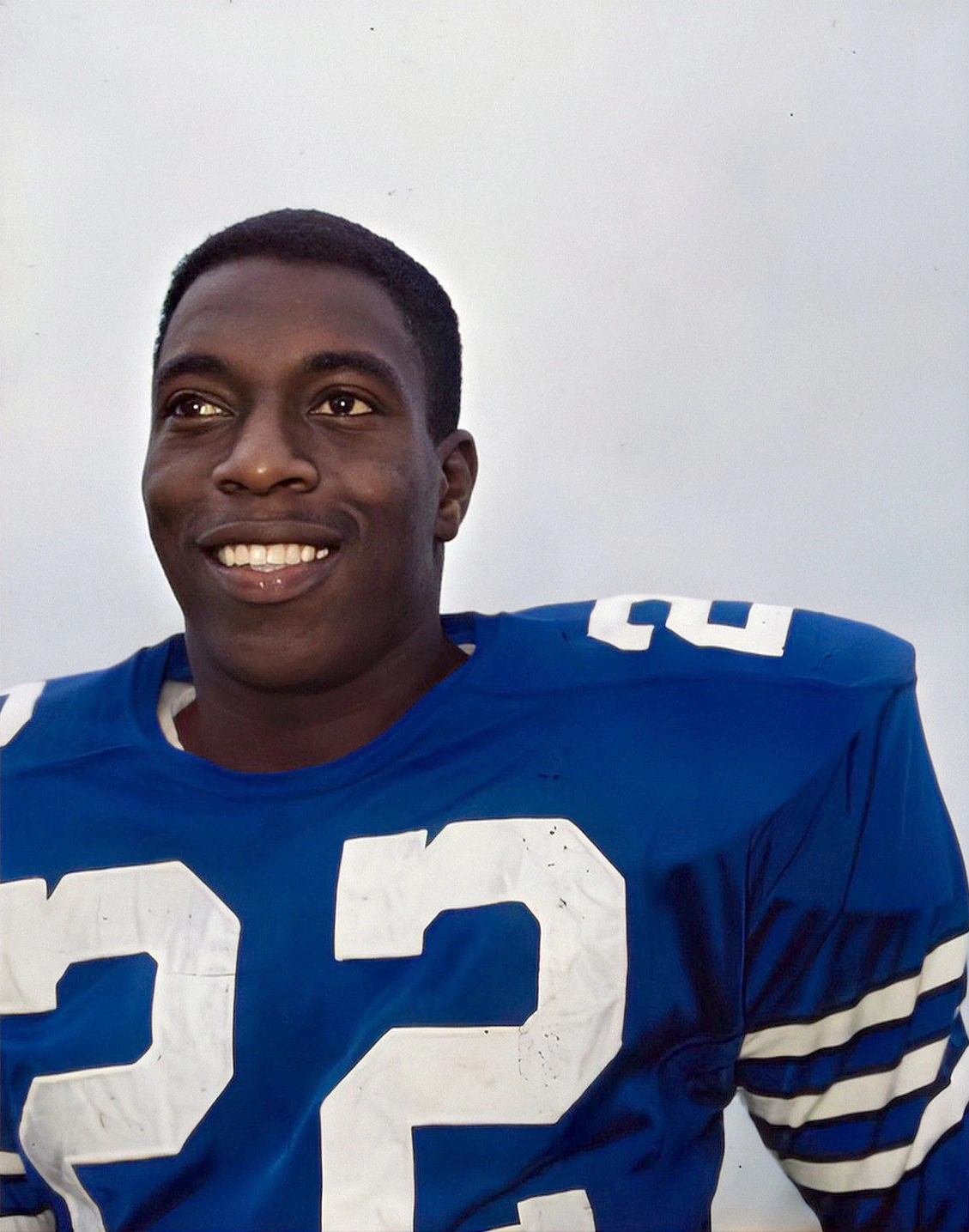
After Tokyo, Hayes accepted the challenge of professional football, joining the Dallas Cowboys and transforming the wide receiver position with unprecedented track-level speed. Under head coach Tom Landry and with front-office support from Tex Schramm, the Cowboys harnessed Hayes's explosiveness in a system that demanded precise routes and timing. Quarterbacks Don Meredith and later Roger Staubach learned to calibrate their deep throws to his stride, often releasing the ball to a spot far downfield with the confidence that Hayes would arrive first. Surrounded by teammates such as Bob Lilly and Mel Renfro on a team known for balance and discipline, Hayes helped Dallas evolve into a perennial contender.The apex of his NFL career came when the Cowboys won Super Bowl VI. By then Hayes had established himself as one of the league's most feared deep threats, forcing defenses to account for his long speed on every snap. He remains the only person to have won an Olympic gold medal in track and a Super Bowl ring, a dual achievement that underscores his unique place in American sports.
Impact on Football Strategy
Hayes's speed was so disruptive that it changed how professional defenses played. Cornerbacks and coordinators leaned into bump-and-run techniques at the line of scrimmage and increasingly used zone coverages and safety help over the top to contain him. Opponents shaded formations, altered personnel groupings, and schemed bracket coverage specifically for Hayes, adjustments that foreshadowed broader strategic shifts in the NFL. In effect, he stretched not only the field but also the playbook, forcing innovations that would ripple through the league for years.Challenges and Resilience
The glare of fame, the pressures of professional sport, and personal choices brought difficulties after his peak playing years. Hayes contended with legal troubles and health issues that complicated his post-career life and affected how some viewed his legacy during his lifetime. Even so, he continued to be embraced by many in Jacksonville and the broader FAMU and Cowboys communities, where former teammates, coaches, and fans recognized the fullness of his contributions and the context of his struggles. Roger Staubach and others regularly spoke of Hayes's competitiveness and the way his presence tilted the field.Later Years and Legacy
Hayes died in 2002, in his hometown of Jacksonville, at 59. In the years that followed, reflection on his career grew more balanced and appreciative. Honors accumulated, including recognition at the highest levels of both football and track and field, and he was posthumously inducted into the Pro Football Hall of Fame. His induction affirmed what coaches like Jake Gaither and Tom Landry had long understood: Hayes fused generational talent with the willingness to adapt and learn in two different elite sports.His legacy rests on three pillars. First, as a sprinter, he embodied the transition from cinder to modern sprinting while producing Olympic moments that remain canonical. Second, as a football player, he proved that world-class speed could be translated into route running, timing, and production at the highest professional level. Third, as a catalyst, he forced opponents to innovate, accelerating the development of coverage strategies that defined later eras.
Beyond records and rings, Hayes stands as an emblem of possibility for athletes who cross disciplines. He opened a door between track and the NFL that few have passed through and none have matched with comparable heights in both. Those who knew him best remembered not just the blur of motion but the competitor who listened to coaches, trusted teammates like Don Meredith and Roger Staubach, and shouldered the expectations that came with being "Bullet Bob". His story, rooted in Jacksonville and shaped by FAMU and Dallas, remains one of the most singular narratives in American sport.
Our collection contains 3 quotes written by Bob, under the main topics: Sports - Faith - Legacy & Remembrance.
Source / external links