
Bob Metcalfe Biography Quotes 2 Report mistakes
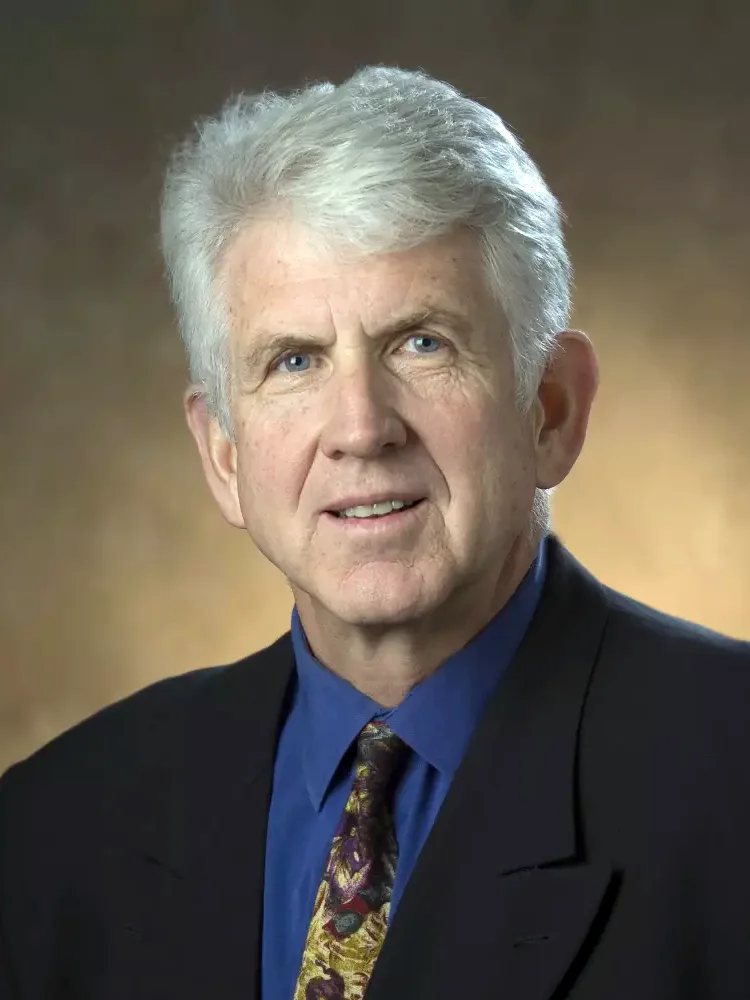
| 2 Quotes | |
| Born as | Robert Melancton Metcalfe |
| Occup. | Scientist |
| From | USA |
| Born | April 7, 1946 Brooklyn, New York City, USA |
| Age | 79 years |
| Cite | |
Citation Formats
APA Style (7th ed.)
Bob metcalfe biography, facts and quotes. (2026, February 11). FixQuotes. https://fixquotes.com/authors/bob-metcalfe/
Chicago Style
"Bob Metcalfe biography, facts and quotes." FixQuotes. February 11, 2026. https://fixquotes.com/authors/bob-metcalfe/.
MLA Style (9th ed.)
"Bob Metcalfe biography, facts and quotes." FixQuotes, 11 Feb. 2026, https://fixquotes.com/authors/bob-metcalfe/. Accessed 12 Feb. 2026.
Early Life and Background
Robert Melancton Metcalfe was born on April 7, 1946, in the United States, in the first wave of Americans to come of age after World War II and during the Cold War boom in science and engineering. His temperament was shaped by an era that treated electronics as both national infrastructure and intellectual frontier: radar, satellites, and mainframes promised order, while the early counterculture questioned authority. Metcalfe absorbed both impulses - a respect for rigorous systems and an impatience with complacent institutions.By the time he reached adulthood, computing was still largely centralized and guarded, a world of scarce machine time, proprietary interfaces, and bureaucratic gatekeeping. Metcalfe's later insistence that networks should be open, scalable, and economically legible can be read as an emotional reaction against scarcity: he gravitated toward designs that multiplied access rather than rationed it, and toward arguments that made technical choices matter in markets and society.
Education and Formative Influences
Metcalfe studied at the Massachusetts Institute of Technology, where he earned undergraduate degrees (including in electrical engineering) during a period when time-sharing, ARPA funding, and computer networking were turning from research curiosities into strategic priorities. He then pursued graduate work at Harvard University. The most consequential formative influence was the early ARPANET culture: not a single school, but a distributed community that prized interoperability, published specifications, and the idea that a network's value increases with participation - a set of beliefs that would later crystallize into his famous articulation of network effects.Career, Major Works, and Turning Points
Metcalfe's pivotal professional chapter began at Xerox PARC in the early 1970s, where he confronted a practical problem with philosophical stakes: how to connect many computers and printers inside an office without centralized control. Drawing inspiration from the ALOHAnet radio system, he and colleagues developed Ethernet, formalized in a 1973 memo and later refined into the coax-based systems that spread through industry; he subsequently helped drive standardization, including the DIX Ethernet specification (Digital, Intel, Xerox) that set the stage for IEEE 802.3. In 1979 he founded 3Com to commercialize networking, translating laboratory protocol into products and organizational momentum. Later, he became an influential commentator and venture capitalist, including a long tenure as a technology columnist, using public argument as an extension of engineering - a way to steer adoption, standards, and capital toward what he believed networks could become.Philosophy, Style, and Themes
Metcalfe's work reflects a psychological preference for decentralization with discipline: systems should have simple, enforceable rules at the edges and emergent strength in the middle. Ethernet's elegance is moral as much as technical - collision detection, shared media, and layered protocols assume contention, not perfection, and turn competition into a workable social contract for machines. His broader intellectual signature is the belief that connectivity is compounding: the network is not merely a tool but an economy of relationships whose marginal value rises as membership grows, a view that helped business leaders understand why standards and compatibility could be strategic weapons.As a public thinker he often framed technology as a contest among institutions, incentives, and timing rather than a parade of inventions. The aphorism "Grove giveth and Gates taketh away". reveals his instinct to narrate the industry as shifting centers of power, where platform control can absorb the gains created by hardware and infrastructure. He also read technical trends through traffic, cost curves, and human appetite, forecasting mainstream behavior before it looked respectable: "In seven to ten years video traffic on the Internet will exceed data and voice traffic combined". That prediction carried a personal subtext common to his career - confidence that networks, once built, will be used beyond their designers' intentions, because people will always find richer ways to communicate when capacity and interoperability stop being scarce.
Legacy and Influence
Metcalfe's enduring influence lies in making local networking ordinary and then making its consequences intelligible: Ethernet became a foundational layer of modern computing, surviving waves of media changes and scaling from early office LANs to data centers and cloud backbones. His articulation of network effects gave executives and policymakers a vocabulary for why connectivity concentrates value and why standards matter - for competition, innovation, and inequality alike. As both inventor and evangelist, he helped shift computing from isolated machines to a world defined by links, where the central question is less what a computer can do alone than what it can do when connected to everyone else.Our collection contains 2 quotes written by Bob, under the main topics: Witty One-Liners - Internet.
Other people related to Bob: Robert Metcalfe (Inventor)