
Bob Woodward Biography Quotes 56 Report mistakes
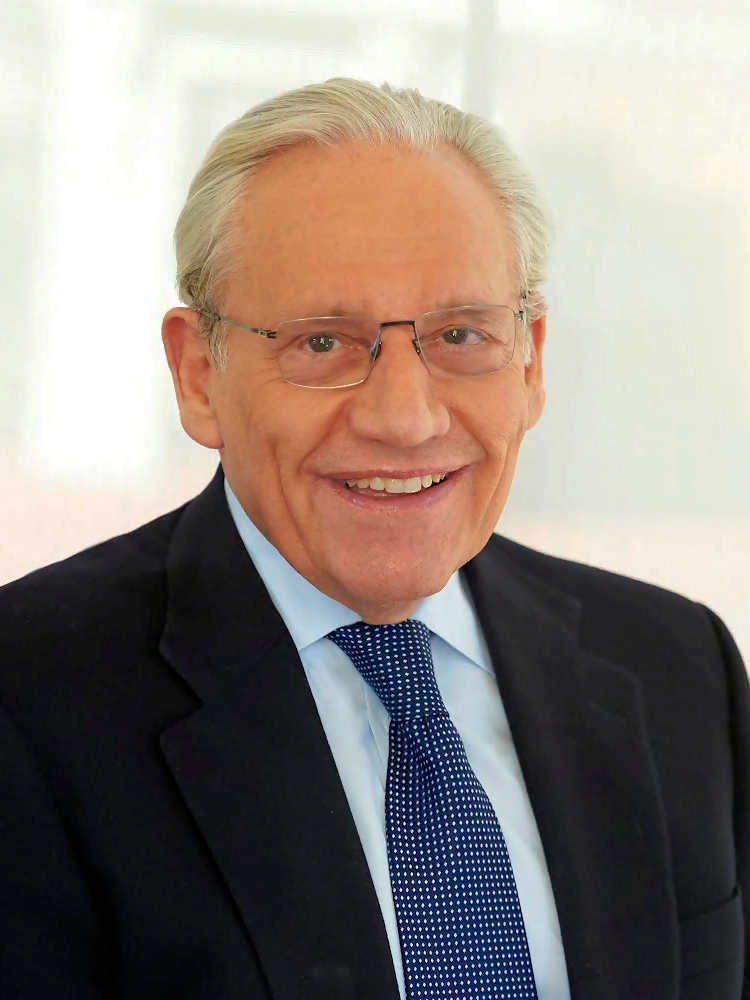
Attr: Lisa Berg
| 56 Quotes | |
| Born as | Robert Upshur Woodward |
| Occup. | Journalist |
| From | USA |
| Born | March 26, 1943 Geneva, Illinois, United States |
| Age | 82 years |
| Cite | |
Citation Formats
APA Style (7th ed.)
Bob woodward biography, facts and quotes. (2026, February 11). FixQuotes. https://fixquotes.com/authors/bob-woodward/
Chicago Style
"Bob Woodward biography, facts and quotes." FixQuotes. February 11, 2026. https://fixquotes.com/authors/bob-woodward/.
MLA Style (9th ed.)
"Bob Woodward biography, facts and quotes." FixQuotes, 11 Feb. 2026, https://fixquotes.com/authors/bob-woodward/. Accessed 25 Mar. 2026.
Early Life and Background
Robert Upshur Woodward was born on March 26, 1943, in Geneva, Illinois, and grew up in nearby Wheaton in a household shaped by Midwestern reserve and postwar confidence. His father, Alfred Woodward, was a judge and later chief judge of DuPage County, giving the young Woodward an early view of how authority speaks in formal language and how facts are weighed in adversarial settings. The family environment emphasized discipline and public duty, a temperament Woodward later redirected from law to reporting.Coming of age in the Cold War, he absorbed the era's faith in institutions and its paranoia about secrecy - a tension that would become central to his career. Woodward did not start as a romantic newspaperman; he was drawn to systems, hierarchies, and how decisions move through them. That instinct, more bureaucratic than bohemian, would make him unusually suited to covering Washington not as theater but as a chain of memos, conversations, and concealed incentives.
Education and Formative Influences
Woodward attended Yale University on scholarship, graduating in 1965, and joined the US Navy, serving as a communications officer on the USS Wright and later at the Pentagon. Navy life trained him in precision, compartmentalization, and the reality that information is power - and that it is often withheld for reasons that are not noble. After military service he studied briefly at George Washington University Law School, then pivoted to journalism, starting at the Montgomery County Sentinel in Maryland; the move signaled a preference for real-world fact gathering over courtroom abstraction.Career, Major Works, and Turning Points
In 1971 Woodward joined The Washington Post, where he partnered with Carl Bernstein on the Watergate investigation after the June 1972 break-in at the Democratic National Committee. Their reporting, supported by editor Ben Bradlee and publisher Katharine Graham, helped map the cover-up from street-level operatives to the Nixon White House and culminated in All the President's Men (1974). Woodward remained at the Post for decades, becoming assistant managing editor and then associate editor, while building a prolific second career as an author of deeply sourced political and national security books: The Brethren (1979, with Scott Armstrong) on the Supreme Court, Veil (1987) on the CIA, The Commanders (1991), The Agenda (1994), Bush at War (2002), State of Denial (2006), Obama's Wars (2010), The Price of Politics (2012), Fear (2018), Rage (2020), Peril (2021, with Robert Costa), and The Trump Tapes (2022). The turning point that never left him was Watergate: it taught him that access must be earned, verified, and doubted even when it feels intimate.Philosophy, Style, and Themes
Woodward's method is less confession than reconstruction. He works by accumulating interviews, documents, calendars, and notes until scenes can be rendered with the plain force of corroborated detail. The tone is restrained, almost procedural, but the aim is moral clarity through evidence. He has consistently argued that the craft should resist showmanship: “I think journalism gets measured by the quality of information it presents, not the drama or the pyrotechnics associated with us”. That stance reveals an inner preference for control and verification - a personality wary of being seduced by narrative and determined to let institutions indict themselves through their own records.His books return to recurring psychological and civic problems: the self-justifications of powerful people, the bureaucratic pathways of deception, and the limits of what any reporter can know in time. Woodward is unusually candid about epistemic humility, framing reporting as a confrontation with ignorance rather than a performance of certainty: “The central dilemma in journalism is that you don't know what you don't know”. Yet he also defends the disciplined use of confidential sourcing as a mechanism of oversight rather than gossip: “Using these unnamed sources, if done properly, carefully and fairly, provides more accountability in government”. Taken together, these beliefs describe a reporter who trusts the documentary pulse of government but distrusts its incentives - and who treats secrecy not as glamour but as a problem to be audited.
Legacy and Influence
Woodward helped set the modern template for investigative political reporting and for the long-form, insider chronicle of presidencies, influencing generations of journalists, editors, and even policymakers who read his work as both warning and mirror. Watergate made him a symbol of accountability, but his broader legacy is methodological: the idea that power can be mapped through patient sourcing, careful attribution, and an almost legalistic burden of proof. Critics debate his reliance on elite access and anonymity, yet few dispute the scale of his impact on how the public understands executive power, national security secrecy, and the moral consequences of decision-making at the top.Our collection contains 56 quotes written by Bob, under the main topics: Witty One-Liners - Truth - Justice - Writing - Freedom.
Other people related to Bob: Richard Armitage (Politician), Carl Bernstein (Journalist)
Bob Woodward Famous Works
- 2021 Peril (Non-fiction)
- 2020 Rage (Non-fiction)
- 2018 Fear: Trump in the White House (Non-fiction)
- 2012 The Price of Politics (Non-fiction)
- 2010 Obama's Wars (Non-fiction)
- 2008 The War Within: A Secret White House History 2006–2008 (Non-fiction)
- 2006 State of Denial: Bush at War, Part III (Non-fiction)
- 2005 The Secret Man: The Story of Watergate's Deep Throat (Non-fiction)
- 2004 Plan of Attack (Non-fiction)
- 2002 Bush at War (Non-fiction)
- 2000 Maestro: Greenspan's Fed and the American Boom (Non-fiction)
- 1999 Shadow: Five Presidents and the Legacy of Watergate (Non-fiction)
- 1994 The Agenda: Inside the Clinton White House (Non-fiction)
- 1987 Veil: The Secret Wars of the CIA, 1981-1987 (Non-fiction)
- 1984 Wired: The Short Life and Fast Times of John Belushi (Biography)
- 1979 The Brethren: Inside the Supreme Court (Non-fiction)
- 1976 The Final Days (Non-fiction)
- 1974 All the President's Men (Non-fiction)