
Bobby Jindal Biography Quotes 27 Report mistakes
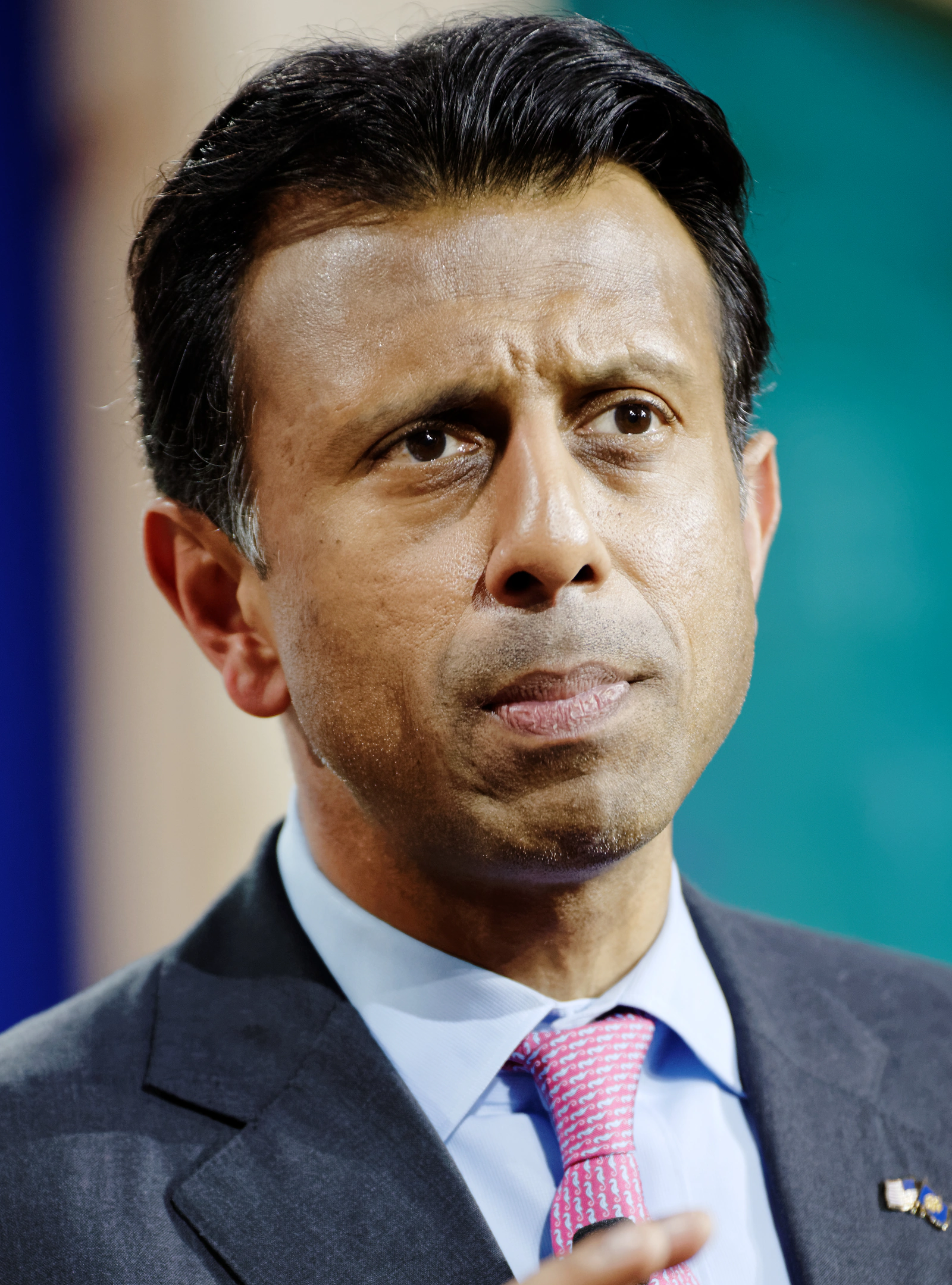
Attr: Michael Vadon, CC BY-SA 4.0
| 27 Quotes | |
| Born as | Piyush Jindal |
| Occup. | Politician |
| From | USA |
| Spouse | Supriya Jolly Jindal |
| Born | June 10, 1971 Baton Rouge, Louisiana, USA |
| Age | 54 years |
| Cite | |
Citation Formats
APA Style (7th ed.)
Bobby jindal biography, facts and quotes. (2026, February 11). FixQuotes. https://fixquotes.com/authors/bobby-jindal/
Chicago Style
"Bobby Jindal biography, facts and quotes." FixQuotes. February 11, 2026. https://fixquotes.com/authors/bobby-jindal/.
MLA Style (9th ed.)
"Bobby Jindal biography, facts and quotes." FixQuotes, 11 Feb. 2026, https://fixquotes.com/authors/bobby-jindal/. Accessed 12 Feb. 2026.
Early Life and Family
Piyush Bobby Jindal was born on June 10, 1971, in Baton Rouge, Louisiana, to immigrant parents from India who had come to the United States for graduate study. Growing up in a middle-class household in Baton Rouge with a younger brother, he was raised in a Hindu family before embracing Christianity as a teenager, a decision he later described in essays and speeches. He adopted the nickname "Bobby" in childhood and kept it throughout his public life. The experience of being the son of newcomers, combined with the civic rhythms of Louisiana life, shaped his focus on education, opportunity, and assimilation.Education
Jindal attended local public schools in Baton Rouge and earned admission to Brown University, where he studied public policy and biology and graduated with honors. He was awarded a Rhodes Scholarship and pursued graduate study at the University of Oxford, concentrating on political science. His academic work and early internships pointed him toward healthcare policy and government management, subjects that would define his early career.Early Public Service in Louisiana
At the age of 24, Jindal was appointed by Governor Mike Foster to lead the Louisiana Department of Health and Hospitals. Tasked with stabilizing one of the state's largest and most complex agencies, he pushed management reforms, data-driven budgeting, and changes to Medicaid operations. His work with hospital administrators, legislators, and parish leaders gave him statewide visibility and a reputation as a detail-oriented technocrat. He later served as executive director of a federal bipartisan panel on Medicare convened with the support of Senator John Breaux, building relationships with policy makers across party lines.In 1999 he became president of the University of Louisiana System, one of the youngest higher-education leaders in the country. There he worked with campus chancellors and the state Board of Regents on finance and accreditation issues, and with legislators on workforce development.
Federal Service
In 2001 Jindal joined the George W. Bush administration as Assistant Secretary for Planning and Evaluation at the U.S. Department of Health and Human Services, working under Secretary Tommy Thompson. In that role he advised on Medicare, Medicaid, public health preparedness, and regulatory analysis. The post immersed him in federal rulemaking and intergovernmental coordination with governors and members of Congress.First Run for Governor
Returning to Louisiana, Jindal ran for governor in 2003. He advanced to the runoff but narrowly lost to Democrat Kathleen Blanco. The hard-fought, issues-heavy campaign introduced him to a wider electorate and to a political class that included then, Lieutenant Governor Mitch Landrieu, Senator Mary Landrieu, and Congressman David Vitter, figures with whom he would later collaborate or contend on budgets, recovery, and federal policy.U.S. House of Representatives
In 2004 Jindal won election to the U.S. House from Louisiana's 1st District and took office in 2005. His first term coincided with Hurricanes Katrina and Rita, and he worked closely with Governor Blanco, New Orleans Mayor Ray Nagin, and parish presidents to secure disaster assistance and rebuild housing, levees, and infrastructure. On Capitol Hill he pressed federal agencies for faster reimbursements and joined colleagues on committees focused on health, energy, and commerce. He was reelected in 2006, often appearing with President George W. Bush and Louisiana's congressional delegation to advocate for long-term recovery funding.
Governor of Louisiana
In 2007 Jindal won the governorship and took office in January 2008, becoming the first Indian American to serve as a governor in the United States and one of the youngest governors of his era. He convened a special session on ethics, tightening gift rules and disclosure, and pursued tax and workforce measures aimed at attracting manufacturing and energy investment. His administration responded to multiple Gulf Coast threats, including Hurricanes Gustav and Ike in 2008 and, later, the Deepwater Horizon oil spill in 2010. During the oil spill he negotiated with the Obama administration and the U.S. Army Corps of Engineers over emergency berms and coastal protection, appearing frequently alongside parish leaders and federal officials.Jindal prioritized K-12 education changes, advancing tenure and accountability reforms and expanding school choice with State Superintendent John White and the state Board of Elementary and Secondary Education. He also pushed higher-education restructuring as falling oil prices and revenue pressures led to difficult budgets and reductions in university funding. He declined to expand Medicaid under the Affordable Care Act, a stance that aligned him with Republican governors around the country and drew sharp debate with hospital leaders and Democratic legislators.
He cultivated a national profile, serving in leadership roles with the Republican Governors Association and delivering the televised Republican response to President Barack Obama in 2009. Reelected governor in 2011 by a wide margin, he later proposed an ambitious tax overhaul that would have eliminated state income taxes in favor of broader consumption taxes; encountering bipartisan resistance, he withdrew the plan. In 2015, after the legislature declined to pass a religious liberty bill, he issued an executive order on the subject, drawing support from some religious leaders and concern from business groups.
2016 Presidential Campaign
Jindal entered the 2016 Republican presidential primary in a crowded field that included Jeb Bush, Marco Rubio, and Donald Trump. He emphasized fiscal restraint, health policy expertise, and cultural assimilation, and he often criticized President Obama's approach to healthcare and energy. Despite active campaigning in Iowa and policy rollouts through his nonprofit America Next, his campaign struggled to gain traction, and he suspended it in November 2015.Later Career and Public Voice
Term-limited, Jindal left office in January 2016 and was succeeded by Democrat John Bel Edwards. After the governorship he remained engaged in policy and business, publishing op-eds on healthcare, energy, and education, speaking at universities and policy institutes, and advising private-sector ventures. He has authored books, including Leadership and Crisis and American Will, reflecting on management lessons from disaster response, budget battles, and federalism debates.Personal Life and Views
Jindal married Supriya Jolly in 1997. As First Lady of Louisiana, Supriya Jindal focused on education and STEM initiatives through a charitable foundation that supported classrooms with technology and supplies. The couple has three children and remained active in their Catholic parish life. Jindal has consistently presented himself as a social and fiscal conservative, grounded in pro-life advocacy, school choice, and a preference for market-oriented healthcare. He has argued for strong assimilationist ideals, often saying that Americans are bound by shared values rather than ancestry.Legacy
Bobby Jindal's career traces a path from policy analyst to executive leadership, marked by an unusual early rise in state administration, frontline experience with historic disasters, and the challenges of governing through revenue volatility. His allies and adversaries have included figures as different as Mike Foster, Kathleen Blanco, George W. Bush, Barack Obama, Mitch Landrieu, Jay Dardenne, and John Bel Edwards, reflecting the breadth of arenas in which he operated. Supporters credit him with ethics reforms, aggressive recruitment of industry, and a methodical approach to management. Critics point to higher-education cuts and the use of one-time funds to balance budgets. Together those debates define his imprint on Louisiana's modern political history and his role in the evolution of Republican governance in the early twenty-first century.Our collection contains 27 quotes written by Bobby, under the main topics: Justice - Freedom - Learning - Equality - Health.
Other people related to Bobby: Rodney Alexander (Politician)
Source / external links