
Bobby Knight Biography Quotes 19 Report mistakes
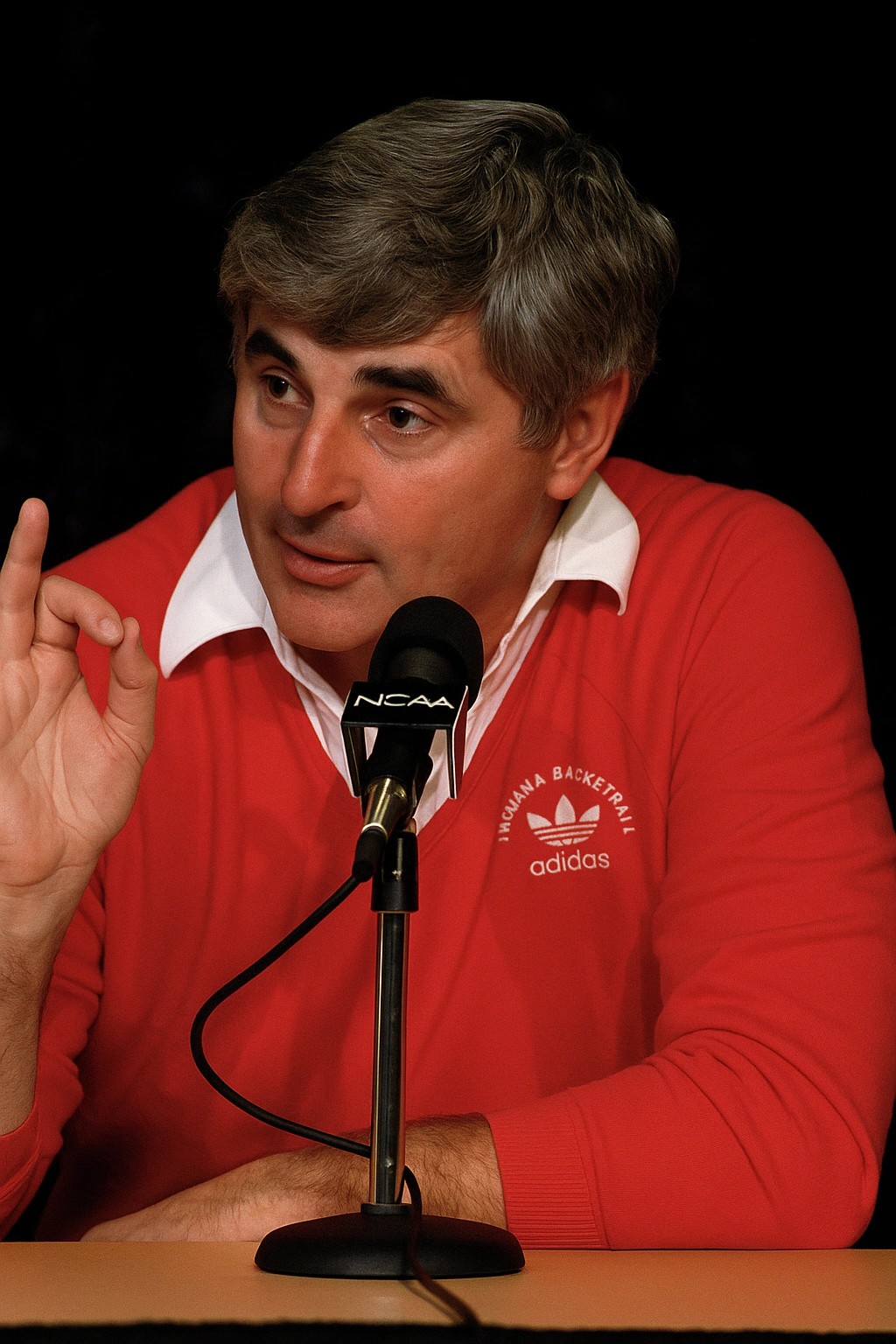
| 19 Quotes | |
| Born as | Robert Montgomery Knight |
| Known as | Bob Knight |
| Occup. | Coach |
| From | USA |
| Born | October 25, 1940 Massillon, Ohio, United States |
| Died | November 1, 2023 Bloomington, Indiana, USA |
| Aged | 83 years |
| Cite | |
Citation Formats
APA Style (7th ed.)
Bobby knight biography, facts and quotes. (2026, February 11). FixQuotes. https://fixquotes.com/authors/bobby-knight/
Chicago Style
"Bobby Knight biography, facts and quotes." FixQuotes. February 11, 2026. https://fixquotes.com/authors/bobby-knight/.
MLA Style (9th ed.)
"Bobby Knight biography, facts and quotes." FixQuotes, 11 Feb. 2026, https://fixquotes.com/authors/bobby-knight/. Accessed 12 Feb. 2026.
Early Life and Background
Robert Montgomery "Bobby" Knight was born on October 25, 1940, in Orrville, Ohio, a small industrial town whose plainspoken rhythms suited his later distrust of pretense. Raised in a Midwestern culture that prized work, order, and public self-control, he absorbed early the idea that competence was moral - that doing the job the right way was a kind of character test. Friends and later players often described him as intensely attentive to detail even in casual settings, as if disorder itself were an insult.That temperament, however, lived beside volatility. Knight could be gregarious, funny, and fiercely loyal, and he also carried an anger that flared when effort or discipline seemed absent. The tension between those poles - care and fury, tenderness and contempt - became the defining drama of his public life. He built a persona that insisted on standards, then fought anyone who questioned his methods, a pattern that would bring both devotion and lasting controversy until his death on November 1, 2023.
Education and Formative Influences
Knight played at Ohio State University under coach Fred Taylor, winning national championships in 1960 and 1962, and he kept the player mentality of that era: team-first, defense-minded, and skeptical of theatrics. After graduation he moved quickly into coaching, serving as an assistant at Army under Bob Knight mentor-like figures such as Pete Newell (whose clinics and emphasis on footwork and spacing shaped him), then becoming head coach at Army in 1965 at just 24. West Point sharpened his belief that structure was not optional - it was the environment in which young men either learned responsibility or failed.Career, Major Works, and Turning Points
Knight took over Indiana University in 1971 and turned Bloomington into a national capital of basketball rigor, winning NCAA titles in 1976, 1981, and 1987; the 1976 Hoosiers went undefeated, a feat still singular in the modern tournament era. He coached the U.S. team to Olympic gold in 1984, and his programs produced not only NBA talent but a recognizable school of play: man-to-man defense, precise passing, and the motion offense run with an almost pedagogical insistence. Yet the same absolutism that delivered banners also triggered suspensions and public eruptions - most notoriously the 1985 chair-throwing incident, and later allegations about his treatment of players - culminating in his firing from Indiana in 2000. He resurfaced at Texas Tech, restoring the program to national relevance and reaching the 2005 Sweet 16, before retiring in 2008. He finished with 902 Division I wins, later surpassed, but his name remained shorthand for both excellence and combustible control.Philosophy, Style, and Themes
Knight coached as if the game were a classroom and the classroom a moral arena. He believed preparation was the only honest form of confidence, and his practices were designed to make habits under pressure feel automatic. His core message was blunt: talent was common; readiness was rare. "Most people have the will to win, few have the will to prepare to win". That sentence captures his psychology - a fear of complacency so strong it became a kind of crusade, pushing him to demand proof of seriousness every day, from footwork to posture to how players spoke to officials.His basketball theology also tried to drain the sport of ego. "You don't play against opponents, you play against the game of basketball". In Knight's mind, the real adversary was chaos - turnovers, undisciplined shots, lazy closeouts, the small surrenders that accumulate into defeat. To fight chaos he elevated endurance of mind above body, insisting, "Mental toughness is to physical as four is to one". The line sounds like a slogan, but it functioned as self-justification: if the mind mattered most, then pressure, confrontation, and relentless correction could be framed as necessary tools. Admirers saw a teacher building resilience; critics saw a man using righteousness to excuse rage.
Legacy and Influence
Knight left a complicated inheritance in American sports culture. Tactically, he helped popularize a defense-first, mistake-averse model that influenced generations of coaches, and his clinics and coaching tree spread a vocabulary of spacing, denial defense, and practice design that remains foundational. Culturally, he became a national argument about authority: whether results sanctify methods, whether intimidation can be called love, whether the educational mission of college athletics can coexist with winning as an obsession. His former players often speak with a mix of gratitude and lingering pain, which may be the most accurate summary of his impact - a man who could make a team play beautifully together, and who also made the cost of such togetherness impossible to ignore.Our collection contains 19 quotes written by Bobby, under the main topics: Witty One-Liners - Motivational - Sports - Work Ethic - Change.
Other people related to Bobby: Mike Krzyzewski (Coach), Isaiah Thomas (Athlete)
Frequently Asked Questions
- Bobby Knight High School: He attended Orrville High School in Orrville, Ohio.
- Bobby Knight movie: He has been featured in sports documentaries and interviews, rather than being the subject of a major Hollywood biopic.
- Bobby Knight young: Born October 25, 1940, in Orrville, Ohio; he played basketball at Ohio State before becoming a coach in his 20s.
- Bobby Knight basketball career: American college basketball coach who led Indiana to three NCAA titles (1976, 1981, 1987) and won an Olympic gold medal coaching Team USA in 1984.
- Bobby Knight chair: He was known for a 1985 incident where he threw a chair across the court during a game.
- How old was Bobby Knight? He became 83 years old
Source / external links