
Bobby Moore Biography Quotes 3 Report mistakes
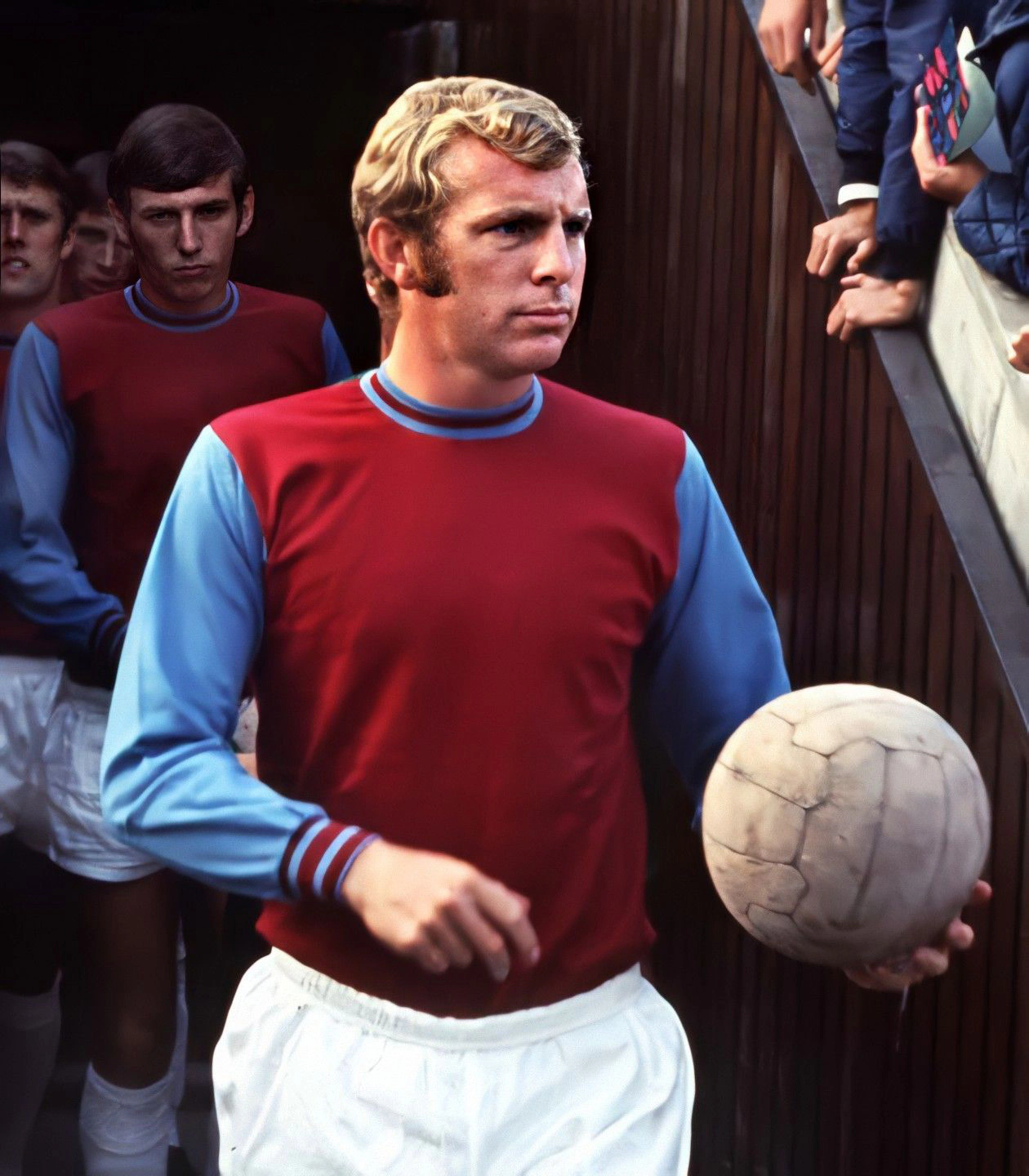
| 3 Quotes | |
| Born as | Robert Frederick Chelsea Moore |
| Occup. | Athlete |
| From | England |
| Spouse | Tina Dean |
| Born | April 12, 1941 Barking, Essex, England |
| Died | February 24, 1993 London, England |
| Cause | Colon cancer |
| Aged | 51 years |
| Cite | |
Citation Formats
APA Style (7th ed.)
Bobby moore biography, facts and quotes. (2026, February 11). FixQuotes. https://fixquotes.com/authors/bobby-moore/
Chicago Style
"Bobby Moore biography, facts and quotes." FixQuotes. February 11, 2026. https://fixquotes.com/authors/bobby-moore/.
MLA Style (9th ed.)
"Bobby Moore biography, facts and quotes." FixQuotes, 11 Feb. 2026, https://fixquotes.com/authors/bobby-moore/. Accessed 12 Feb. 2026.
Early Life and Introduction to Football
Robert Frederick Chelsea Moore was born in 1941 in Barking, then in Essex on the eastern edge of London. From an early age he showed an uncommon composure with a football, preferring timing and anticipation to force. He joined the youth system at West Ham United and progressed through the ranks at a club renowned for nurturing technically adept players. Guided by coaches who valued intelligence on the ball, and later by the visionary manager Ron Greenwood, he developed the calm authority and positional mastery that would define his career.Rise at West Ham United
Moore made his senior breakthrough as a teenager and became the defensive heartbeat of West Ham United. Playing at center-half, he was not the archetypal stopper; instead he intercepted, read danger before it appeared, and launched attacks with crisp, accurate passing. Named captain at a young age, he led West Ham to the FA Cup in 1964 and the European Cup Winners Cup in 1965, landmark triumphs in the club's history. Teammates such as Geoff Hurst, Martin Peters, and Ronnie Boyce flourished alongside him, while Ron Greenwood's faith in his leadership shaped his technical and tactical maturity. In recognition of his outstanding performances he was honored by the football writers in 1964, underscoring his status as England's pre-eminent defender.England Career and the 1966 World Cup
Bobby Moore's international debut was followed by a swift ascent to the England captaincy under manager Alf Ramsey. He went on to win 108 caps for his country, a national record at the time, and captained England in the majority of those appearances. The pinnacle came in 1966, when England hosted the World Cup. Surrounded by a team that included Gordon Banks, Bobby Charlton, Nobby Stiles, Ray Wilson, and his West Ham colleagues Hurst and Peters, Moore marshaled the defense with understated brilliance. In the final at Wembley, England defeated West Germany 4-2 after extra time, with Hurst scoring a historic hat-trick and Peters adding another. The image of Moore ascending the Wembley steps to receive the Jules Rimet Trophy from Queen Elizabeth II, immaculately composed and gracious in triumph, became part of England's sporting folklore.Reputation on the World Stage
Moore's reputation as a peerless reader of the game was cemented at the 1970 World Cup in Mexico. In a celebrated group match against Brazil, he executed a perfectly timed tackle on Jairzinho, a moment emblematic of his precision and restraint. After the match he exchanged mutual respect with Pele, who admired Moore's quality and sportsmanship. That tournament also included drama beyond the pitch: a brief and highly publicized detention in Colombia before England's arrival in Mexico, from which he was released after the intervention of football authorities. Despite England's quarter-final exit to West Germany, Moore's stature as an international great only grew.Later Club Career and Fulham
Moore remained synonymous with West Ham United until 1974, when he moved across London to Fulham. He brought the same composure and leadership to Craven Cottage and, in 1975, helped guide Fulham to the FA Cup Final, where they met West Ham. It was a poignant occasion that reflected the esteem in which he was held by supporters of both clubs. After his time in the English top flight, he added brief spells abroad, including in North American soccer, extending a career that had already left an indelible mark.Coaching, Management, and Mentoring
After retiring from top-level play, Moore turned to coaching and management. He took charge at Southend United, bringing the same quiet authority to the touchline that he had embodied on the pitch. He also served in advisory and ambassadorial capacities, always connected to the game and to the communities that supported it. Former teammates and younger professionals, among them figures such as Harry Redknapp and Trevor Brooking from the West Ham lineage, often spoke of his generosity with time and wisdom, and of how his example shaped their understanding of professionalism.Personal Character and Resilience
Beyond his reading of the game, Moore's defining trait was his composure. He rarely slid into reckless challenges, preferring to arrive before danger developed. He overcame a serious health scare in the mid-1960s, returning swiftly to top form and leading England to their greatest triumph. His personal life included marriage to Tina during his playing years and, later, marriage to Stephanie, whose support would become central in his final years. Those closest to him, from Ron Greenwood to Alf Ramsey and his England colleagues, recognized not only his talent but a deep sense of responsibility and fairness that made him the natural leader of any team he joined.Media and Public Life
In later years he remained visible as a pundit and commentator, contributing to radio and television coverage with the same clarity he had shown on the field. He wrote columns and lent his name to charitable and grassroots causes, mindful of the platform his 1966 captaincy had given him. Whether at Wembley on cup final day or at local community initiatives, Moore was a courteous presence, an emblem of the values many sought to associate with English football.Illness and Passing
In the early 1990s, Moore was diagnosed with bowel cancer. He continued to work and to appear at matches for as long as his health allowed, embodying stoicism and dignity. His death in 1993, at the age of 51, prompted tributes from across the world game. Former teammates such as Geoff Hurst and Gordon Banks, opponents including Pele, and managers and supporters from West Ham, Fulham, and England all paid their respects. Moments of silence, black armbands, and spontaneous applause greeted his memory at grounds across the country.Legacy
Bobby Moore's legacy is woven into English football culture. At Wembley Stadium, a bronze statue stands in his honor, a gathering place for supporters on great occasions. West Ham United celebrates his memory in the naming of stands and in the traditions passed down through its academy. Stephanie Moore helped establish the Bobby Moore Fund with a major cancer charity, turning personal loss into a public commitment to research and awareness, especially around bowel cancer. On the pitch, his example remains a touchstone for defenders: impeccable timing, perfect balance, clean tackling, and leadership without bluster. Off it, his humility and grace under pressure endure as a standard. The captain who lifted the World Cup in 1966 did more than win a trophy; he set a template for how to carry responsibility, how to compete, and how to represent club and country with honor.Our collection contains 3 quotes written by Bobby, under the main topics: Victory - Sports.
Other people related to Bobby: Jack Charlton (Athlete), Trevor Brooking (Athlete), Jimmy Greaves (Athlete)
Source / external links