
Bobby Riggs Biography Quotes 4 Report mistakes
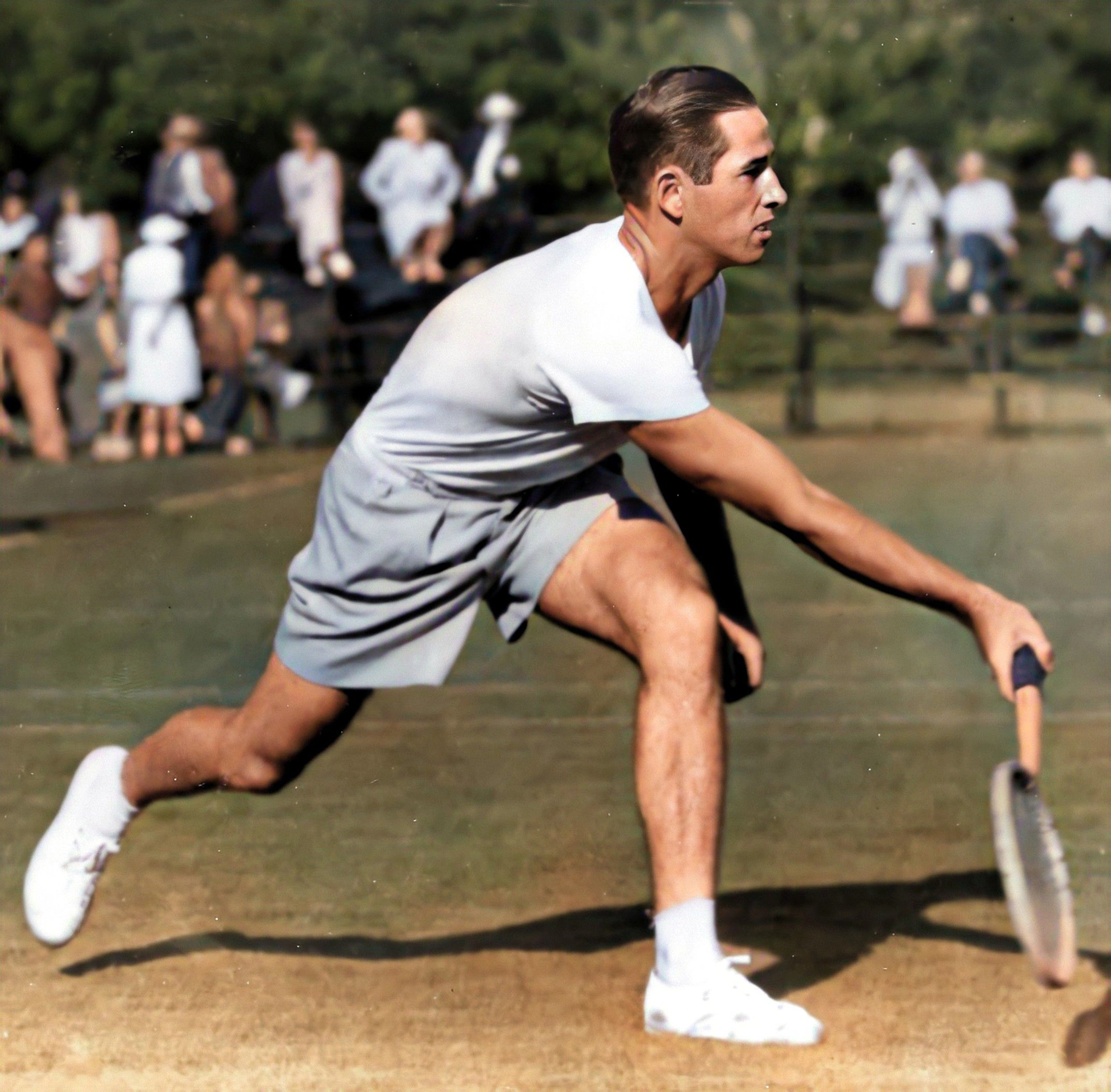
Attr: Attr
| 4 Quotes | |
| Born as | Robert Larimore Riggs |
| Occup. | Athlete |
| From | USA |
| Born | February 25, 1918 Los Angeles, California, USA |
| Died | October 25, 1995 Chula Vista, California, USA |
| Cause | Prostate Cancer |
| Aged | 77 years |
| Cite | |
Citation Formats
APA Style (7th ed.)
Bobby riggs biography, facts and quotes. (2026, February 27). FixQuotes. https://fixquotes.com/authors/bobby-riggs/
Chicago Style
"Bobby Riggs biography, facts and quotes." FixQuotes. February 27, 2026. https://fixquotes.com/authors/bobby-riggs/.
MLA Style (9th ed.)
"Bobby Riggs biography, facts and quotes." FixQuotes, 27 Feb. 2026, https://fixquotes.com/authors/bobby-riggs/. Accessed 30 Mar. 2026.
Early Life and Background
Robert Larimore Riggs was born on February 25, 1918, in Los Angeles, California, into a city that sold sunshine and spectacle as readily as it sold oranges. He grew up in the interwar years when American sport was becoming mass entertainment and when hustling - the ability to turn skill into cash, attention, and leverage - was its own kind of literacy. Tennis, still carrying a country-club sheen, nevertheless offered a sharp-edged proving ground for a boy who learned early that nerve and gamesmanship could matter as much as prettiness of stroke.Riggs developed his persona alongside his athletic identity. Friends and rivals later described a man who wanted the room as much as he wanted the point: clever, restless, and always auditioning for advantage. In an era when male bravado was often rewarded and rarely interrogated, he cultivated the grin and the needle as tools, not just habits. That public face - the quick insult, the extravagant claim, the manufactured feud - would become inseparable from his private calculus about money, status, and control.
Education and Formative Influences
He attended public schools in Southern California and came up through the competitive junior circuit, where the line between sport and hustle was thin. The Depression-era lesson was simple: security was fragile, and winners wrote the rules. Riggs absorbed the culture of Southern California gamesmanship - a place where show business and sport overlapped - and he learned to play opponents as much as he played the ball, using delay, rhythm changes, and psychological pressure to provoke errors. Those early habits hardened into a worldview: competition was theater, and theater was leverage.Career, Major Works, and Turning Points
Riggs turned professional after a standout amateur run capped by a 1939 season that made him the top man in American tennis, including wins at Wimbledon, the U.S. National Championships (Forest Hills), and the professionalized pressure cooker of Davis Cup expectations. His style - crafty, exacting, and relentlessly strategic - fit the pre-Open Era, when top pros toured for guarantees and gate receipts rather than Grand Slam glory. In later decades, as the Open Era reshaped tennis and celebrity culture escalated, Riggs repositioned himself less as a reigning champion than as a provocateur. The turning point came in 1973 with the self-branded "Battle of the Sexes": first, his defeat of Margaret Court, then his loss to Billie Jean King at the Houston Astrodome in a match that became a televised referendum on gender roles as much as on tennis.Philosophy, Style, and Themes
Riggs played tennis the way a pool shark sizes up a table - not with indifference to beauty, but with allegiance to outcome. His strokes were not built to impress; they were built to irritate, to expose impatience, to make an opponent feel time stretching. The same impulse governed his public life. He openly framed sport as a marketplace and treated money as both scorecard and stimulant: “If I can't play for big money, I play for a little money. And if I can't play for a little money, I stay in bed that day”. The line reads as a joke, but it also reveals a temperament that needed stakes to feel alive, a man who equated movement with wagering and idleness with defeat.His self-mythology was inseparable from provocation, especially around gender. Riggs leaned into a caricature of male superiority because it guaranteed attention, and attention could be converted into gates, sponsors, and control of the narrative. “If I am to be a chauvinist pig, I want to be the number one pig”. That sentence is less confession than strategy: he understood that in a media age, villainy can be a form of power. Yet his greatest cultural impact came through the very opponent he tried to diminish. By turning King into the protagonist of a national spectacle, he helped amplify a broader argument for women's equality - and then tried to claim a cut of its proceeds: “Billie and I did wonders for women's tennis. They owe me a piece of their checks”. The entitlement is striking, but so is the inadvertent admission that his showmanship had consequences beyond his control.
Legacy and Influence
Riggs died on October 25, 1995, in Encinitas, California, after decades as one of American sport's most recognizable hustlers - a former champion who kept reinventing himself as culture shifted. In tennis history, he remains a bridge figure: a pre-Open tactician with a touring-pro edge who later anticipated the modern sports entertainer, where narrative and self-branding can rival results. The "Battle of the Sexes" endures as his paradox: he sought validation and profit through mockery, yet helped stage a defining moment for women's sports, one that outlasted both his boast and his defeat.Our collection contains 4 quotes written by Bobby, under the main topics: Witty One-Liners - Sports - Legacy & Remembrance.
Source / external links