
Bobby Sands Biography Quotes 5 Report mistakes
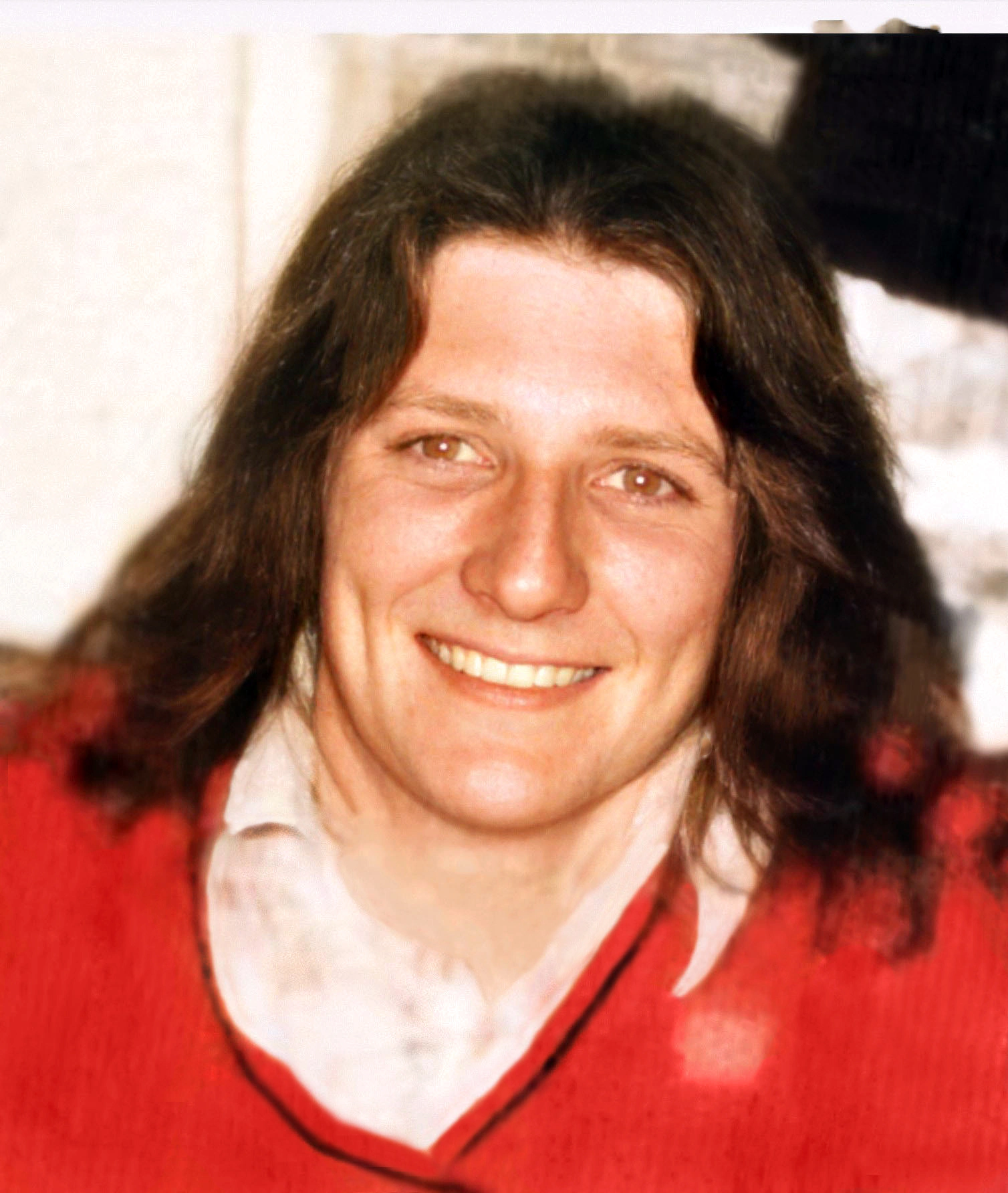
| 5 Quotes | |
| Born as | Robert Gerard Sands |
| Occup. | Activist |
| From | Ireland |
| Born | March 9, 1954 Rathcoole, County Antrim, Northern Ireland |
| Died | May 5, 1981 Maze Prison, Northern Ireland |
| Cause | Hunger strike |
| Aged | 27 years |
| Cite | |
Citation Formats
APA Style (7th ed.)
Bobby sands biography, facts and quotes. (2026, February 11). FixQuotes. https://fixquotes.com/authors/bobby-sands/
Chicago Style
"Bobby Sands biography, facts and quotes." FixQuotes. February 11, 2026. https://fixquotes.com/authors/bobby-sands/.
MLA Style (9th ed.)
"Bobby Sands biography, facts and quotes." FixQuotes, 11 Feb. 2026, https://fixquotes.com/authors/bobby-sands/. Accessed 13 Feb. 2026.
Early Life and Background
Robert Gerard Sands was born on 1954-03-09 in County Down, Northern Ireland, into a Catholic family living in a state built on partition and policed by sectarian inequality. He grew up as the civil rights movement stirred in the late 1960s and as loyalist intimidation and street violence reshaped daily life for many Catholics. That atmosphere gave Sands an early sense that politics was not abstract - it was a question of safety, dignity, and whether one could imagine a future without fear.His adolescence unfolded against the onset of the Troubles: the deployment of British troops, the spiral into bombings and reprisals, and the hardening of neighborhoods into defended enclaves. Sands experienced displacement amid intimidation and rising communal tensions, the kind of ruptures that turn a young man inward while also tightening his identification with a threatened community. Those pressures, mixed with a keen sensitivity and an emerging literary impulse, would later surface in prison writing that fused private introspection with public defiance.
Education and Formative Influences
Sands left school early and worked as an apprentice coach builder, a common route for working-class youths in the North, but one increasingly narrowed by discrimination and instability. He was formed as much by streets and kitchens as by classrooms: by family stories of Irish history, by the cadences of republican commemoration, and by the accelerating collision between reformist civil rights hopes and the reality of militarized policing, internment without trial, and retaliatory violence. The era taught him that identity could be criminalized, and it pushed him toward a movement that promised not merely civil equality but national sovereignty.Career, Major Works, and Turning Points
Sands joined the Provisional Irish Republican Army in the early 1970s, was arrested and imprisoned, released, and then arrested again after a 1976 raid; he was sentenced to 14 years and became central to the prison struggle that followed the British government ending of Special Category Status in March 1976. The removal of political status triggered the blanket protest, then the no-wash protest, and finally the 1981 hunger strike, designed to force recognition of prisoners as political rather than criminal. In prison he wrote relentlessly - poems, songs, essays, and the diary later published as One Day in My Life - sharpening a public voice that could move between tenderness and militancy. His election as MP for Fermanagh and South Tyrone in April 1981, while he was starving in the H-Blocks of Long Kesh, became a turning point: it internationalized the hunger strike and exposed the contradiction of a government treating as a common criminal a man chosen by voters as a legislator. Sands died on 1981-05-05 after 66 days without food, the first of ten hunger strikers to die.Philosophy, Style, and Themes
Sands understood prison as a laboratory of power: the state sought to rename political resistance as mere lawlessness, while the prisoner sought to preserve meaning, comradeship, and self-command. His writing, often composed under censorship and deprivation, uses plain diction, religious and mythic echoes, and concrete prison detail to insist that the body is not the final terrain of defeat. He framed endurance as contagious - not a solitary stoicism but an ethic meant to ripple outward into families, neighborhoods, and future generations. That expansive sense of participation appears in his insistence that collective struggle is made of many small acts: "Everyone, Republican or otherwise, has their own particular part to play. No part is too great or too small; no one is too old or too young to do something". Psychologically, it reveals a mind resisting the narrowing effects of confinement by turning suffering into a shared civic vocation.At the core of his philosophy was an almost fierce refusal to let coercion define the self. He cast the prison regime as an "imperial arsenal" and answered it with a theology of unbroken will: "They have nothing in their whole imperial arsenal that can break the spirit of one Irishman who doesn't want to be broken". The line is not only propaganda; it is self-instruction, a sentence meant to be repeated when pain and isolation threatened to fracture identity. Yet Sands also tempered hardness with an image of ordinary joy, projecting victory not as domination but as continuity - children living unafraid: "Our revenge will be the laughter of our children". In that shift from wrath to laughter lies his emotional signature: a longing for innocence recovered, and a belief that the ultimate rebuttal to oppression is a normal life made possible by extraordinary sacrifice.
Legacy and Influence
Sands became one of the most potent symbols of late 20th-century Irish republicanism, a figure through whom martyrdom, electoral politics, and prison protest converged. His death intensified polarization in Northern Ireland while also accelerating a strategic rethinking within republicanism about the ballot box alongside armed struggle, a trajectory later associated with Sinn Fein's electoral ascent. Internationally, the hunger strike fixed attention on the ethics of protest, the limits of state authority over the body, and the political nature of imprisonment in conflicted societies. As literature, his prison writings endure because they are not detached commentary but lived argument - documents in which a young man, facing extinction, tried to compress an entire people's history and hope into a voice steady enough to outlast the cell.Our collection contains 5 quotes written by Bobby, under the main topics: Never Give Up - Freedom - Hope.
Source / external links