
Bobby Sands Biography Quotes 5 Report mistakes
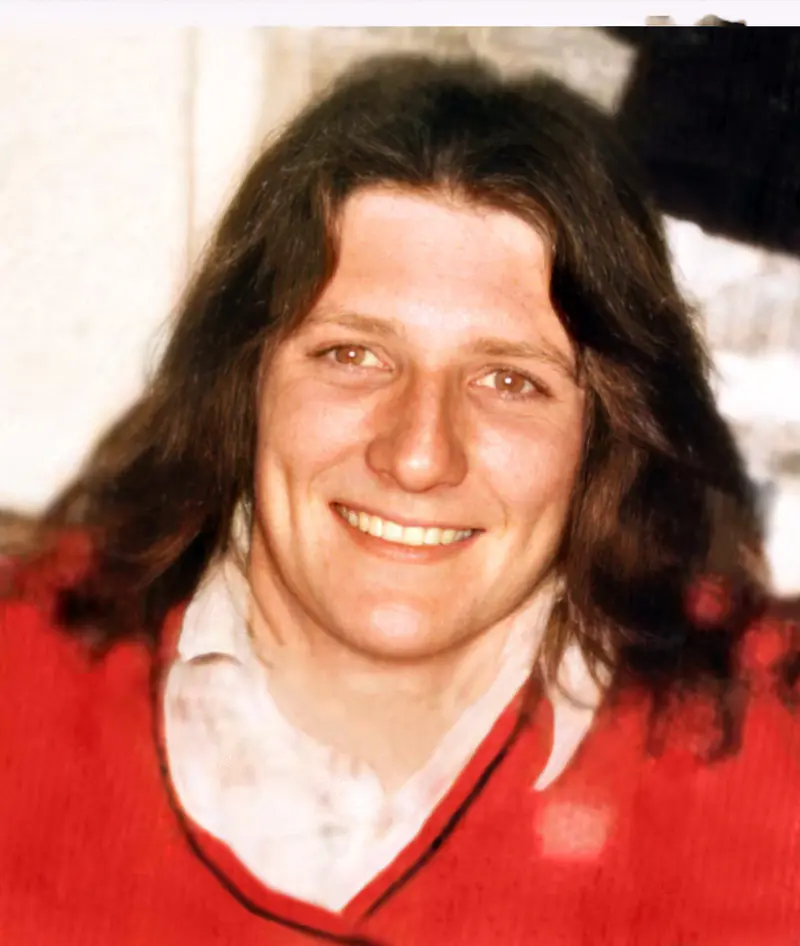
| 5 Quotes | |
| Born as | Robert Gerard Sands |
| Occup. | Activist |
| From | Ireland |
| Born | March 9, 1954 Rathcoole, County Antrim, Northern Ireland |
| Died | May 5, 1981 Maze Prison, Northern Ireland |
| Cause | Hunger strike |
| Aged | 27 years |
Robert Gerard (Bobby) Sands was born on 9 March 1954 in the northern outskirts of Belfast, Northern Ireland, into a working-class Catholic family that experienced the sectarian tensions of the city first-hand. His parents, John and Rosaleen Sands, tried to protect their children from street-level intimidation, but the family endured frequent harassment and eventually moved from their home in Rathcoole after loyalist threats. Those early displacements and the surrounding atmosphere of the Troubles shaped Sands's sense of identity and his turn toward political activism. He left school young and worked as an apprentice coach builder, but recurring workplace hostility and the spread of conflict in the late 1960s and early 1970s made steady employment and ordinary life difficult. In this environment, Sands gravitated toward republican circles that framed the violence and discrimination around him as part of a broader struggle over sovereignty and civil rights.
Entry into Activism and Imprisonment
By the early 1970s Sands had aligned himself with the Provisional Irish Republican Army. He was first arrested in 1972 on weapons charges and imprisoned at Long Kesh (later known as the Maze Prison). During these years he was influenced by prisoners who combined political education with militant discipline, and he began to write poetry and short reflections that would later circulate among sympathizers. After release, he returned to West Belfast, where community tensions remained acute. In 1976 he was arrested again and, the following year, convicted of firearms possession; he denied involvement in the wider incident for which he had been detained, but received a lengthy sentence and was sent back to the Maze. The switch in British policy ending "special category" status for paramilitary prisoners in 1976 set the stage for the protests that would come to define his life.
Prison Protests and Political Strategy
The withdrawal of political or special status meant that prisoners convicted of paramilitary offenses were to be treated as ordinary criminals. In protest, republican inmates refused prison uniforms and work details, beginning the "blanket protest", and later the "no-wash" protest. Within the Maze, Sands emerged as a leading organizer and a prolific writer, contributing essays and poems to republican outlets under his own name and occasionally with pen names drawn from family. He observed and learned from the 1980 hunger strike led by Brendan Hughes, which ended without fatalities after tentative signals from the British government. When those signals did not translate into an agreement that met prisoners' demands, a renewed, more methodically staged hunger strike was planned.
Gerry Adams and other republican leaders on the outside were developing a political strategy known as the "ballot box and Armalite" approach, shifting Sinn Fein toward more open electoral participation even while the armed campaign continued. Although in prison, Sands became central to this evolving strategy. Clergy figures including Cardinal Tomas O Fiaich and Father Denis Faul visited the Maze and publicly urged a humanitarian resolution, while also criticizing various sides for intransigence. These voices would accompany the hunger strike as it unfolded, petitioning both the prisoners and the British government for compromise.
1981 Hunger Strike and Parliamentary Election
On 1 March 1981, Bobby Sands began a hunger strike to press five key demands aimed at restoring political-type conditions in the prison. The strike was designed to be staggered, with additional prisoners joining at intervals to sustain pressure. In the midst of the crisis, an unexpected political opening emerged. After the death of independent nationalist MP Frank Maguire, a by-election was called in the Westminster constituency of Fermanagh and South Tyrone. Nationalist parties agreed not to split the vote, and Sands was nominated as an Anti H-Block/Armagh candidate. In April 1981 he won the seat, defeating the unionist candidate Harry West. The result reverberated internationally, turning a prison protest into a high-profile political confrontation.
The British government under Prime Minister Margaret Thatcher refused to concede political status, arguing that criminal convictions could not be transformed by political claims. Appeals for clemency or mediation grew. Representatives from the Catholic Church, including envoys linked to the Vatican, visited the Maze and met Sands's family; Pope John Paul II appealed for an end to the fast. Public figures across Europe and beyond called for compromise, while domestic opinion in Northern Ireland remained sharply divided, reflecting the polarized experience of the conflict.
Death and Immediate Aftermath
Sands died on 5 May 1981 after 66 days on hunger strike, in the prison hospital at the Maze. He was 27. His mother, Rosaleen, and other family members had kept vigil during the final weeks, while supporters maintained demonstrations outside the prison. His death set off days of unrest and rioting in parts of Northern Ireland and sparked protests in cities abroad. Within the prison, other men continued the strike, among them Francis Hughes, Raymond McCreesh, Patsy O'Hara, Joe McDonnell, Martin Hurson, Kevin Lynch, Kieran Doherty, Thomas McElwee, and Michael Devine; several of them also died before the strike ended later that year. Doherty was elected to the Irish parliament during the fast, underscoring how the protest had migrated into electoral arenas on both sides of the border.
The British government held to its position, and Parliament soon passed the Representation of the People Act 1981 to bar prisoners serving long sentences from standing for the House of Commons. Thatcher's insistence that the state would not yield on political status hardened unionist support while deepening nationalist alienation. For many international observers, Sands's election and death crystallized the human cost and political stalemate of the Troubles.
Writings, Family, and Personal Dimension
Beyond the headlines, Sands cultivated a private, reflective voice through poems and prison writings. Works like his hunger strike diary and songs such as Back Home in Derry circulated widely after his death, set to music and performed by artists who sought to capture the emotional register of the era. He had married in the 1970s and became a father; although the marriage did not last, his family, especially his mother Rosaleen and siblings, remained central figures in public vigils and commemorations, embodying the personal toll of the conflict. Friends and comrades remembered him as soft-spoken in person and unyielding in principle; opponents regarded him as an IRA volunteer whose choices perpetuated violence. Those conflicting perspectives defined his public image from the outset.
Legacy and Historical Assessment
Bobby Sands became a symbol whose meaning depends on the vantage point from which the Troubles are interpreted. For many Irish nationalists and republicans, he is remembered as a martyr who used his body as a final form of protest against what they viewed as criminalization of political prisoners. For unionists and many in Britain, he was a convicted member of a paramilitary organization responsible for deadly attacks, and his elevation in popular memory is troubling. Political leaders such as Gerry Adams later argued that the hunger strike accelerated Sinn Fein's transition toward electoral politics, creating a path that would, in time, feed into the peace process. Others, including John Hume and church figures like Father Denis Faul, contended that nonviolence and negotiation offered a surer route out of conflict and warned against sacralizing self-destructive protest.
Sands's funeral drew massive crowds, and commemorations have continued annually, especially in West Belfast and in republican communities abroad. His face appears on murals from Belfast to the Basque Country, and his writings remain in print. At the same time, critics insist that any remembrance must acknowledge the pain inflicted by the IRA campaign and the suffering of victims on all sides. Historians situate Sands within a broader arc: the end of special category status in 1976, the prison protests, the hunger strikes of 1980 and 1981, and the eventual moves toward ceasefires and political compromise that culminated in the Good Friday Agreement of 1998.
In this longer view, Bobby Sands stands as a focal point where prison resistance, electoral experiment, international attention, and the intractable questions of identity and legitimacy in Northern Ireland converged. The people around him during those months, fellow strikers like Francis Hughes and Joe McDonnell, political organizers such as Gerry Adams, adversaries in government led by Margaret Thatcher, and moral interlocutors like Cardinal Tomas O Fiaich, illustrate the range of forces acting upon a young man who chose the most extreme form of protest. His life and death continue to challenge readers to reckon with the human complexities behind political absolutes.
Our collection contains 5 quotes who is written by Bobby, under the main topics: Never Give Up - Freedom - Hope.
Source / external links