
Booker T. Washington Biography Quotes 26 Report mistakes
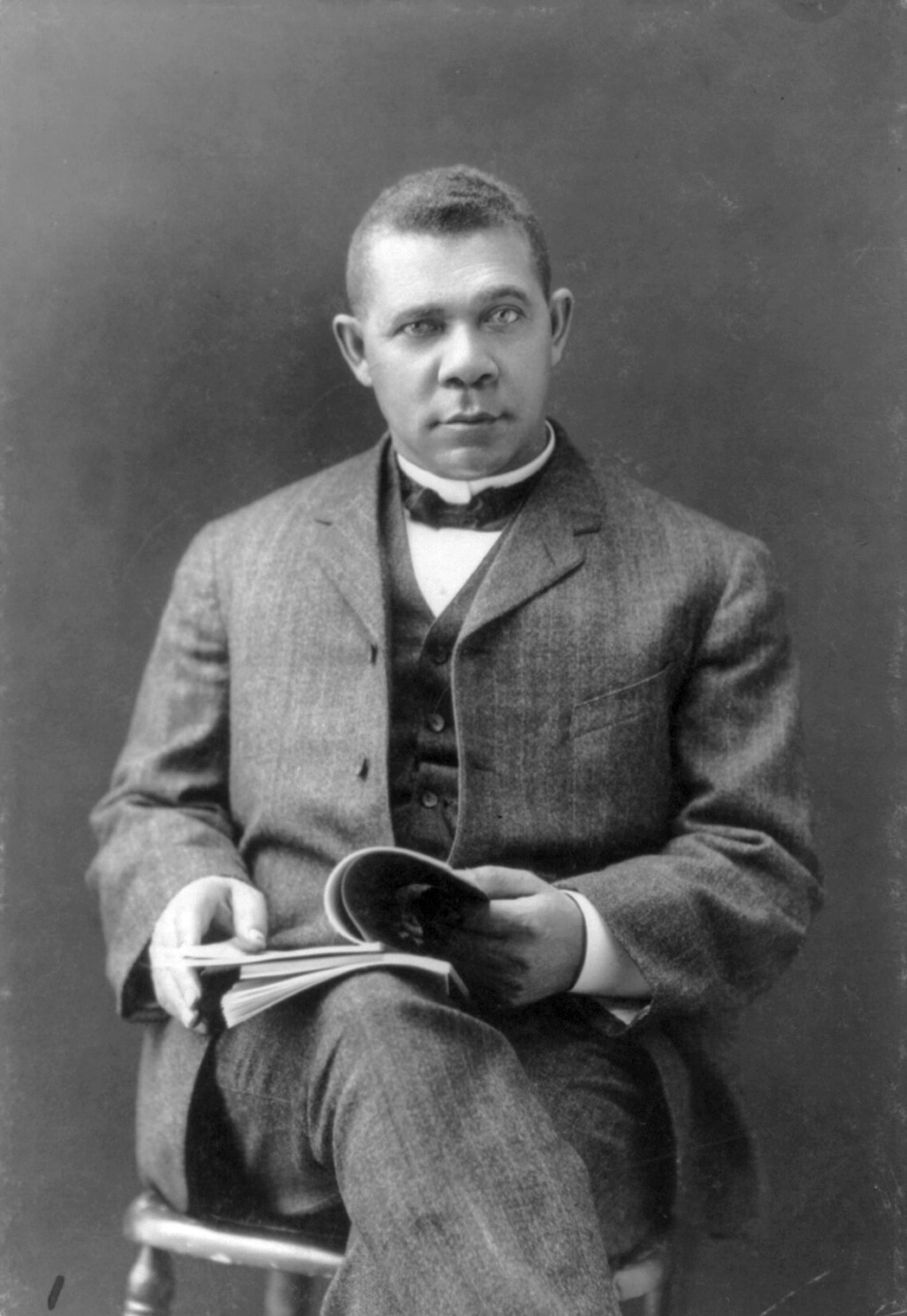
| 26 Quotes | |
| Occup. | Educator |
| From | USA |
| Born | April 5, 1856 |
| Died | November 15, 1915 |
| Aged | 59 years |
| Cite | |
Citation Formats
APA Style (7th ed.)
Booker t. washington biography, facts and quotes. (2026, February 11). FixQuotes. https://fixquotes.com/authors/booker-t-washington/
Chicago Style
"Booker T. Washington biography, facts and quotes." FixQuotes. February 11, 2026. https://fixquotes.com/authors/booker-t-washington/.
MLA Style (9th ed.)
"Booker T. Washington biography, facts and quotes." FixQuotes, 11 Feb. 2026, https://fixquotes.com/authors/booker-t-washington/. Accessed 26 Mar. 2026.
Early Life and Background
Booker Taliaferro Washington was born on April 5, 1856, on a plantation in Franklin County, Virginia, into slavery. He knew his father only as a white man in the neighborhood and grew up in the cramped, surveilled world of quarters life with his mother, Jane, and siblings, absorbing early how power worked through literacy bans, debt, and arbitrary violence. The Civil War ended his legal bondage, but emancipation arrived as a hard, undefined freedom: food still had to be found, work still had to be bargained for, and dignity still had to be defended one ordinary day at a time.In 1865 his family joined the stream of Black Southerners moving toward wages and relative autonomy, settling in Malden, West Virginia. There Washington worked in salt furnaces and coal mines and as a house servant, improvising education around exhausting shifts. Those years built his lifelong fascination with the moral meaning of labor - not as submission, but as a way to claim agency, self-respect, and practical leverage in a hostile economy.
Education and Formative Influences
Washington walked hundreds of miles to enroll at Hampton Normal and Agricultural Institute in Virginia in 1872, a school shaped by Gen. Samuel Chapman Armstrong and by Northern missionary ideals that married classical uplift to industrial training. Hampton taught him the discipline of routine, the politics of respectability, and the strategy of presenting Black advancement in forms that reassured white patrons; it also gave him a model of institution-building that he would adapt for the post-Reconstruction South, where federal protection was receding and white supremacist rule was regrouping through law, terror, and custom.Career, Major Works, and Turning Points
After teaching and briefly studying at Wayland Seminary in Washington, D.C., he was chosen in 1881 to lead a new school for Black students in Tuskegee, Alabama, beginning with little more than a shanty and an idea. Washington turned Tuskegee Institute into a major center for teacher training and industrial education, raising funds from Northern philanthropists such as Andrew Carnegie and Julius Rosenwald while building a national network of Black educators, farmers, and tradespeople. His 1895 Atlanta Exposition Address made him the era's most famous Black spokesman, urging economic cooperation and vocational advance while downplaying immediate demands for social equality - a posture that brought extraordinary access and bitter controversy. In Up from Slavery (1901) he crafted his defining public narrative of ascent, while behind the scenes he maneuvered through what came to be called the "Tuskegee Machine", influencing appointments, shaping newspapers, and cultivating white political allies to protect Tuskegee and his broader program amid the rise of Jim Crow.Philosophy, Style, and Themes
Washington's inner life was marked by a constant audit of risk. He had watched Reconstruction hopes collapse into lynching, disfranchisement, and debt peonage, and he tailored his message to what he believed could survive that climate. His optimism was never naive; it was tactical, rooted in the conviction that progress had to be made legible to enemies and funders alike. The psychological engine of his thought was endurance: “Success is to be measured not so much by the position that one has reached in life as by the obstacles which he has overcome”. That sentence is less a platitude than a defense of selfhood for people whose achievements were routinely erased - a way of locating worth where hostile society could not easily confiscate it.His prose and speeches favored concrete work, clean habits, and communal stability, a style designed to sound unthreatening while smuggling in a radical claim: that competence could become a form of sovereignty. “Nothing ever comes to one, that is worth having, except as a result of hard work”. For Washington, labor was both a material strategy and a moral drama, because the Black worker was forced to prove humanity in a world determined to deny it. At the core sat an almost religious faith in inner discipline - “Character is power”. The emphasis could shade into blame of the oppressed, yet it also reveals his fear that rage without infrastructure would invite backlash, and his hope that institutions - schools, farms, businesses, habits of mind - could outlast the volatility of politics.
Legacy and Influence
Washington died on November 15, 1915, in Tuskegee, having become one of the most influential Americans of his time and one of the most debated. His strategy of accommodation and industrial education was challenged by W.E.B. Du Bois and the Niagara Movement as insufficiently confrontational against segregation and disfranchisement, yet his institution-building proved durable: Tuskegee became a pipeline for teachers, artisans, and leaders and a template for Black self-help organizations and philanthropy, including the Rosenwald schools. In the long view, his legacy is a paradox that still structures arguments about reform - whether security is won by meeting power halfway or by confronting it head-on - and his life remains a case study in how a public voice is shaped by private calculation under an unjust regime.Our collection contains 26 quotes written by Booker, under the main topics: Witty One-Liners - Motivational - Friendship - Leadership - Learning.
Other people related to Booker: Kelly Miller (Sociologist), Martin Puryear (Sculptor), Timothy Thomas Fortune (Writer)
Source / external links