
Boris Pasternak Biography Quotes 22 Report mistakes
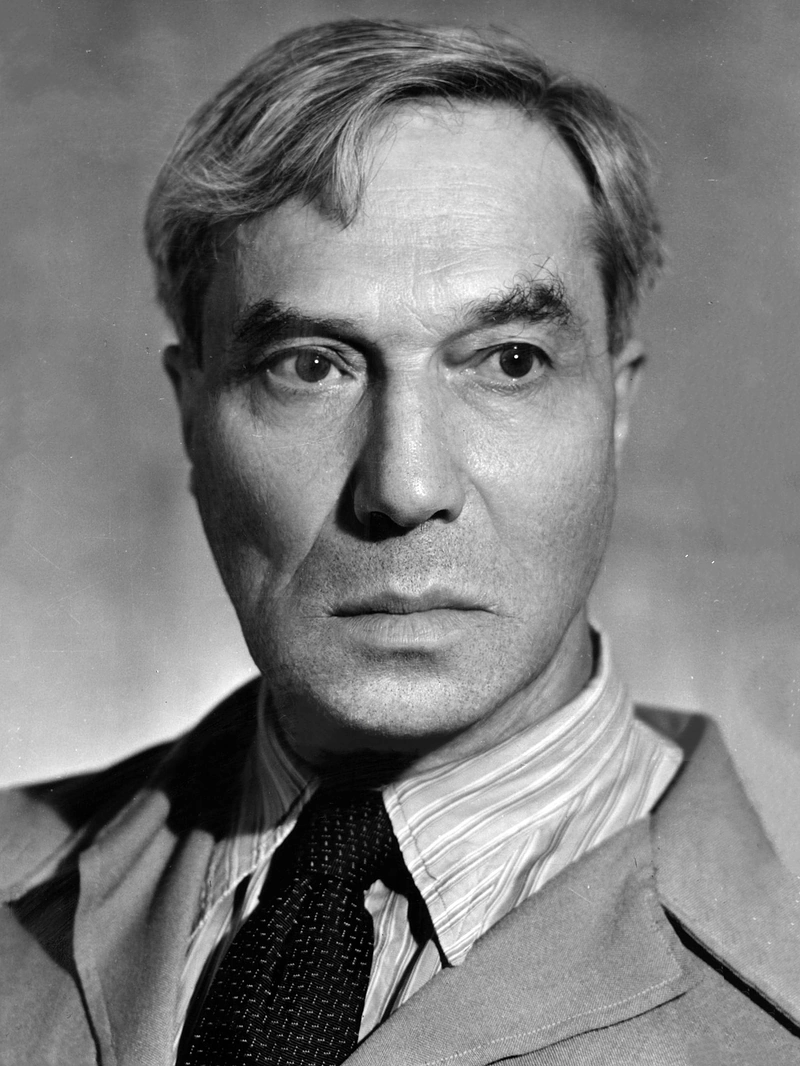
Attr: ТАСС, Public domain
| 22 Quotes | |
| Born as | Boris Leonidovich Pasternak |
| Occup. | Novelist |
| From | Russia |
| Born | February 10, 1890 Moscow, Russian Empire |
| Died | May 30, 1960 Peredelkino, Soviet Union |
| Aged | 70 years |
| Cite | |
Citation Formats
APA Style (7th ed.)
Boris pasternak biography, facts and quotes. (2026, February 11). FixQuotes. https://fixquotes.com/authors/boris-pasternak/
Chicago Style
"Boris Pasternak biography, facts and quotes." FixQuotes. February 11, 2026. https://fixquotes.com/authors/boris-pasternak/.
MLA Style (9th ed.)
"Boris Pasternak biography, facts and quotes." FixQuotes, 11 Feb. 2026, https://fixquotes.com/authors/boris-pasternak/. Accessed 12 Feb. 2026.
Early Life and Background
Boris Leonidovich Pasternak was born on 1890-02-10 in Moscow, into a cultivated household where art was not an ornament but a daily language. His father, Leonid Pasternak, was a prominent painter and illustrator connected to the Moscow School of Painting, Sculpture and Architecture; his mother, Rozaliya (Rosa) Kaufman, was a concert pianist trained in the European tradition. Their home received musicians, writers, and painters, and the young Pasternak grew up hearing serious arguments about form, conscience, and the price of vocation.That privileged intimacy with culture also gave him an early sense of history pressing on private life. He came of age as the Russian Empire entered its terminal decades, with the 1905 Revolution, intensifying censorship, and the moral exhilaration - and dread - of impending rupture. Pasternak absorbed the Moscow intelligentsia's faith that art had ethical weight, yet he also learned that public events could abruptly confiscate personal time, friendships, and even language itself.
Education and Formative Influences
Pasternak first leaned toward music, studying composition and dreaming of a rigorous, almost scientific mastery of harmony; the discipline shaped his later sense of poetic structure even after he turned away from it. He entered Moscow University, studying law and then philosophy, and in 1912 traveled to Marburg in Germany, where he encountered Neo-Kantian thought and the demands of systematic reasoning. He ultimately chose literature, but philosophy left a permanent imprint: an insistence that experience exceeds any single account, and that freedom is tested not in theories but in the friction between conscience and circumstance.Career, Major Works, and Turning Points
He emerged as a poet during the ferment of Russian modernism, associated with the avant-garde milieu around Futurism while remaining temperamentally independent; early collections such as "Sestra moya zhizn" ("My Sister Life", written 1917, published 1922) made his reputation for compressed imagery and ecstatic attention to the ordinary world. Through the 1920s and 1930s he wrote major lyric cycles, longer poems, and important translations (notably Shakespeare), increasingly navigating Soviet cultural politics as Socialist Realism hardened into an enforced doctrine and writers were compelled to perform ideological loyalty. His decisive turning point was the long labor on "Doktor Zhivago" (completed in the mid-1950s), a novel of revolution, civil war, and inner survival; it was refused publication in the USSR, published abroad in 1957, and became an international event. Awarded the Nobel Prize in Literature in 1958, Pasternak was subjected to a state-orchestrated campaign of vilification and intimidation and forced to decline; he died on 1960-05-30 at Peredelkino, the writers' settlement outside Moscow, having paid in isolation for a book that insisted on the primacy of personal truth.Philosophy, Style, and Themes
Pasternak's inner life was marked by a near-mystical attentiveness to moments when reality breaks its habitual crust - weather, light, a voice in a stairwell - and suddenly becomes fateful. The Russian Revolution and the Soviet project did not simply supply him with historical material; they formed the pressure chamber in which his ethics were tested. He believed that life cannot be reduced to programs, statistics, or correct slogans, a conviction he formulates with lapidary clarity: "What is laid down, ordered, factual is never enough to embrace the whole truth: life always spills over the rim of every cup". That "spillover" is the engine of his art: the sense that the unregistered remainder of feeling is where dignity lives, and where a person discovers what cannot be commanded.Stylistically, he fused high lyric intensity with plainspoken observation, refusing to let metaphysical questions float free of kitchens, roads, and tired bodies. His best writing insists that the extraordinary is hidden inside the common, and that language must not become a bureaucratic instrument; hence his credo, "Literature is the art of discovering something extraordinary about ordinary people, and saying with ordinary words something extraordinary". Under a regime that trained citizens to reverse their affections on command, he anatomized the psychological violence of ideological conformity: "They don't ask much of you. They only want you to hate the things you love and to love the things you despise". The tension between love and coercion, private faith and public scripts, gives his poems and "Doctor Zhivago" their distinctive moral weather - tender, unsentimental, and quietly defiant.
Legacy and Influence
Pasternak endures as a central witness to the 20th century's collision between artistic conscience and political absolutism, and as a novelist-poet who showed how history enters the bloodstream of ordinary days. "Doctor Zhivago" helped shape global perceptions of Soviet life not through reportage but through a lived phenomenology of fear, loyalty, and grace, while his lyric poetry remains a touchstone for writers seeking radiance without rhetoric. In Russia, his reputation traveled a long arc from suspicion to renewed honor, and his work continues to argue - without slogans - that the fullest human truth is often the least governable.Our collection contains 22 quotes written by Boris, under the main topics: Witty One-Liners - Ethics & Morality - Truth - Art - Love.
Other people related to Boris: Anna Akhmatova (Poet), Craig Raine (Poet)
Source / external links