
Boris Vallejo Biography Quotes 4 Report mistakes
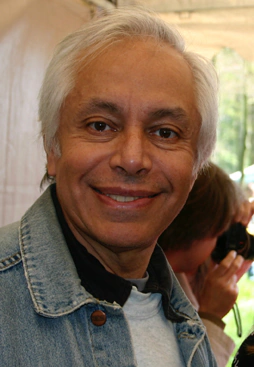
Attr: Stefan Servos, CC BY-SA 3.0
| 4 Quotes | |
| Occup. | Artist |
| From | Peru |
| Spouse | Julie Bell |
| Born | January 8, 1941 Lima, Peru |
| Age | 85 years |
| Cite | |
Citation Formats
APA Style (7th ed.)
Boris vallejo biography, facts and quotes. (2026, February 11). FixQuotes. https://fixquotes.com/authors/boris-vallejo/
Chicago Style
"Boris Vallejo biography, facts and quotes." FixQuotes. February 11, 2026. https://fixquotes.com/authors/boris-vallejo/.
MLA Style (9th ed.)
"Boris Vallejo biography, facts and quotes." FixQuotes, 11 Feb. 2026, https://fixquotes.com/authors/boris-vallejo/. Accessed 28 Mar. 2026.
Early Life and Background
Boris Vallejo was born on January 8, 1941, in Lima, Peru, into a mid-century city where Catholic tradition, criollo modernity, and imported popular culture coexisted uneasily. Peru in the 1940s and 1950s offered limited infrastructure for a young artist dreaming beyond portraiture and decorative commissions, yet it did offer an intense visual education: street processions, pre-Columbian forms in museums, and the muscular rhetoric of public monuments. Vallejo absorbed these contrasts early - the sacred and the sensational, the monumental and the intimate - and they later resurfaced in his penchant for heroic bodies posed like living statuary.From the beginning he drew with the particular hunger of someone who expects to leave. Friends and teachers noted a craftsmanly patience: repeated studies of anatomy, drapery, and value, and a willingness to copy and revise until an image felt inevitable. That temperament - disciplined rather than bohemian - helped him navigate the distance between a Peruvian childhood and the international marketplace he would later enter, where fantasy art demanded not only imagination but persuasive, quasi-classical realism.
Education and Formative Influences
Vallejo trained at the Escuela Nacional Superior Autonoma de Bellas Artes del Peru in Lima, where academic draftsmanship and anatomy remained central even as modernism pressed in from abroad. In 1964 he left Peru for the United States, a decisive migration that placed him inside the engine room of mass illustration: paperbacks, magazines, advertising, and, later, film posters. The move also aligned him with a lineage of illustrators and painterly realists he admired - from Renaissance anatomy to the heroic dynamism of 20th-century fantasy illustration - while confronting him with a commercial reality in which speed, clarity, and reproducibility mattered as much as personal vision.Career, Major Works, and Turning Points
In the United States Vallejo built a career as a professional illustrator whose virtuoso figure painting made him a sought-after name for paperback covers and genre publishing. His breakthrough years in the 1970s and 1980s coincided with a wider boom in sword-and-sorcery, science fiction, and role-playing culture; his images helped define the look of that era, placing exaggerated musculature, gleaming skin, and mythic beasts at center stage. Over time he expanded into high-profile poster work and concept-oriented assignments tied to Hollywood fantasy, including imagery associated with titles such as "Barbarian Queen" (1985) and "National Lampoon's Vacation" (1983). He also consolidated his reputation through art books and calendars that showcased his studio practice and recurring subjects, and through a long creative partnership with artist Julie Bell, whose own career both paralleled and intersected with his.Philosophy, Style, and Themes
Vallejo's method is fundamentally classical: draw insistently, construct the body as architecture, then make it luminous. Technique, for him, is not secondary to inspiration but the condition that permits it. “You can not do what you want to do unless you know the correct technique”. That statement reveals a psychology oriented toward mastery and control - a belief that the imagination only becomes communicable when it is engineered, like a bridge, to hold weight. His fantasy is therefore less dreamlike than declarative: it insists on physical credibility, even when the subject is impossible.His surfaces are equally deliberate. Vallejo is known for oil painting that heightens flesh, metal, and atmosphere into a sensual sheen, and he discusses materials with a pragmatic painter's ear. “The oils, for one thing, are softer and more flexible than the acrylics”. Oil's blendability supports his signature transitions - from highlight to shadow across a deltoid, from reflected light along a scaled creature - and underlines a central theme: the body as both weapon and icon. Yet his realism is selective. He famously prefers the functional over the fussy and resists costume as mere decoration: “You can't do a machine without knowing something about how it's going to work”. The remark clarifies why his most convincing images feel engineered - creatures with believable weight, armor that seems wearable, engines that imply purpose - and why he gravitates toward the timeless, stripped-down theatrics of myth rather than the finicky obligations of period detail.
Legacy and Influence
Vallejo's enduring influence lies in how thoroughly he shaped the visual grammar of late-20th-century fantasy illustration: the hyper-real heroic nude, the staged confrontation with a creature, the erotic charge tempered by classical draftsmanship. His work helped set expectations for book-cover marketing, poster spectacle, and the broader ecosystem of fantasy art that fed comics, games, and film. Admired and debated in equal measure - praised for anatomical command and criticized by some for idealization - he remains a reference point for illustrators learning to reconcile commercial demands with painterly ambition, and for audiences who still recognize his particular promise: that myth can be rendered with the authority of flesh and the polish of oil paint.Our collection contains 4 quotes written by Boris, under the main topics: Art - Learning.
Other people related to Boris: Frank Frazetta (Artist)
Source / external links