
Boyle Roche Biography Quotes 13 Report mistakes
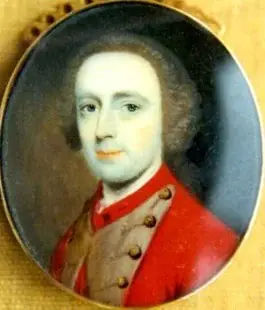
| 13 Quotes | |
| Born as | Sir Boyle Roche, 1st Baronet |
| Occup. | Politician |
| From | Ireland |
| Born | October 1, 1736 Ireland |
| Died | June 5, 1807 Ireland |
| Aged | 70 years |
Sir Boyle Roche, 1st Baronet, is generally recorded as having been born around 1736 and dying around 1807. He was Irish and made his name in the political life of the Kingdom of Ireland before the Union with Great Britain. Firm details about his early years are sparse in popular accounts, and much of his later fame, or notoriety, has tended to eclipse information about his family background and education. By the time he enters the historical record with clarity, he is a public figure on College Green in Dublin, closely associated with the workings of the Irish Parliament and the interests of the government centered at Dublin Castle.
Entry into public life
By the mid-1770s Roche had taken a seat in the Irish House of Commons. He aligned himself with the administration, at a time when the relationship between the Irish legislature and the British ministry was being renegotiated. The Volunteer movement and the agitation for legislative relief created a turbulent political setting, bringing him into the same arena as leading Patriot figures such as Henry Grattan and the Earl of Charlemont. From the outset, Roche was viewed as a dependable government man: a reliable speaker in debate, a vote for ministerial measures, and a familiar presence in the organization of parliamentary business.
Government allegiance and baronetcy
Roche spent much of his career as a conspicuous supporter of successive Lords Lieutenant and their chief secretaries. He is often linked with the rhythms of government management under viceroys such as the Duke of Rutland and, later, Lord Cornwallis, and with chief secretaries like Robert Stewart (better known as Lord Castlereagh). His working relationship with the Speaker, John Foster, placed him near the procedural center of the Commons. In recognition of sustained loyalty and service, he was created a baronet in the 1780s, a mark of royal favor that confirmed his status within the governing interest.
Parliament and the world of College Green
Roche represented more than one constituency over a long tenure, a common pattern in the late-eighteenth-century Irish House of Commons. He participated in debates that followed the constitutional arrangements often associated with 1782, when the Irish legislature gained broader autonomy. During these years he defended administration policy as ministers in London, notably William Pitt the Younger, sought to balance Irish demands, security concerns, and imperial priorities. His place at College Green brought him into regular if adversarial proximity to Henry Grattan and other reformers, while keeping him aligned with Dublin Castle officials responsible for day-to-day management of business.
Rhetoric, reputation, and the Irish bull
Roche is most widely remembered for the verbal slips and mixed metaphors popularly known as Irish bulls. A number of flamboyant lines are attributed to him in pamphlets and newspapers of the period, including the quip, Why should we do anything for posterity? what has posterity ever done for us? Whether all such sayings are authentically his, adapted by satirists, or assembled after the fact, they shaped his public persona. Contemporary wits used these anecdotes to caricature the government side as complacent or absurd, while supporters sometimes suggested the blunders were tactical, comic diversions that could ease tension or slow an unwelcome motion. Either way, Roche became a byword: an instantly recognizable figure on the floor of the House whose manner made him memorable well beyond the particulars of any single bill or speech.
Associates and opponents
Roche moved within a cast of political heavyweights. On the government side he echoed priorities set by William Pitt and worked under the Irish vice-regal administration, eventually led during crisis years by Lord Cornwallis with Lord Castlereagh as chief secretary. Across the aisle stood Henry Grattan, whose oratory defined the Patriot critique, and Lord Charlemont, whose leadership of the Volunteers gave reform a social base. The Speaker, John Foster, provided the institutional backbone of the Commons and, in many sessions, a procedural framework within which Roche operated. Ideas circulating from Irish-born thinkers like Edmund Burke resonated through debates, even when Burke himself addressed a Westminster audience. Roche's career was thus spent amid, and reacting to, some of the most significant personalities of the age.
Union debates and later years
The final phase of Roche's parliamentary life coincided with the crises of the 1790s, including the rising of 1798 and the push toward a legislative union. He sat during the contentious sessions that led to the Acts of Union of 1800. True to his longstanding alignment, he was counted among those who supported the administration as it advanced union as a remedy for instability and as a means of binding Ireland more closely to Great Britain. After the Union, when the Irish Parliament was abolished, his public role necessarily receded. He died around 1807, leaving behind the image of a stalwart of the old College Green system.
Legacy
Roche's legacy marries political utility with cultural caricature. As a parliamentary loyalist, he served as a reliable conduit for government positions in an era of constitutional change. As a figure of popular memory, he is inseparable from the repertoire of Irish bulls that enliven anthologies of wit and parliamentary lore. Historians often note that the comic reputation obscures his effectiveness as a vote-getter and manager for the administration. Yet the very persistence of the anecdotes speaks to his impact: in a chamber filled with commanding orators, Roche left a distinctive imprint on public life by the way he spoke as much as by what he supported.
Our collection contains 13 quotes who is written by Boyle, under the main topics: Witty One-Liners - Wisdom - Freedom - Faith - Legacy & Remembrance.
Source / external links