
Brad Henry Biography Quotes 25 Report mistakes
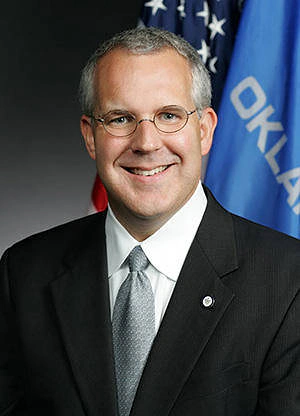
Attr: digitalprairie.ok.gov
| 25 Quotes | |
| Occup. | Politician |
| From | USA |
| Born | June 10, 1963 |
| Age | 62 years |
| Cite | |
Citation Formats
APA Style (7th ed.)
Brad henry biography, facts and quotes. (2026, February 11). FixQuotes. https://fixquotes.com/authors/brad-henry/
Chicago Style
"Brad Henry biography, facts and quotes." FixQuotes. February 11, 2026. https://fixquotes.com/authors/brad-henry/.
MLA Style (9th ed.)
"Brad Henry biography, facts and quotes." FixQuotes, 11 Feb. 2026, https://fixquotes.com/authors/brad-henry/. Accessed 5 Mar. 2026.
Early Life and Education
Charles Bradford "Brad" Henry was born on July 10, 1963, in Shawnee, Oklahoma. Raised in a community that prized public service and civic participation, he graduated from local schools before attending the University of Oklahoma. He earned a bachelor's degree and subsequently a law degree from the University of Oklahoma College of Law. Returning to his hometown area after law school, he began practicing law and developed a reputation for diligence, accessibility, and a pragmatic approach to problem-solving, qualities that would carry into his public career.Entry into Public Service
Henry entered elective office in the early 1990s, winning a seat in the Oklahoma State Senate representing the Shawnee area. During his decade in the Senate, he was recognized as a consensus-builder who worked across party lines on matters important to his district and the state, including education and economic development. His Senate tenure helped him build relationships that crossed ideological and geographic boundaries, and he became known as a moderate voice attentive to both fiscal responsibility and investments in the future.Path to the Governorship
In 2002, Henry ran for governor as a Democrat in a closely watched, three-way race that featured Republican Steve Largent and independent candidate Gary Richardson. The split field and Henry's pitch as a centrist willing to seek common ground helped him prevail with a narrow plurality. He succeeded Frank Keating in January 2003. In 2006, Henry was re-elected decisively, defeating Republican Congressman Ernest Istook by a wide margin, a result that underscored his broad appeal in a traditionally conservative state. During his first term, the lieutenant governor was Mary Fallin, a Republican, followed in his second term by Jari Askins, a Democrat, reflecting the bipartisan dynamic that defined much of his tenure.Governor of Oklahoma (2003-2011)
Education and health care were central themes of Henry's administration. He championed the creation of a state lottery to bolster education funding, an initiative that Oklahoma voters approved in 2004. The Oklahoma Education Lottery became a signature achievement, dedicated to supporting schools, scholarships, and related priorities. He also worked to expand health coverage for working Oklahomans through the Insure Oklahoma program, which combined state resources with federal waivers to help small businesses and individuals access more affordable insurance.Public safety and quality-of-life issues were part of his agenda. Henry supported pioneering measures to curb the state's methamphetamine crisis by tightening controls on pseudoephedrine sales, helping Oklahoma become an early model for other states and the federal government. He also emphasized economic development, with attention to the state's energy, aerospace, and manufacturing sectors and the need to align workforce training with employer demand.
The second half of his governorship unfolded during the national economic downturn, which placed heavy strain on state finances. Henry navigated repeated budget shortfalls by negotiating with legislative leaders to use reserves from the Rainy Day Fund while enacting targeted cuts and protecting core services as much as possible. Severe weather events, including major ice storms and tornado outbreaks, tested state emergency management; he worked with local officials, the Oklahoma Department of Emergency Management, and federal partners such as FEMA to coordinate response and recovery.
Henry's approach was often centrist and incremental, striving to find a workable middle ground in a politically divided environment. He negotiated with leaders from both parties, including Attorney General Drew Edmondson, Senate leaders such as Mike Morgan and Glenn Coffee, and House speakers like Todd Hiett, Lance Cargill, and Chris Benge. On socially contentious issues he sometimes deployed the veto pen, including on high-profile abortion legislation in 2010; in several instances, the legislature overrode his vetoes, illustrating both his willingness to stake out positions and the independent power of the legislative branch.
Leadership Style and Public Image
Henry cultivated a low-key, collaborative style. He preferred to convene stakeholders and allow policy details to be informed by practitioners, whether on education funding, health care design, or criminal justice responses to drug abuse. Supporters praised his steadiness and capacity to bridge differences; critics sometimes wished for more sweeping, ideological changes. His tenure is remembered for an emphasis on practical results, stable management during economic turbulence, and a willingness to accept incremental progress when broader consensus was not attainable.Later Career and Civic Engagement
Term-limited in 2011, Henry left office after two terms and returned to private life and the practice of law. He remained engaged in public affairs, lending his experience to civic, educational, and charitable initiatives and participating in policy discussions on issues he prioritized as governor, especially education, health access, and workforce development. Although he stepped back from day-to-day politics, he continued to be consulted by leaders across the state for his perspective on governance and bipartisanship.Personal Life
Brad Henry is married to Kim Henry, an educator who served as Oklahoma's First Lady. Together they raised three daughters, and the family's roots in Shawnee played a recurring role in Henry's public narrative. Friends and colleagues often pointed to his family life and his spouse's career in the classroom as influences on his education-focused agenda. The Henrys were visible supporters of community events and youth programs, reinforcing the administration's emphasis on schools and opportunity.Legacy
Henry's governorship is closely associated with three enduring themes: the education lottery that continues to provide dedicated funds to schools and scholarships; pragmatic, bipartisan governance in a politically diverse state; and policy experiments that sought to expand health coverage and reduce the harm of methamphetamine. He also managed the state through budget whiplash caused by the Great Recession and frequent severe weather emergencies. By grounding his leadership in compromise and incremental improvement, Brad Henry left a record marked less by sweeping ideological transformation and more by durable, consensus-based initiatives that continued to shape Oklahoma's education and health policy long after he left office.Our collection contains 25 quotes written by Brad, under the main topics: Motivational - Leadership - Freedom - Learning - Parenting.
Other people related to Brad: Ernest Istook (Politician), Steve Largent (Athlete)