
Branch Rickey Biography Quotes 22 Report mistakes
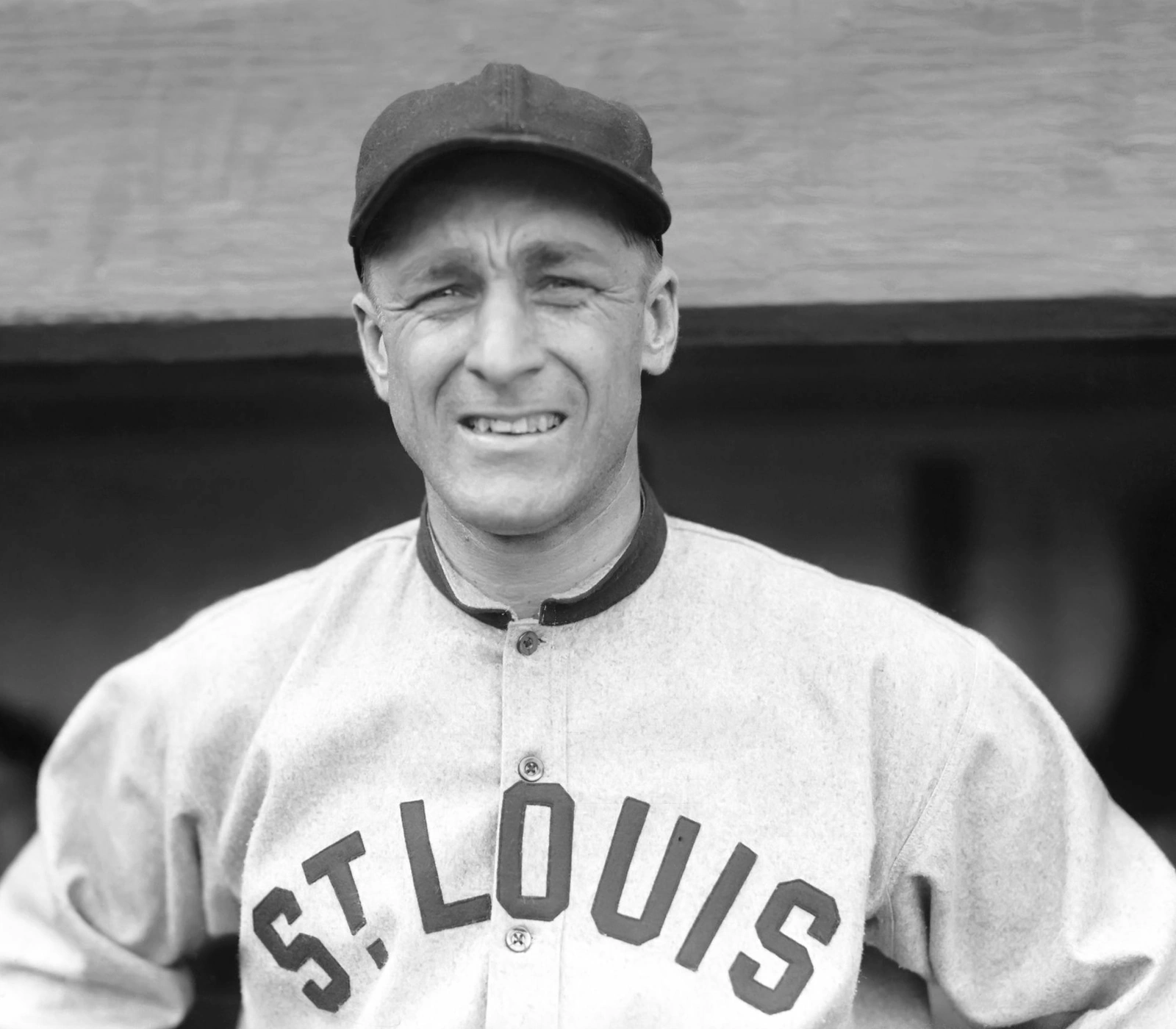
| 22 Quotes | |
| Occup. | Athlete |
| From | USA |
| Born | December 20, 1881 |
| Died | December 9, 1965 |
| Aged | 83 years |
| Cite | |
Citation Formats
APA Style (7th ed.)
Branch rickey biography, facts and quotes. (2026, February 11). FixQuotes. https://fixquotes.com/authors/branch-rickey/
Chicago Style
"Branch Rickey biography, facts and quotes." FixQuotes. February 11, 2026. https://fixquotes.com/authors/branch-rickey/.
MLA Style (9th ed.)
"Branch Rickey biography, facts and quotes." FixQuotes, 11 Feb. 2026, https://fixquotes.com/authors/branch-rickey/. Accessed 6 Mar. 2026.
Early Life and Background
Wesley Branch Rickey was born December 20, 1881, in rural Stockdale, Ohio, a small community shaped by Protestant discipline, farms, and the hard arithmetic of seasonal work. His parents, Jacob and Emily Rickey, raised him in a culture where sobriety and self-command were virtues, and where ambition had to justify itself as service. Baseball reached him not as glamour but as a field for order and self-testing - a game with rules strict enough to reward the patient and expose the careless.Rickey never fit the romantic mold of the natural ballplayer. He was earnest, bookish, and driven by a need to impose structure on chance. Early experiences around rough play and social boundaries - the lines between town and country, between respectability and vice, and later between Black and white America - seeded the moral intensity that would define him. He learned early that institutions do not drift into decency; they have to be pushed, and the pushing costs.
Education and Formative Influences
He attended Ohio Wesleyan University in Delaware, Ohio, playing football and baseball while building the habits of a debater and organizer. After a brief stint as a player and manager in the minors, he earned a law degree at the University of Michigan and coached baseball there, absorbing both the bureaucracy of big institutions and the power of systems - scouting, training, compliance - to turn average inputs into reliable outcomes. The mixture of law, religion, and athletics made him unusually suited to baseballs front offices: he could argue, persuade, moralize, and calculate.Career, Major Works, and Turning Points
Rickey played briefly in the major leagues as a catcher (including stints with the St. Louis Browns and New York Highlanders) but found his true field in management and innovation. As an executive with the St. Louis Browns and then the St. Louis Cardinals, he helped create the modern farm system in the 1920s and 1930s, stockpiling and developing minor-league talent on an industrial scale while helping build perennial contenders. His most consequential turning point came with the Brooklyn Dodgers: as president and general manager, he signed Jackie Robinson in 1945 and brought him to the majors in 1947, breaking the color line amid intense hostility. Later, as an executive with the Pittsburgh Pirates, he helped popularize the batting helmet, another example of his willingness to endure ridicule to reduce preventable risk.Philosophy, Style, and Themes
Rickeys inner life was a contest between zeal and control. Publicly he could be theatrical, sermonizing in a rolling cadence that opponents mocked and allies relied on; privately he was exacting, often suspicious of sentiment, and addicted to the long view. He treated baseball as a managed ecosystem: supply chains of players, pipelines of instruction, and rules that could be engineered to make performance reproducible. His signature maxim, “Luck is the residue of design”. , was less a slogan than a psychological defense against chaos - a way to insist that preparation could domesticate uncertainty and that foresight was a moral obligation.His style married cold-blooded personnel decisions to a professed code of principle. He preached efficiency, and he practiced it, even when it looked ruthless: “Trade a player a year too early rather than a year too late”. Yet the same executive who saw aging curves with merciless clarity also framed integration as a national duty rather than a market trick. “Ethnic prejudice has no place in sports, and baseball must recognize that truth if it is to maintain stature as a national game”. That sentence captures the dual engine of his career - conscience and calculation - and the way he often fused them until they were inseparable.
Legacy and Influence
Rickey died on December 9, 1965, in Columbia, Missouri, after living long enough to see integration reshape baseball and the farm system become the sports default machinery. His enduring influence is structural: player development, deep scouting networks, and the idea that competitive advantage can be built, not merely bought. But his deeper legacy is ethical and civic. By forcing Americas pastime to confront its own segregation, he proved that a sports executive could be a political actor without holding office - and that institutional change, like winning pennants, begins with someone willing to design the future and pay the price for it.Our collection contains 22 quotes written by Branch, under the main topics: Witty One-Liners - Motivational - Wisdom - Sports - Live in the Moment.
Other people related to Branch: Dizzy Dean (Athlete), Jackie Robinson (Athlete), Bill Veeck (Businessman), Al Campanis (Businessman), Bill Klem (Athlete), Roger Kahn (Writer), Rogers Hornsby (Athlete), Red Smith (Journalist), Enos Slaughter (Athlete), Gil Hodges (Athlete)
Source / external links