
Brendan Behan Biography Quotes 23 Report mistakes
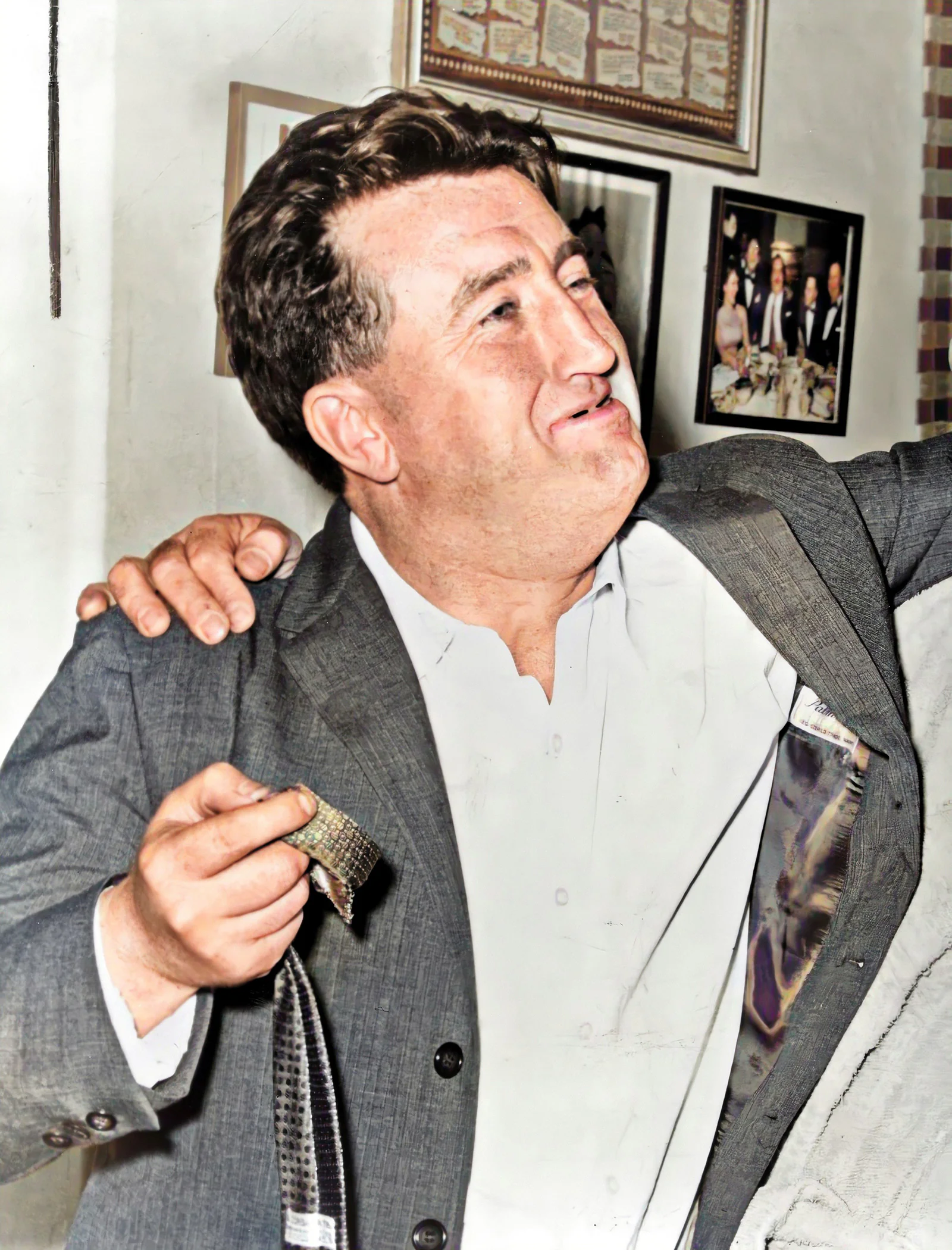
| 23 Quotes | |
| Born as | Brendan Francis Behan |
| Occup. | Dramatist |
| From | Ireland |
| Born | February 9, 1923 Dublin, Ireland |
| Died | March 20, 1964 Dublin, Ireland |
| Cause | Alcoholism |
| Aged | 41 years |
| Cite | |
Citation Formats
APA Style (7th ed.)
Brendan behan biography, facts and quotes. (2026, February 1). FixQuotes. https://fixquotes.com/authors/brendan-behan/
Chicago Style
"Brendan Behan biography, facts and quotes." FixQuotes. February 1, 2026. https://fixquotes.com/authors/brendan-behan/.
MLA Style (9th ed.)
"Brendan Behan biography, facts and quotes." FixQuotes, 1 Feb. 2026, https://fixquotes.com/authors/brendan-behan/. Accessed 28 Mar. 2026.
Early Life and Background
Brendan Francis Behan was born on 9 February 1923 into a politically charged Dublin, in the north-inner-city neighborhood of Russell Street, a world of tenements, street corner wit, and grinding insecurity. His family lived close to the aftershocks of revolution: the War of Independence and Civil War were not distant events but local memories, folded into songs, arguments, and the quiet injuries of a new state trying to police itself. Behan grew up speaking the idioms of the city poor and absorbing a fierce sense of the Irish language as something lived, not museumed.Home was crowded but saturated with culture and republican memory. His mother, Kathleen Kearney, was a songwriter and storyteller with connections to the cultural-nationalist circles that helped shape modern Ireland; his father, Stephen Behan, was a house painter with strong republican sympathies. In that atmosphere, politics was not abstract - it was family history and neighborhood allegiance - and Behan learned early that a joke could be both weapon and shelter. The same streets that fed his ear for dialogue also offered the temptations that later tightened their grip: drink, bravado, and the quick validation of performance.
Education and Formative Influences
Behan left school young and apprenticed as a house painter, but he educated himself through Dublin libraries, pub debate, and the bilingual world of Irish revivalists alongside English-language modernism. He was drawn into the Irish Republican Army as a teenager and in 1939, sent to England on an IRA mission, was arrested in Liverpool with explosives; sentenced to Borstal, he discovered how confinement distills character into voices, routines, humiliations, and sudden solidarities. Those years - followed by later imprisonment in Mountjoy and the Curragh for IRA activity - formed his lifelong preoccupation with institutions and the men trapped inside them, and gave him the raw material that he would reshape into art.Career, Major Works, and Turning Points
In the late 1940s and early 1950s Behan began publishing while still moving in and out of precarious work and poor health, building a reputation as a writer whose sentences carried the cadence of speech and the bruises of experience. His memoir Borstal Boy (1958) turned his English imprisonment into a study of camaraderie and political disillusion, refusing simple propaganda; it announced him internationally as more than a rebel raconteur. The major theatrical breakthrough came with The Quare Fellow (first staged 1954), a prison play circling an unseen condemned man, and then The Hostage (1958), which fused farce, song, and menace around an English soldier held by republicans in a Dublin lodging house - works that captured a society still negotiating sovereignty, violence, and moral hypocrisy. Success intensified his public persona - the bard of the pub, brilliant and unreliable - and as alcoholism and diabetes advanced, the gap widened between the disciplined craft visible on the page and the self-destructive performance expected of him on television and in bars.Philosophy, Style, and Themes
Behan wrote from the conviction that the state and its uniforms are most dangerous when they pretend to be neutral, and his comedy is often a defensive laugh at coercion. His line “I have never seen a situation so dismal that a policeman couldn't make it worse”. is not merely a gag - it is a psychological reflex formed in cells, courts, and interrogations, where authority felt less like protection than escalation. Yet his work rarely flatters rebellion, either; he understood how movements become machines, how slogans can dull feeling, and how ordinary people are pressed into roles by history. His plays keep returning to the same pressure points: prisons and lodging houses as micro-states, songs as communal anesthesia, and humor as a way to say what would otherwise be unsayable.The most intimate antagonist in his life was not the British or the Free State but addiction, which he treated with a pitiless clarity that reads like self-diagnosis: “One drink is too many for me and a thousand not enough”. That admission explains the manic oscillation in his tone - tenderness turning to cruelty, lyricism collapsing into rowdy defiance - and it helps decode the tragic arc of his celebrity. Even his social conscience arrived wrapped in irreverence, as when he declared, "I have a total irreverence for anything connected with society except that which makes the roads safer, the beer stronger, the food cheaper and the old men and old women warmer in
Our collection contains 23 quotes written by Brendan, under the main topics: Witty One-Liners - Love - Sarcastic - Writing - War.
Source / external links