
Brian Greene Biography Quotes 10 Report mistakes
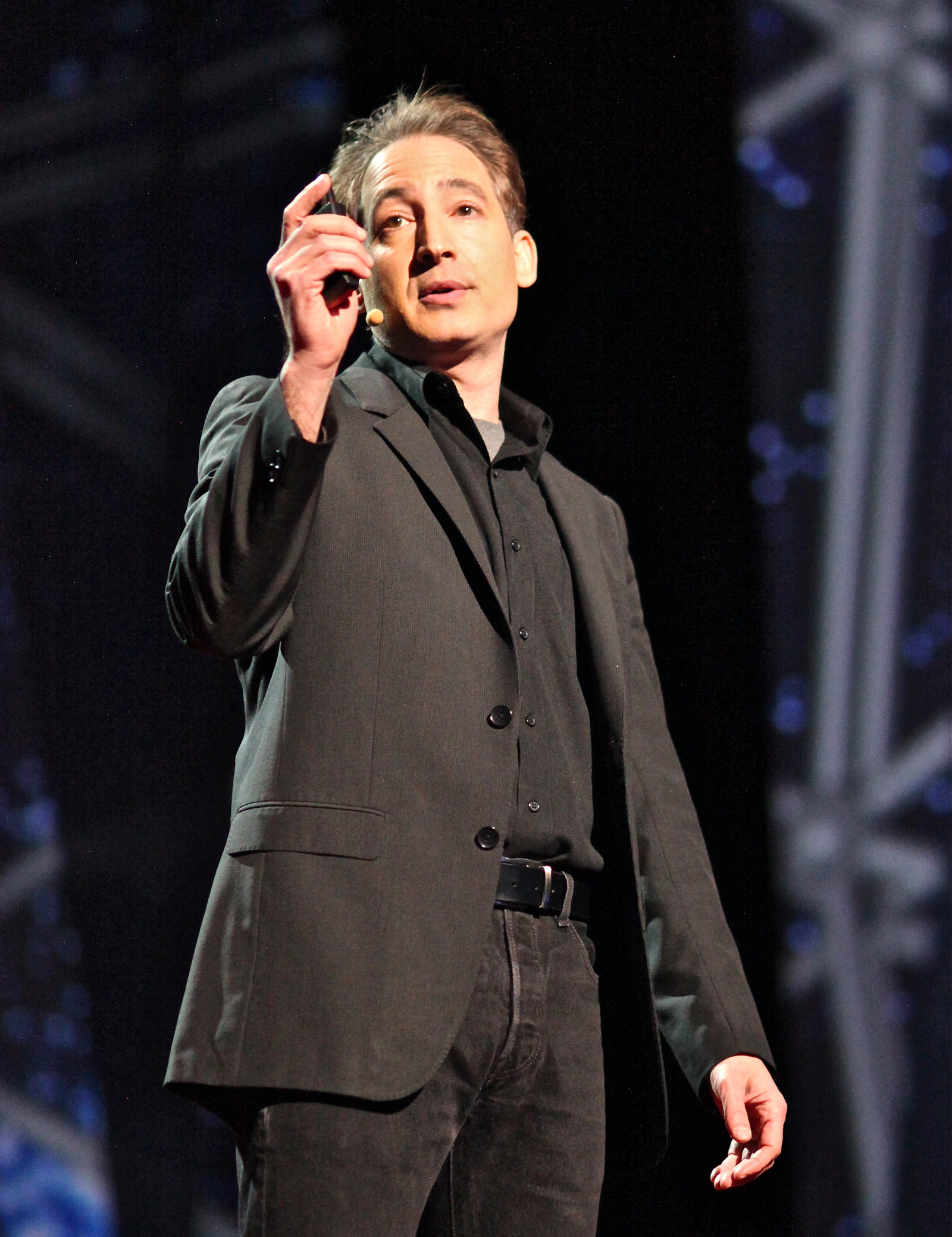
Attr: Steve Jurvetson, CC BY 2.0
| 10 Quotes | |
| Born as | Brian Randolph Greene |
| Occup. | Physicist |
| From | USA |
| Born | February 9, 1963 New York City, New York, USA |
| Age | 63 years |
| Cite | |
Citation Formats
APA Style (7th ed.)
Brian greene biography, facts and quotes. (2026, February 11). FixQuotes. https://fixquotes.com/authors/brian-greene/
Chicago Style
"Brian Greene biography, facts and quotes." FixQuotes. February 11, 2026. https://fixquotes.com/authors/brian-greene/.
MLA Style (9th ed.)
"Brian Greene biography, facts and quotes." FixQuotes, 11 Feb. 2026, https://fixquotes.com/authors/brian-greene/. Accessed 11 Feb. 2026.
Early Life and Education
Brian Randolph Greene was born on February 9, 1963, in New York City, and grew up with a keen interest in mathematics and physics that rapidly outpaced the typical curriculum. As a student he sought out advanced coursework and mentorship, setting a foundation for the theoretical work that would define his career. He earned his undergraduate degree in physics from Harvard University, where he developed a rigorous command of both formal theory and the art of problem solving. Greene then continued as a Rhodes Scholar at the University of Oxford, pursuing doctoral research that immersed him in the rapidly developing world of string theory and related areas of mathematical physics. These formative years brought him into contact with senior theorists in both the United States and the United Kingdom, sharpening his feel for the deep interplay between geometry and the laws of nature.Academic Career and Research
Greene built a research portfolio rooted in string theory, focusing on the geometric framework of Calabi-Yau spaces and the surprising equivalences known as dualities. He became widely known for contributions to mirror symmetry, which revealed that different geometric shapes could yield identical physical predictions within string theory. This line of inquiry opened new paths between physics and pure mathematics, changing how theorists think about space, topology, and the possibility of transitions between different vacuum configurations. Greene also helped frame the conceptual stakes of string theory for high-energy physics and cosmology, emphasizing how the theory seeks to unify quantum mechanics and general relativity. At Columbia University, where he became a professor of physics and mathematics, he helped develop programs that placed the university at the center of research in string theory, cosmology, and astroparticle physics, building bridges among fields that once seemed separate.Books and Media
Greene is one of the most widely read science communicators of his generation. His book The Elegant Universe (1999) introduced string theory to a broad audience with uncommon clarity, earning major accolades and establishing him as a public face for the field. He followed with The Fabric of the Cosmos (2004), which explored space, time, and the nature of reality; The Hidden Reality (2011), which examined speculative multiverse ideas; and Until the End of Time (2020), a sweeping narrative that connects cosmology with the emergence of life, mind, and meaning. The adaptation of The Elegant Universe as a NOVA miniseries on PBS brought his work to millions of viewers and received Emmy and Peabody recognition under the leadership of executive producer Paula S. Apsell. A later NOVA series based on The Fabric of the Cosmos similarly combined rigorous content with cinematic storytelling, reinforcing Greene's role as an articulate advocate for scientific literacy.World Science Festival and Public Engagement
Beyond writing and teaching, Greene has been a builder of institutions. In 2008 he co-founded the World Science Festival with Tracy Day, a veteran broadcast journalist and producer who became a central partner in shaping the festival's vision. The festival's programs have brought leading scientists together with artists, educators, and the public for live events that stage science as a cultural activity as much as an academic pursuit. Through its associated educational platform, World Science U, Greene and Day extended the festival's reach into classrooms and homes, offering online courses and interactive lectures designed to help learners grasp challenging concepts in relativity, quantum mechanics, and cosmology. Their collaboration blended Greene's strengths as a theoretician and explainer with Day's expertise in production and storytelling, creating a high-profile forum that has helped normalize serious scientific discussion in mainstream venues.Colleagues, Debates, and Influences
Greene's professional milieu has included many of the era's central figures in high-energy theory, among them researchers such as Edward Witten and Leonard Susskind, whose advances helped frame the landscape in which Greene worked and that he helped interpret for the public. His books and public lectures also engaged with critiques of string theory's testability and scope, in conversation with the broader community and with outspoken critics such as Lee Smolin and Peter Woit. Rather than avoid controversy, Greene used these debates to emphasize how speculative ideas can be responsibly assessed and how theory and experiment can remain in dialogue even when empirical guidance is limited. In the classroom and in the public square, he has been known for distilling complex mathematics into vivid metaphors while preserving the structure that makes the ideas precise.Teaching and Mentorship
At Columbia University, Greene has taught across levels, from introductory courses that spark first exposure to relativity and quantum theory to advanced seminars for graduate students. He has mentored young researchers navigating the boundary between mathematics and physics, encouraging work that bridges techniques and cultivates intuition. His presence on campus has linked the university's research programs to public-facing initiatives, giving students unusual opportunities to participate in outreach, festival programming, and media production as a complement to formal study.Style, Themes, and Reach
Greene's communication style foregrounds the big questions: What is space? What is time? How can a universe of particles give rise to life and consciousness? He uses these questions to connect technical advances in string theory and cosmology to human concerns about meaning and our place in the cosmos. Whether writing about dualities, black holes, or the arrow of time, he emphasizes the interplay between mathematical consistency and empirical adequacy, and he acknowledges the limits of current knowledge even as he articulates the aspirations of fundamental physics. His public lectures, debates, and interviews have reached audiences well beyond academia, contributing to a broader cultural literacy about science.Impact and Legacy
Brian Greene's legacy rests on a dual foundation: research that deepened understanding of the mathematical structure of string theory, and communication that made some of modern physics' most abstract ideas accessible and compelling. The interplay of these roles is essential to his influence. Collaborations within the theoretical community advanced topics such as mirror symmetry and the geometry of compactification, while partnerships with producers like Paula S. Apsell and with Tracy Day built large-scale platforms for public engagement. Through books, television, festivals, and classrooms, Greene helped shape the contemporary narrative of fundamental physics, inspiring many to study science and providing a clear, candid account of the hopes and challenges that drive the field.Our collection contains 10 quotes written by Brian, under the main topics: Witty One-Liners - Meaning of Life - Deep - Science - Knowledge.
Brian Greene Famous Works
- 2020 Until the End of Time: Mind, Matter, and Our Search for Meaning in an Evolving Universe (Book)
- 2011 The Hidden Reality: Parallel Universes and the Deep Laws of the Cosmos (Book)
- 2008 Icarus at the Edge of Time (Book)
- 2004 The Fabric of the Cosmos: Space, Time, and the Texture of Reality (Book)
- 1999 The Elegant Universe: Superstrings, Hidden Dimensions, and the Quest for the Ultimate Theory (Book)
Source / external links