
Brian Herbert Biography Quotes 25 Report mistakes
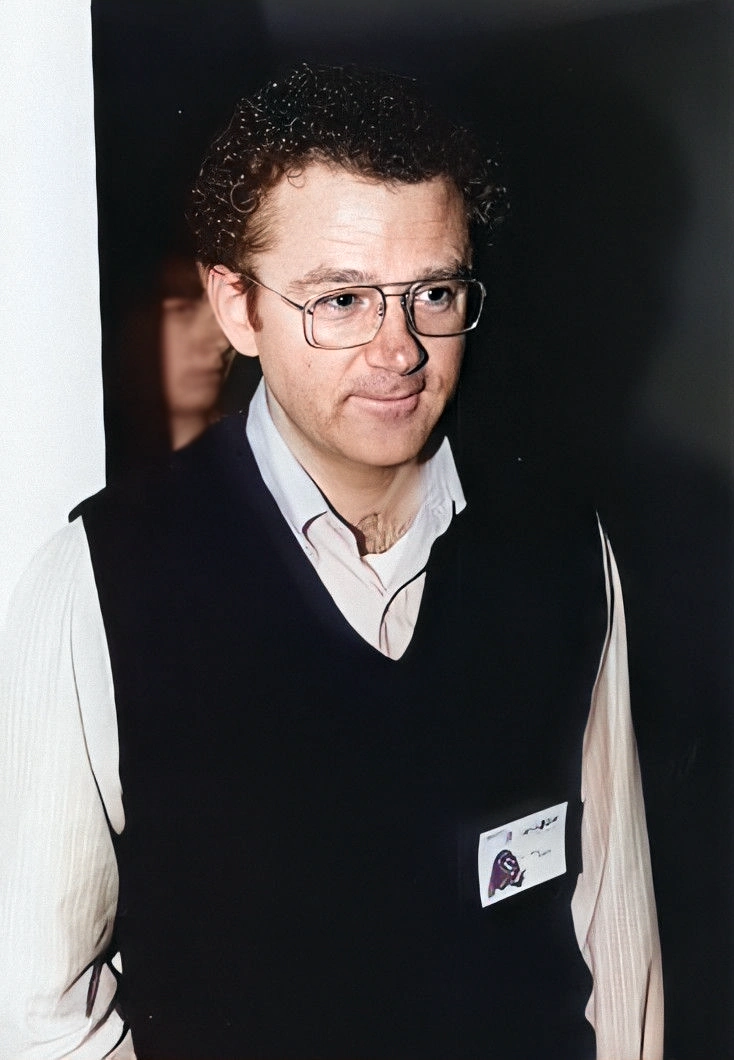
| 25 Quotes | |
| Born as | Brian Patrick Herbert |
| Occup. | Author |
| From | USA |
| Born | June 29, 1947 Seattle, Washington, USA |
| Age | 78 years |
| Cite | |
Citation Formats
APA Style (7th ed.)
Brian herbert biography, facts and quotes. (2026, February 11). FixQuotes. https://fixquotes.com/authors/brian-herbert/
Chicago Style
"Brian Herbert biography, facts and quotes." FixQuotes. February 11, 2026. https://fixquotes.com/authors/brian-herbert/.
MLA Style (9th ed.)
"Brian Herbert biography, facts and quotes." FixQuotes, 11 Feb. 2026, https://fixquotes.com/authors/brian-herbert/. Accessed 5 Mar. 2026.
Early Life and Background
Brian Patrick Herbert was born on June 29, 1947, in the United States, into a mid-century West Coast milieu where aerospace, suburban expansion, and postwar optimism coexisted with Cold War unease. His earliest public identity was inseparable from the gravitational pull of his father, Frank Herbert, whose 1965 novel Dune would become a cultural weather system of its own. Growing up in the long shadow of a world-famous imagination gave Brian both access and pressure: access to a working writer's habits, and pressure to define a self beyond a surname that readers treated like a brand.Family life, in his accounts and interviews over the years, has often been framed as an education in observation - how people tell stories about themselves, how private choices become public narratives, and how legacies harden into expectation. Watching Frank Herbert labor over drafts and research also meant seeing creativity as disciplined work rather than inspiration alone. That early proximity to ambition and to the marketplace of ideas would later shape Brian's practical, continuation-minded approach to authorship, especially when stewardship and commerce began to overlap.
Education and Formative Influences
Herbert served as a Vietnam-era helicopter pilot, an experience that left him with a first-hand sense of risk, logistics, and the thin membrane between planning and chaos; those sensibilities recur in his later emphasis on institutions, command hierarchies, and unintended consequences. After military service he pursued higher education (including work in the sciences and humanities) and moved through jobs that sharpened his feel for reporting, procedure, and documentation. The combination of war, study, and archival habits formed a temperament drawn to systems - how they function, how they fail, and how individuals attempt to steer them.Career, Major Works, and Turning Points
Herbert first established himself apart from the Dune franchise with nonfiction and biography, most notably Dreamer of Dune (2003), his portrait of Frank Herbert that mixes family history with literary context and a son's attempt to translate intimacy into record. The decisive turning point came in the late 1990s when Herbert, working with novelist Kevin J. Anderson, began expanding the Dune universe using Frank Herbert's notes and the series' existing scaffolding. Beginning with Dune: House Atreides (1999) and continuing through multiple prequels, interquels, and sequels - including Hunters of Dune (2006) and Sandworms of Dune (2007), which aimed to complete the arc left open after Chapterhouse: Dune - he moved from being "the son of" to becoming a primary architect of what Dune would mean to a new generation of mass-market readers.Philosophy, Style, and Themes
Herbert's fiction and public remarks tend to emphasize choice, self-knowledge, and the high price of historical motion - a moral accounting that mirrors his life as both participant and curator. In the Dune expansions, characters often discover that power is less an object to seize than a web of obligations to manage; decisions ripple through economies, ecologies, and mythmaking. That worldview condenses neatly in his line, “The Universe operates on a basic principle of economics: everything has its cost. We pay to create our future, we pay for the mistakes of the past”. Psychologically, it reads as a soldier-writer's realism: the future is not wished into being but purchased, sometimes with regret.His style, especially in collaboration, privileges forward motion, clear plotting, and institutional drama - a contrast to Frank Herbert's denser interiority and philosophical digressions. Yet Brian's recurring fascination is still the instability of identity under pressure: spies, shape-shifters, and political actors who survive by performing selves. “No person can ever know everything that is in the heart of another. We are all Face Dancers in our souls”. The sentence functions as both theme and confession: a son preserving a father's world while acknowledging the masks required to live inside someone else's legacy. Running beneath it is a practical ethic of learning as agency, not ornament - “The capacity to learn is a gift; The ability to learn is a skill; The willingness to learn is a choice”. That triad maps onto his career: the inheritance of material, the craft of continuation, and the decision to accept the public burden of authorship where many would refuse it.
Legacy and Influence
Brian Herbert's enduring influence rests on stewardship - controversial to some purists, indispensable to many readers - that transformed Dune from a finite canon into a sprawling franchise ecology of novels, reference works, and renewed cultural visibility. By combining archival authority with commercial storytelling, he helped keep the Herbert universe continuously in print and conversation, shaping how late-20th- and early-21st-century audiences encounter Dune: not only as a singular 1960s masterpiece, but as an evolving narrative commons. His biography of Frank Herbert also remains a key lens on the man behind Dune, anchoring the myth in family memory and reminding readers that literary empires are built from private lives, compromises, and choices that cannot be footnoted away.Our collection contains 25 quotes written by Brian, under the main topics: Motivational - Wisdom - Truth - Friendship - Leadership.
Brian Herbert Famous Works
- 2016 Navigators of Dune (Novel)
- 2014 Mentats of Dune (Novel)
- 2012 Sisterhood of Dune (Novel)
- 2009 The Winds of Dune (Novel)
- 2008 Paul of Dune (Novel)
- 2007 Sandworms of Dune (Novel)
- 2006 Hunters of Dune (Novel)
- 2004 Dune: The Battle of Corrin (Novel)
- 2003 Dune: The Machine Crusade (Novel)
- 2002 Dune: The Butlerian Jihad (Novel)
- 2001 House Corrino (Novel)
- 2000 House Harkonnen (Novel)
- 1999 House Atreides (Novel)
Source / external links