
Bridget Riley Biography Quotes 13 Report mistakes
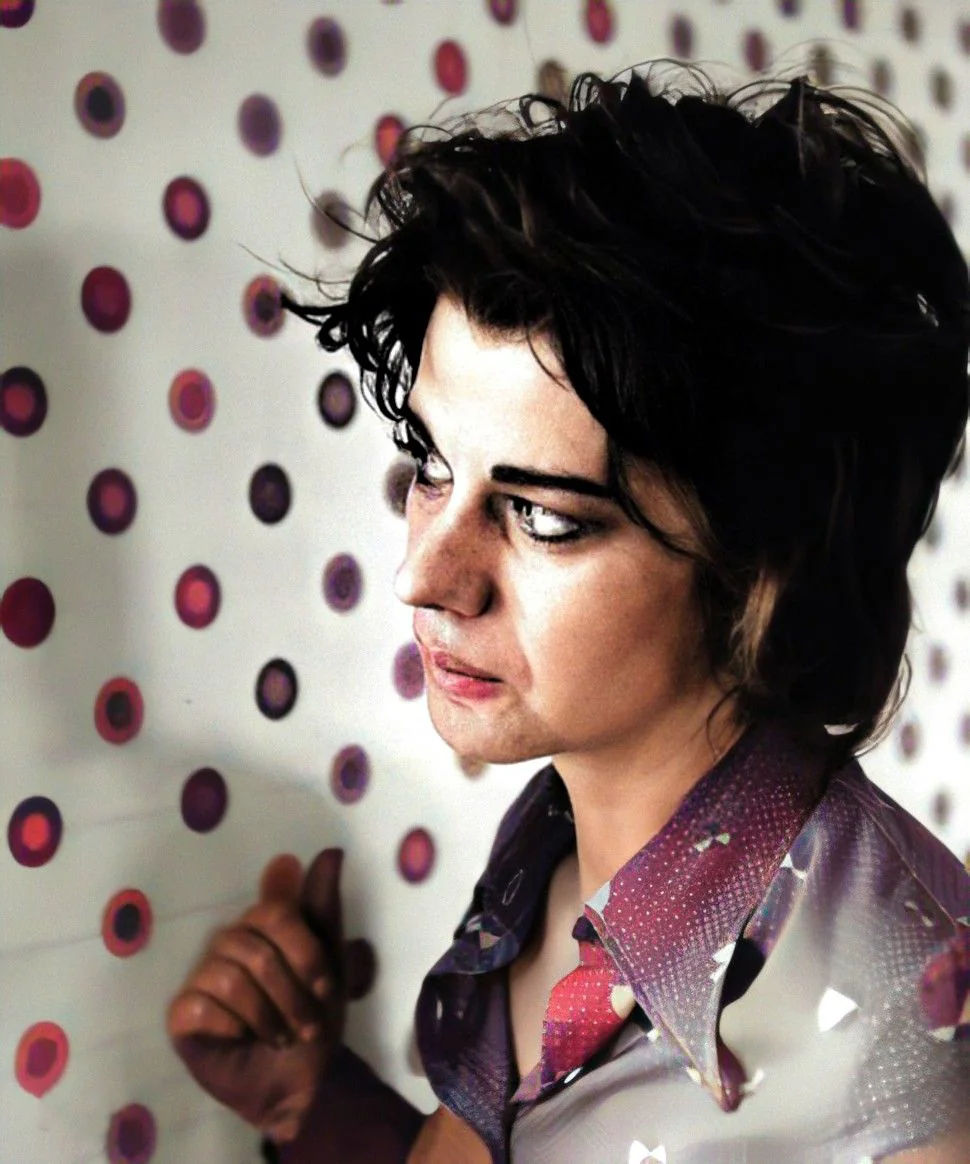
| 13 Quotes | |
| Born as | Bridget Louise Riley |
| Occup. | Artist |
| From | United Kingdom |
| Born | April 24, 1931 Norwood, London, England, UK |
| Age | 94 years |
| Cite | |
Citation Formats
APA Style (7th ed.)
Bridget riley biography, facts and quotes. (2026, February 2). FixQuotes. https://fixquotes.com/authors/bridget-riley/
Chicago Style
"Bridget Riley biography, facts and quotes." FixQuotes. February 2, 2026. https://fixquotes.com/authors/bridget-riley/.
MLA Style (9th ed.)
"Bridget Riley biography, facts and quotes." FixQuotes, 2 Feb. 2026, https://fixquotes.com/authors/bridget-riley/. Accessed 25 Mar. 2026.
Early Life and Background
Bridget Louise Riley was born on April 24, 1931, in the United Kingdom, into a country drifting toward war and then into the long, rationed afterlife of victory. Her childhood was marked by the dislocations shared by many Britons of her generation: evacuation, separation, and an early sense that ordinary space could suddenly become strange and unstable. That awareness would later reappear in her art as a disciplined making-strange of the most basic visual facts - line, interval, and edge.She grew up with the quiet pressures of mid-century English respectability and the private intensity of a child who watched closely. The landscapes of her early years - fields, roads, and the shifting English weather - lodged less as scenery than as sensations: glare, vibration, the tremor of heat or wind across surfaces. Even before she had a language for abstraction, she was storing experiences of how the eye is nudged, teased, or overwhelmed by what seems, at first glance, simple.
Education and Formative Influences
Riley studied at Goldsmiths College in London (1949-1952) and then at the Royal College of Art (1952-1955), training in an atmosphere where postwar British painting was renegotiating its relationship to European modernism. She absorbed the structural lessons of Seurat and the measured intelligence of Cezanne, while also confronting the claims of Abstract Expressionism and the cool economies of emerging hard-edge practice. A severe illness in the mid-1950s interrupted her momentum, but it also clarified her determination to make a painting that was not illustration or confession - something closer to a visual event, tested by repeated looking and by the ethics of exactness.Career, Major Works, and Turning Points
After early figurative work, Riley turned decisively toward optical abstraction around 1960, building black-and-white paintings that treated perception as both subject and medium. Works such as Movement in Squares (1961) and Blaze (1964) established her as a central figure in what critics labeled Op Art, a term that brought fame but often flattened the complexity of her intentions. The 1965 New York exhibition The Responsive Eye amplified her international visibility, as did her first major retrospectives and the 1968 Venice Biennale, where she won the International Painting Prize. From the later 1960s onward she expanded into color, developing stripes, curves, and interlocking chromatic sequences that matured through series and sustained inquiry - not a search for novelty, but for ever more precise control of pictorial energy.Philosophy, Style, and Themes
Riley approached painting as a laboratory of attention in which the spectator is not an onlooker but an instrument. “Focusing isn't just an optical activity, it is also a mental one”. That sentence summarizes her psychological stance: she mistrusted the romantic myth of inspiration and instead built conditions in which sensation could be earned. In the early black-and-white paintings, she made the interval itself - the tiny unit of difference between one band and the next - do the emotive work, producing dizziness, shimmer, and a bodily sense of instability without narrative. Her aim was not to depict motion but to cause a measured disturbance, a controlled loss of equilibrium that reveals how much of seeing is interpretation.Her themes, despite the geometric look, remained tethered to the natural world, understood as force rather than motif. “For me nature is not landscape, but the dynamism of visual forces”. When she later studied Egyptian, Mediterranean, and Indian sources, and when she pursued color with increasing audacity, the point was never decorative enrichment but a deeper grasp of how light, adjacency, and rhythm behave in the mind. She described her method as cumulative and release-driven: “I used to build up to sensation, accumulating tension until it released a perceptual experience”. The recurrent stripes and curves are therefore less a signature than a device for generating pressure - an insistence that modern painting can still speak through the body, via the nerves of the eye.
Legacy and Influence
Riley's influence is double-edged: she is both a canonical modernist and a perpetual challenge to easy categories of "optical" art. Her rigor helped legitimize perception as a serious subject for painting, shaping generations of abstract artists, designers, and architects, while also providing a counter-model to expressionist autobiography - an art of feeling produced by structure. Honored with major retrospectives and public commissions and recognized as a leading British painter of her era, she endures because her work does not merely represent vision; it trains it, proposing that freedom in art can be won through constraint, and that the deepest emotions can arrive through the most impersonal means.Our collection contains 13 quotes written by Bridget, under the main topics: Truth - Wisdom - Art - Faith - Learning from Mistakes.
Source / external links