
Bruce Barton Biography Quotes 23 Report mistakes
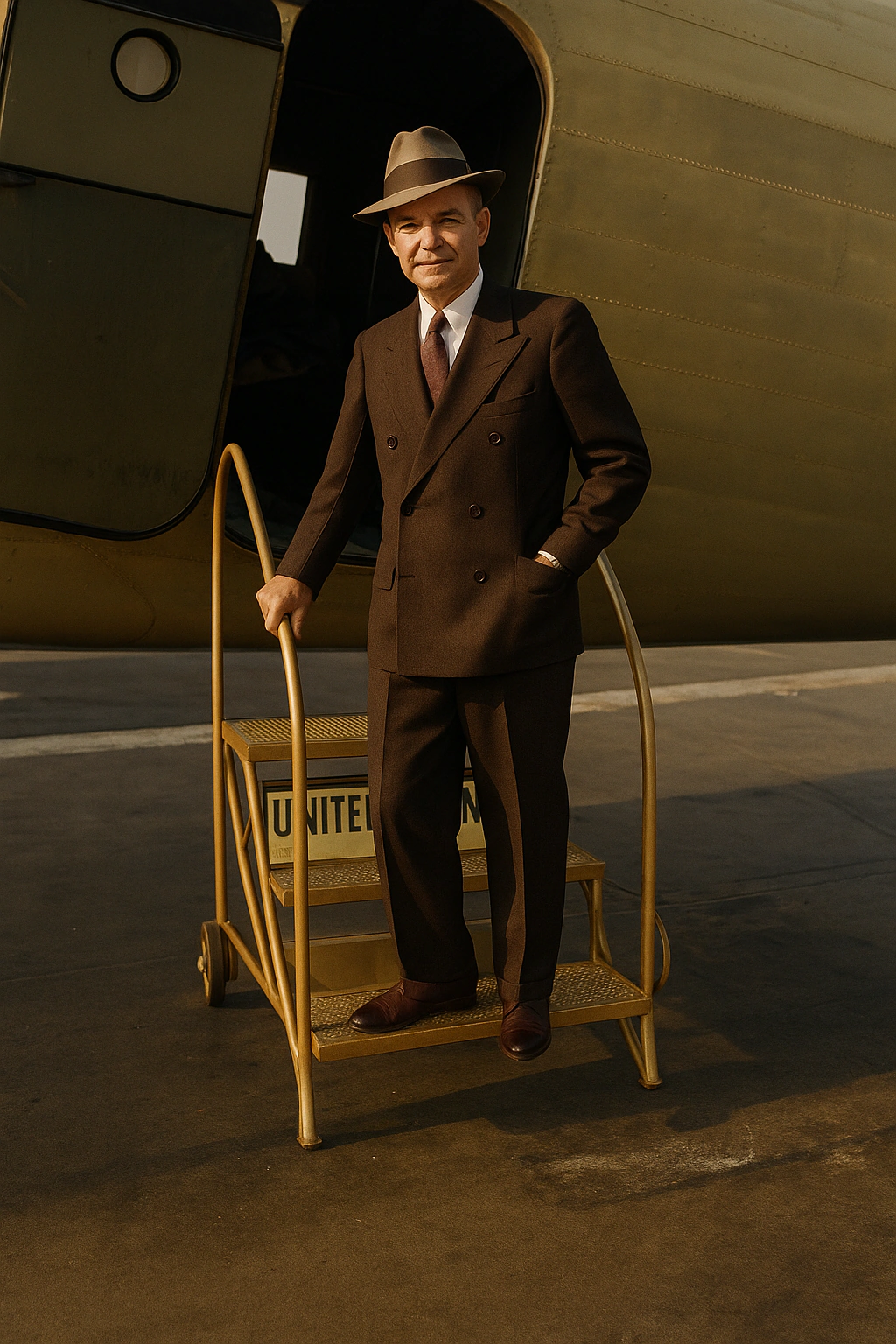
| 23 Quotes | |
| Born as | Bruce Fairchild Barton |
| Occup. | Author |
| From | USA |
| Spouse | Frances Fincke |
| Born | August 5, 1886 Robinson, Illinois, USA |
| Died | July 5, 1967 New York City, New York, USA |
| Cause | Heart attack |
| Aged | 80 years |
| Cite | |
Citation Formats
APA Style (7th ed.)
Bruce barton biography, facts and quotes. (2026, February 11). FixQuotes. https://fixquotes.com/authors/bruce-barton/
Chicago Style
"Bruce Barton biography, facts and quotes." FixQuotes. February 11, 2026. https://fixquotes.com/authors/bruce-barton/.
MLA Style (9th ed.)
"Bruce Barton biography, facts and quotes." FixQuotes, 11 Feb. 2026, https://fixquotes.com/authors/bruce-barton/. Accessed 25 Mar. 2026.
Early Life and Background
Bruce Fairchild Barton was born on August 5, 1886, in Robbins, Tennessee, into a household shaped by Protestant ministry and small-town American aspiration. His father, the Rev. William Eleazar Barton, was a Congregationalist pastor and later a well-known author of religious and Lincoln-themed works, and the family moved with the cadence of clerical appointments, including time in the Midwest. That itinerant childhood gave Barton two lasting preoccupations: how words move communities, and how moral authority is performed in public.He came of age as the United States industrialized and advertising began to professionalize, when magazines, mail order commerce, and national brands were remaking daily life. Barton absorbed the era's faith in uplift, self-help, and managerial efficiency, but he also noticed the anxieties beneath it - the fear of being ordinary, the hunger for belonging, the wish to make private life feel part of a larger story. Those tensions would later fuel his knack for translating spiritual or civic ideals into accessible narratives that could sell a product, a candidate, or a vision of America.
Education and Formative Influences
Barton studied at Berea College in Kentucky and later at Amherst College, graduating in 1907, training his ear for clean prose and his eye for audience. Amherst sharpened his belief that persuasion was a public duty, not merely a commercial trick, while his father's ministry and writing modeled how biography and moral example could operate as a kind of social technology. Entering journalism in the progressive-era press, Barton learned to write quickly, summarize complex motives in human terms, and treat attention as the scarce commodity behind every cultural movement.Career, Major Works, and Turning Points
After early reporting and editorial work, Barton became a central figure in modern American advertising, joining and then helping lead the agency BBDO (Batten, Barton, Durstine and Osborn), where he pushed the idea that advertising should build trust, not just demand sales. His most famous book, The Man Nobody Knows (1925), recast Jesus as an energetic leader and organizer - a startling blend of devotional portrait, management parable, and salesmanship primer that became a bestseller and a cultural flashpoint. In the 1930s and 1940s he moved from corporate persuasion to electoral politics, serving as a Republican U.S. Representative from New York (1937-1941), and later as a wartime information official, his public life reflecting an era when mass communication and governance increasingly braided together.Philosophy, Style, and Themes
Barton's inner logic was pragmatic idealism: elevate the reader's self-concept, then give that self a task. He trusted momentum, morale, and the disciplined habit of hope. “Nothing splendid has ever been achieved except by those who dared believe that something inside them was superior to circumstance”. That sentence is also a self-portrait - Barton selling, to himself as much as to his audiences, the belief that personality and will could outpace structural limits, whether in a small-town boy entering Manhattan boardrooms or a nation trying to argue itself out of despair.His style fused sermon cadence, biographical storytelling, and the clean, declarative thrust of copy. He liked aphorisms because they behaved like advertisements: compact, repeatable, and portable across contexts. “Sometimes when I consider what tremendous consequences come from little things, I am tempted to think there are no little things”. Psychologically, it reveals a mind trained to scan for leverage - the small phrase, image, or gesture that can tip decisions and reputations. And because he believed morale was a civic asset, he treated emotional energy as a moral obligation within families and institutions: “If you can give your child only one gift, let it be enthusiasm”. Beneath the pep is an anxiety about stagnation - a fear that without cultivated eagerness, people and societies drift into passivity.
Legacy and Influence
Barton endures as one of the architects of 20th-century American persuasion, a figure who blurred the boundaries between pulpit, boardroom, bestseller list, and campaign platform. The Man Nobody Knows helped mainstream a business-friendly idiom of faith that would echo through later leadership literature, while his work at BBDO advanced the agency model that made advertising a dominant cultural institution. Admired for his clarity and criticized for turning sacred narrative into managerial myth, he remains a revealing biographical case: an author who believed belief itself could be engineered - and who helped teach a modern nation to hear its ideals in the language of sales.Our collection contains 23 quotes written by Bruce, under the main topics: Witty One-Liners - Motivational - Wisdom - Never Give Up - Leadership.
Frequently Asked Questions
- Bruce Barton trend: He epitomized the 1920s trend of business boosterism and consumerism in American advertising.
- Bruce Barton Betty Crocker: Betty Crocker was created by Washburn-Crosby/General Mills; Barton popularized similar persona branding via BBDO.
- Bruce Barton Actor: No, he was an author and advertising executive, not an actor.
- Bruce Barton consumerism: A 1920s ad pioneer (BBDO) who used moral/religious themes to promote products and shape consumer culture.
- Bruce Barton The Man Nobody Knows: A 1925 bestseller portraying Jesus as a modern business leader to champion advertising and leadership.
- Bruce Barton books: Key titles: The Man Nobody Knows (1925) and The Book Nobody Knows (1926).
- How old was Bruce Barton? He became 80 years old
Bruce Barton Famous Works
- 1926 The Book Nobody Knows (Book)
- 1925 The Man Nobody Knows (Book)
- 1902 Letters from a Self-Made Merchant to His Son (Book)
Source / external links