
Bruno Bauer Biography Quotes 4 Report mistakes
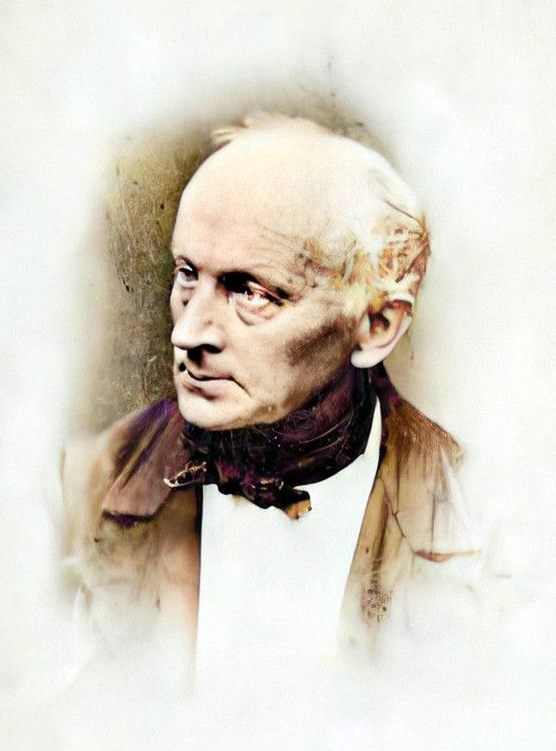
| 4 Quotes | |
| Occup. | Theologian |
| From | Germany |
| Born | September 6, 1809 Eisenberg, Saxe-Gotha-Altenburg |
| Died | April 13, 1882 Rixdorf, Berlin, German Empire |
| Aged | 72 years |
| Cite | |
Citation Formats
APA Style (7th ed.)
Bruno bauer biography, facts and quotes. (2026, February 11). FixQuotes. https://fixquotes.com/authors/bruno-bauer/
Chicago Style
"Bruno Bauer biography, facts and quotes." FixQuotes. February 11, 2026. https://fixquotes.com/authors/bruno-bauer/.
MLA Style (9th ed.)
"Bruno Bauer biography, facts and quotes." FixQuotes, 11 Feb. 2026, https://fixquotes.com/authors/bruno-bauer/. Accessed 25 Mar. 2026.
Early Life and Background
Bruno Bauer was born on September 6, 1809, in Eisenberg in the duchy of Saxe-Altenburg, a small Thuringian town where Lutheran piety, provincial administration, and the aftershocks of the Napoleonic era shaped the horizon of a bright child. Germany in his youth was not yet a nation but a patchwork of states; public life was policed by censorship and church-state alliances, and intellectual ambition often had to pass through theology. Bauer grew up in a culture where the Bible was both sacred text and social constitution, and where the promise of Bildung (self-cultivation) could feel like a private escape route from political immobility.From early on he displayed the temperament of a critic rather than a pastor: drawn to argument, suspicious of inherited formulas, and magnetized by the prestige of scholarship. This stance was not simply rebelliousness; it reflected an inner demand for coherence at a time when religious language was asked to carry the weight of history, morality, and communal identity. The same Germany that produced Romantic devotion also produced a hardening state apparatus after 1819, and Bauer came of age with the sense that ideas could be dangerous - and that truth, if pursued to the end, might cost position and belonging.
Education and Formative Influences
Bauer studied theology and philosophy at the University of Berlin, moving within the orbit of Hegelianism at a moment when Hegel's system promised to reconcile faith, reason, and history. He attended lectures by G.W.F. Hegel and absorbed the prestige of historical thinking, learning to treat doctrine not as timeless deposit but as a development with internal contradictions. The 1830s in Berlin were a laboratory of modern criticism: philology, historical method, and post-Kantian philosophy collided with confessional commitments. Bauer began as an orthodox-leaning Hegelian and wrote on New Testament questions, but the tools he mastered - especially the Hegelian emphasis on self-consciousness and the historical becoming of spirit - pushed him toward a more radical, destabilizing form of critique.Career, Major Works, and Turning Points
By the late 1830s Bauer was teaching and publishing as a rising Protestant scholar, but his trajectory turned sharply as his historical criticism of the Gospels and his increasingly polemical stance toward church authority alarmed patrons. In works culminating in his multi-volume Critique of the Gospel History of the Synoptics (1841-1842) and Critique of the Gospel History of John (1840), he argued that the Gospel narratives were not straightforward historical reportage but literary-theological constructions shaped by early Christian community struggles, with Mark playing a foundational role in the synoptic tradition. The political reaction of the 1840s, coupled with his public radicalization among the Young Hegelians, led to dismissal from academic posts in Prussia (1842). Thereafter he lived largely as an independent writer, associated with Berlin's radical milieu, influencing and then quarreling with figures such as Karl Marx; his later decades brought isolation, journalism, and sprawling historical-polemical studies that hardened into a combative critique of religion and modern politics.Philosophy, Style, and Themes
Bauer's inner drama was the collision between a scholar's devotion to method and a moralist's impatience with collective illusion. He treated Christianity less as a set of doctrines than as a historical formation that reconfigured human subjectivity. His recurring target was heteronomy - the surrender of thought to an external authority - and he framed emancipation as a drama of self-consciousness learning to recognize itself as the source of meaning. That is why his critique of religion often reads like a psychological anatomy of dependency: “Thus in Christianity the alienation had become total, and it was this total alienation that was the biggest obstacle to the progress of self-consciousness”. The sentence is not merely theoretical; it reveals Bauer's sense that modern Europeans carried an internalized exile, a self estranged from its own powers, and that criticism had to be relentless because the captivity was inward.His prose is sharp, procedural, and often prosecutorial, moving by close textual readings and then leaping to sweeping historical judgments. Yet beneath the severity lies an almost romantic fascination with what binds people - nature, kinship, nation - and with how those bindings can become substitutes for freedom: “The sight of nature fascinates, the family tie has a sweet enchantment and patriotism gives the religious spirit a fiery devotion to the powers that it reveres”. Bauer could describe these enchantments with genuine sensitivity, then turn them into evidence for how consciousness abdicates responsibility. In the same spirit he insisted that Christian "freedom" too easily became a withdrawal from culture and politics - “But in Christianity, by contrast, the freedom of the children of God was also freedom from all important worldly interests, from all art and science, etc”. - a line that discloses his fear of inward piety masquerading as liberation while actually disarming the intellect.
Legacy and Influence
Bauer's reputation has swung between pioneering critic and problematic polemicist, but his impact on modern thought is durable: he helped push German biblical scholarship toward more explicit attention to literary formation, ideological conflict, and historical mediation, and he exemplified the Young Hegelian belief that criticism is a form of moral action. His break with academic security after 1842 became a cautionary tale about the costs of intellectual dissent in Restoration Prussia, while his influence lingered through the debates that shaped Marx, Feuerbach, and later secular historiography of religion. If his later political judgments narrowed his audience, his central wager remains historically significant: that modern freedom requires a fearless accounting of how sacred narratives and social loyalties are made - and how they make us.Our collection contains 4 quotes written by Bruno, under the main topics: Wisdom - Freedom - Deep - Faith.
Other people related to Bruno: Max Stirner (Philosopher), Ferdinand Christian Baur (Theologian)
Source / external links