
Bruno Bettelheim Biography Quotes 5 Report mistakes
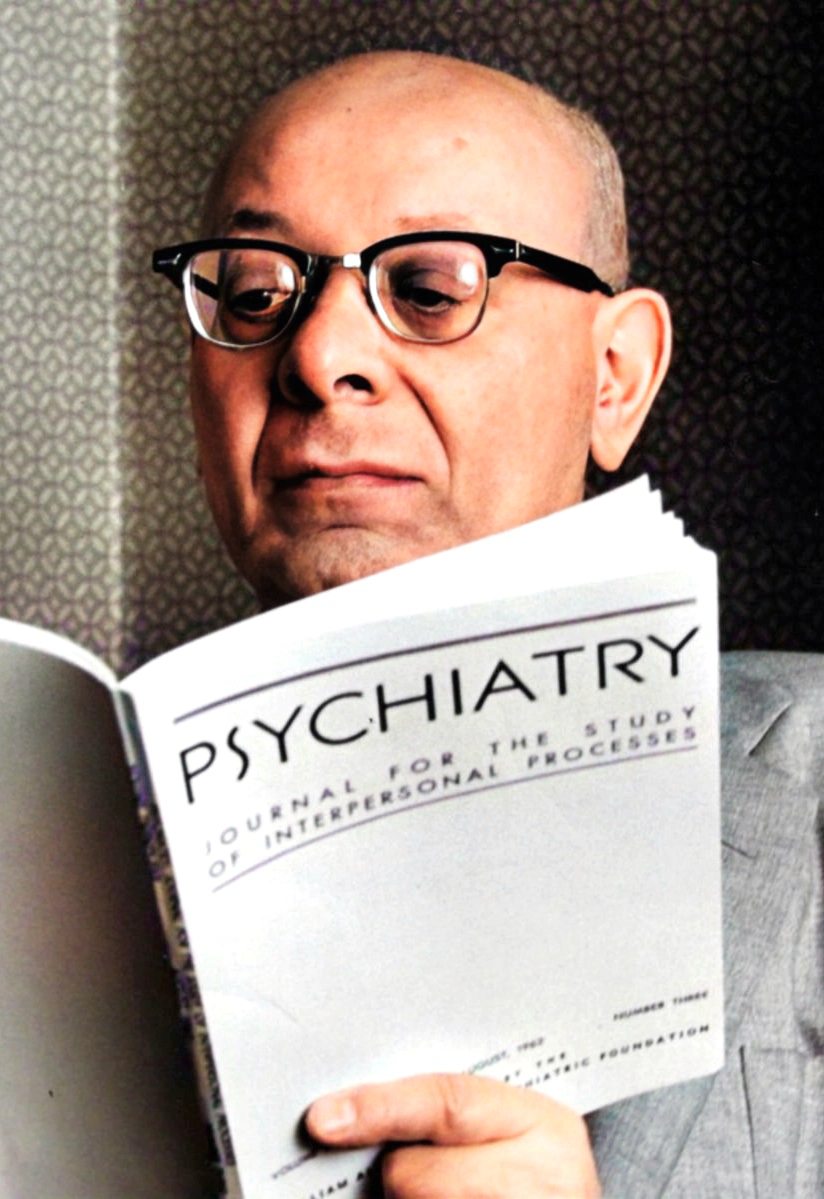
| 5 Quotes | |
| Occup. | Writer |
| From | Austria |
| Spouses | Gina Alstadt (1930–1940) Gertrude Weinfeld (1941–1984) |
| Born | August 28, 1904 Vienna, Austria |
| Died | March 13, 1990 Silver Spring, Maryland, USA |
| Cause | Heart Failure |
| Aged | 85 years |
| Cite | |
Citation Formats
APA Style (7th ed.)
Bruno bettelheim biography, facts and quotes. (2026, February 11). FixQuotes. https://fixquotes.com/authors/bruno-bettelheim/
Chicago Style
"Bruno Bettelheim biography, facts and quotes." FixQuotes. February 11, 2026. https://fixquotes.com/authors/bruno-bettelheim/.
MLA Style (9th ed.)
"Bruno Bettelheim biography, facts and quotes." FixQuotes, 11 Feb. 2026, https://fixquotes.com/authors/bruno-bettelheim/. Accessed 28 Mar. 2026.
Early Life and Background
Bruno Bettelheim was born on August 28, 1904, in Vienna, then the capital of the Austro-Hungarian Empire, into the German-speaking Jewish middle class that prized Bildung, manners, and intellectual seriousness. He came of age as the old imperial order collapsed after World War I and the First Austrian Republic struggled with inflation, political street violence, and the growing magnetism of authoritarian ideologies. The Vienna of his youth was also Freud's city, saturated with talk of psyche, sexuality, and the pressures of modern life - a cultural climate that made it plausible to treat inner conflicts as public matters.His early adulthood unfolded under the shadow of Austrian anti-Semitism hardening into Nazi power. After the Anschluss of 1938, Bettelheim was arrested and sent to Dachau and then Buchenwald, experiences that became the defining rupture of his inner life and later writing. The camps confronted him with how quickly civilized identities can be stripped, and how institutions can train helplessness or resilience. He was released and emigrated to the United States in 1939, carrying not only the trauma of persecution but also a lasting conviction that the environment - especially an institution - can shape personality with frightening speed.
Education and Formative Influences
In Vienna, Bettelheim studied philosophy and psychology at the University of Vienna and completed a doctorate in philosophy (PhD) in 1938, absorbing the legacy of psychoanalysis and the era's debates about education, neurosis, and culture. He moved in the orbit of Viennese intellectual life rather than a single laboratory tradition: Freud's ideas about unconscious conflict, Anna Freud's child-centered psychoanalytic practice, and progressive educational currents all fed his later synthesis. The camps, paradoxically, became another formative influence - an involuntary apprenticeship in the psychology of extreme situations, group coercion, and the survival value of meaning-making.Career, Major Works, and Turning Points
In the United States Bettelheim reinvented himself as a public intellectual of child development, eventually becoming director of the Sonia Shankman Orthogenic School at the University of Chicago (1944-1973), a residential treatment program for severely disturbed children. There he built a therapeutic milieu that treated everyday routines - meals, play, schoolwork, and rules - as psychological instruments. His early fame drew on wartime and postwar writings about mass society and trauma, including The Informed Heart (1960), which extended lessons from totalitarian terror to ordinary anxieties and conformity. He later became a widely read interpreter of childhood through books such as The Uses of Enchantment (1976), arguing that fairy tales speak in symbolic language to children's fears and wishes. Over time his reputation became complicated by later investigations and testimonies about harsh disciplinary practices at the Orthogenic School and by sustained criticism of his autism theories, once influential but now broadly rejected.Philosophy, Style, and Themes
Bettelheim wrote with the urgency of someone who believed psychological ideas mattered in the design of daily life. His core theme was that development is not merely an individual fate but a negotiation with an environment that can either cultivate agency or demand submission. He stressed the child's need for imaginative space and symbolic rehearsal - “Play reaches the habits most needed for intellectual growth”. - because play, for him, trained flexible thinking and toleration of ambiguity, the opposite of the rigid inner world he associated with fear and coercion. He also distrusted punitive systems, insisting that external force produces compliance without inner mastery: “Punishment may make us obey the orders we are given, but at best it will only teach an obedience to authority, not a self-control which enhances our self-respect”. The sentence reads like a clinical principle and a political memory, reflecting how the camps taught him that obedience can be manufactured while dignity cannot.At his best, Bettelheim combined psychoanalytic interpretation with moral psychology, describing family life without sentimentality and treating ambivalence as normal rather than shameful. He insisted that love in families is mixed with irritation and disappointment, a realism meant to reduce guilt and panic in parents and to make room for repair: “Not only is our love for our children sometimes tinged with annoyance, discouragement, and disappointment, the same is true for the love our children feel for us”. That insistence reveals his own preoccupation with fragile attachments - how quickly safety can become threat, and how quickly a frightened person can retreat into silence or submission. His prose often moved between clinical case, cultural critique, and parable, using stories - from institutional routines to Grimm - to argue that meaning, not mere technique, is what steadies a child against chaos.
Legacy and Influence
Bettelheim died on March 13, 1990, in Silver Spring, Maryland, by suicide, a final act that underscored the lifelong weight of illness, trauma, and the relentless self-scrutiny that shaped his public voice. His enduring influence lies less in his contested theories of autism than in his powerful, era-defining claim that environments educate the psyche: schools, families, and institutions create either learned helplessness or a sense of agency. The Uses of Enchantment remains a landmark in popular and scholarly conversations about how children use stories to metabolize fear, while The Informed Heart still reads as a warning about the psychological costs of coercive systems. Yet his legacy is inseparable from controversy: accusations about misrepresentation and harmful practices have forced a more critical reassessment, turning him into a cautionary figure about charisma, authority, and the ethical limits of therapeutic power even when wielded in the name of care.Our collection contains 5 quotes written by Bruno, under the main topics: Learning - Parenting - Self-Discipline.
Bruno Bettelheim Famous Works
- 1990 Freud's Vienna and Other Essays (Book)
- 1987 A Good Enough Parent (Book)
- 1976 The Uses of Enchantment (Book)
- 1967 The Empty Fortress (Book)
- 1950 Love is Not Enough (Book)
Source / external links