
Bruno Walter Biography Quotes 3 Report mistakes
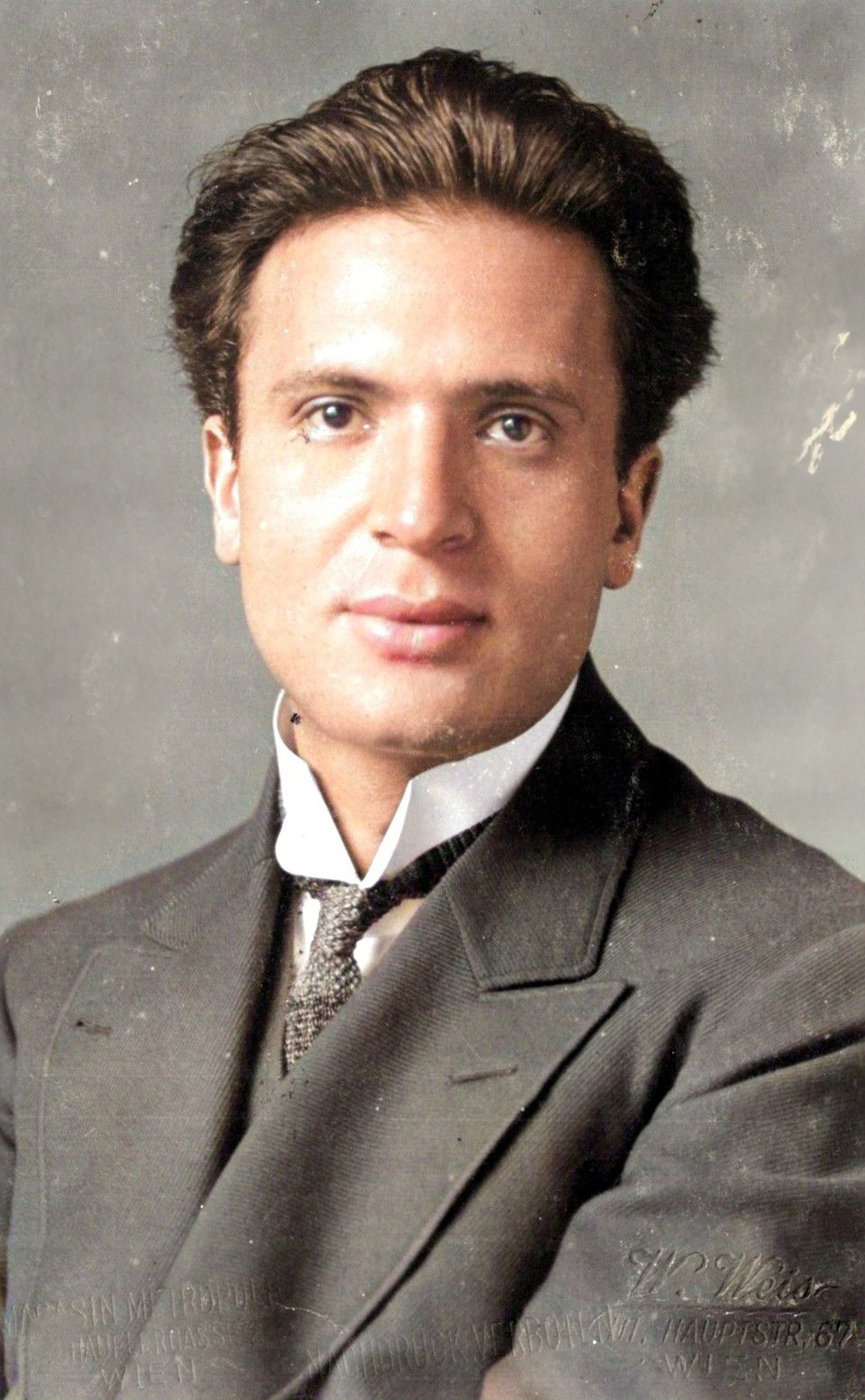
Attr: photographer W(enzel) Weis (1858-1930), Wien, Landstraßer Hauptstraße 67, Public domain
| 3 Quotes | |
| Born as | Bruno Schlesinger |
| Occup. | Composer |
| From | Germany |
| Spouse | Elsa Schlesinger |
| Born | September 15, 1876 Berlin, Germany |
| Died | February 17, 1962 Beverly Hills, California, USA |
| Cause | Heart attack |
| Aged | 85 years |
| Cite | |
Citation Formats
APA Style (7th ed.)
Bruno walter biography, facts and quotes. (2026, February 11). FixQuotes. https://fixquotes.com/authors/bruno-walter/
Chicago Style
"Bruno Walter biography, facts and quotes." FixQuotes. February 11, 2026. https://fixquotes.com/authors/bruno-walter/.
MLA Style (9th ed.)
"Bruno Walter biography, facts and quotes." FixQuotes, 11 Feb. 2026, https://fixquotes.com/authors/bruno-walter/. Accessed 26 Mar. 2026.
Early Life and Background
Bruno Walter was born Bruno Schlesinger on September 15, 1876, in Berlin, in the newly unified German Empire - a capital swelling with industry, a confident bourgeois culture, and a musical life dominated by Wagner, Brahms, and the institutional prestige of the opera house. Raised in a Jewish family, he grew up inside the tensions of late-19th-century German assimilation: the promise of civic participation paired with social fragility. Music offered both a vocation and a passport into the most German of cultural realms.His early ambition was less the romantic myth of inspiration than the disciplined hunger of a gifted child watching the machinery of professional music at close range. Berlin could make prodigies quickly - and exhaust them quickly, too - and Walter absorbed early the conductor-composer ideal that still haunted German musical life: the belief that interpretation and creation were not opposites but two faces of the same musical intelligence. The surname change to Walter, adopted in his early career, also signaled the era's pressure toward acceptability in public life.
Education and Formative Influences
Walter studied piano, composition, and conducting in Berlin and entered the German theater network while still very young, learning the trade in the practical, punishing conditions of provincial opera. The decisive formative influence was Gustav Mahler: first as a model of total musical authority, then as a mentor who recognized Walter's unusual ear for vocal phrasing and long-line architecture. Under Mahler's shadow - and later with a sense of custodianship after Mahler's death in 1911 - Walter developed the habit that would define him: reading a score not as a collection of effects but as a moral argument in sound.Career, Major Works, and Turning Points
Walter's conducting career rose through Hamburg and other posts before he became a central figure in Vienna, where he led the Vienna Court Opera and the Vienna Philharmonic in the years surrounding World War I and the early First Republic. He conducted major premieres associated with Mahler's circle, most famously the first performance of Mahler's Das Lied von der Erde (Munich, 1911) and later the premiere of Mahler's Ninth Symphony (Vienna, 1912), performances that helped secure Mahler's posthumous standing. Though sometimes labeled a composer, Walter's enduring public identity was as an interpreter and musical organizer; his own compositions exist but never displaced the gravitational pull of his conducting. The Nazi seizure of power forced a rupture: as a Jewish artist he was pushed out of German musical life in 1933, worked for a time in Austria and elsewhere, and after the Anschluss in 1938 emigrated, eventually becoming an American citizen and a pillar of musical life in the United States, including major work with the New York Philharmonic and an influential late recording career.Philosophy, Style, and Themes
Walter's inner life was shaped by two competing loyalties - to German musical humanism and to the historical reality that expelled him from its institutions. This produced a temperament at once tender and unsentimental: he sought warmth of sound, but resisted sentimental distortion, aiming for a kind of ethical clarity. His rehearsal ethic crystallized in an aphorism that doubles as self-portrait: “By concentrating on precision, one arrives at technique, but by concentrating on technique one does not arrive at precision”. The line reveals a psychology that mistrusted virtuosity as performance and trusted it as consequence - a conductor who wanted the orchestra to arrive at truth through exact listening rather than muscular display.His style, especially in Mozart, Brahms, Bruckner, and Mahler, treated lyricism as structure: phrases breathe, but they also bear weight. The public often heard in him an Old World nobility, yet his own writings and late interviews show a man who did not mythologize mastery; he preferred the humility of renewal, insisting, “It is glorious to become a learner again at my time of life”. That willingness to re-enter the score as a student helps explain why his late interpretations could feel simultaneously simpler and deeper - less driven by personal will, more by an earned trust in the work. And his historical sense was never antiquarian. When he invoked the endurance of art over political theater - “Napolean is dead - but Beethoven lives”. - he was not making a casual epigram so much as defending a lifeline: the belief that musical meaning outlasts the regimes that try to own it.
Legacy and Influence
Walter's influence endures less through a school of imitators than through a standard of musical conscience: a model of conducting in which humanity and craft are inseparable. He helped canonize Mahler when Mahler was still controversial, and his recordings - especially in the Austro-German repertoire - remain reference points for their singing line, integrated sonority, and refusal to confuse profundity with heaviness. In the broader cultural story of the 20th century, his life traces the arc from imperial confidence to exile and reinvention, showing how an artist can lose a homeland yet keep a tradition alive by re-grounding it in listening, memory, and disciplined compassion.Our collection contains 3 quotes written by Bruno, under the main topics: Wisdom - Music - Learning.
Other people related to Bruno: Lotte Lehmann (Musician), Georg Solti (Musician), Charles Munch (Musician), Artur Rodzinski (Musician)
Source / external links