
Buddha Biography Quotes 255 Report mistakes
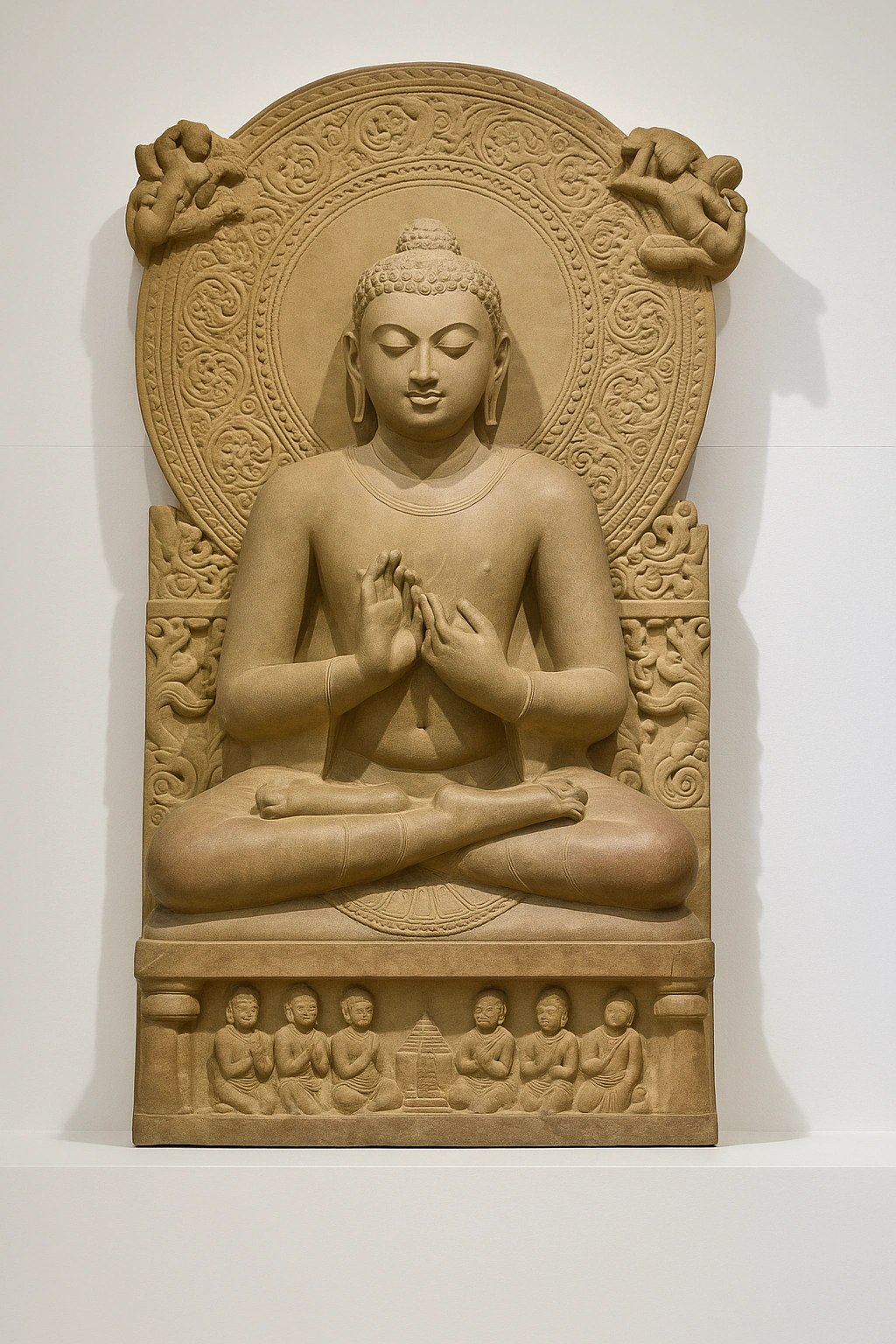
| 255 Quotes | |
| Born as | Siddhartha Gautama |
| Known as | Gautama Buddha |
| Occup. | Leader |
| From | India |
| Born | 563 BC Lumbini, Shakya Republic (according to Buddhist tradition) |
| Died | 483 BC Kushinagar, Malla Republic (according to Buddhist tradition) |
| Cause | Illness (traditionally after eating sukaramaddava; possibly food poisoning) |
| Aged | 80 years |
| Cite | |
Citation Formats
APA Style (7th ed.)
Buddha biography, facts and quotes. (2026, March 10). FixQuotes. https://fixquotes.com/authors/buddha/
Chicago Style
"Buddha biography, facts and quotes." FixQuotes. March 10, 2026. https://fixquotes.com/authors/buddha/.
MLA Style (9th ed.)
"Buddha biography, facts and quotes." FixQuotes, 10 Mar. 2026, https://fixquotes.com/authors/buddha/. Accessed 30 Mar. 2026.
Early Life and Background
Siddhartha Gautama, later known as the Buddha, was born around 563 BCE in the Shakya realm near Lumbini, in the Himalayan foothills of what is now southern Nepal, into a kshatriya (warrior-aristocratic) clan enmeshed in the small-state politics of the Ganges borderlands. Later tradition names his father Suddhodana, a leader among the Shakyas, and his mother Maya, who died soon after his birth; he was raised with the care of Mahapajapati Gotami. The world he entered was restless: old Vedic sacrificial religion coexisted with new urban economies, rising monarchies such as Magadha and Kosala, and a ferment of renunciant seekers (shramanas) who questioned caste authority and ritual as a path to liberation.Biographical memory, preserved in early Buddhist texts and elaborated in later hagiography, casts his youth in the tension between privilege and foreboding. Stories of prophecy, protected palaces, and the "four sights" dramatize a psychological truth that likely drove him: a heightened sensitivity to aging, sickness, and death, and the suspicion that every worldly success was shadowed by loss. Whether or not every episode is literal history, they map an inner biography - the awakening of disgust (nibbidha) and urgency (samvega) in a young man who could not reconcile status with impermanence.
Education and Formative Influences
He would have been trained in the skills expected of a Shakya noble - governance, negotiation, martial discipline - but his formative education came from the intellectual marketplace of North India, where wandering teachers offered competing accounts of self, cosmos, and ethics. Leaving home as a renunciant, he studied meditative absorption under Alara Kalama and Uddaka Ramaputta, mastering high states of concentration yet finding them insufficient for final freedom; he then pursued extreme asceticism near Uruvela (later associated with Bodh Gaya), learning the limits of self-mortification and sharpening the question that would define him: what practice ends suffering rather than merely reshaping it?Career, Major Works, and Turning Points
Around 528 BCE, after abandoning austerities and accepting nourishment, he sat in meditation beneath the Bodhi tree and claimed awakening (bodhi) - a direct insight into dependent origination, the mechanics of craving, and the possibility of cessation. He began teaching at Sarnath in the Deer Park, delivering the first sermon on the Four Noble Truths and the Noble Eightfold Path, and built a mobile community of monks and nuns (sangha) supported by lay households. His career was not that of an author but of a founder whose "works" were living institutions and spoken discourses later collected as suttas; he engaged kings (Bimbisara of Magadha), merchants (Anathapindika), rivals, and grieving parents, adapting language to audience while maintaining a core program of ethics, meditation, and wisdom. The consolidation of monastic discipline (Vinaya), the admission of women under Mahapajapati, and his final journey to Kusinara - where he died around 483 BCE after instructing disciples to rely on the Dhamma - were turning points that transformed a personal realization into a durable tradition.Philosophy, Style, and Themes
At the center of the Buddha's psychology stands a rigorous confidence that liberation is an achieved clarity, not a gift. His ethic is not dependence but agency: “Work out your own salvation. Do not depend on others”. That sentence, often invoked as a final instruction, reveals a mind wary of charisma - including his own - and determined to turn disciples from devotion to practice. The same temperament shaped his analysis of suffering (dukkha): the diagnosis is universal, but the treatment is intimate, demanding that one observe craving as it arises and dismantle it through conduct (sila), collectedness (samadhi), and discernment (panna).His style is famously practical: short lists, vivid similes, and a preference for verification in experience rather than metaphysical speculation. The teaching is anchored in immediacy - “Do not dwell in the past, do not dream of the future, concentrate the mind on the present moment”. - because present-moment attention is where craving can be seen and released. Yet this is not mere mindfulness as mood; it is moral and epistemic training, a belief that the inner life literally constructs the world one inhabits: “We are what we think. All that we are arises with our thoughts. With our thoughts, we make the world”. His themes - impermanence (anicca), not-self (anatta), compassion (karuna), and the middle way between indulgence and self-harm - converge on a disciplined tenderness: freedom is possible, but it is earned through sustained, honest looking.
Legacy and Influence
Within a few centuries, the Buddha's community helped reshape Asian religious life, offering an alternative to sacrificial authority and a portable path open to all social ranks, while preserving a demanding monastic ideal. Councils and oral recitation stabilized a canon; later movements such as Mahayana reinterpreted his awakening in expansive cosmologies, and Vajrayana fused his insights with esoteric method, but the foundational frame of the Four Noble Truths remained. Across India and beyond - Sri Lanka, Central Asia, China, Korea, Japan, Tibet, and Southeast Asia - his life became a template for renunciation, ethical leadership, and psychological realism, influencing philosophy, art, statecraft, and modern contemplative practice. More than a saintly biography, his enduring power lies in the proposition his life embodies: that suffering is intelligible, the mind is trainable, and liberation can be made real in a human lifetime.Our collection contains 255 quotes written by Buddha, under the main topics: Motivational - Ethics & Morality - Truth - Wisdom - Friendship.
Other people related to Buddha: Dogen (Leader), Bodhidharma (Leader), Bernardo Bertolucci (Director), Karen Armstrong (Writer), Eknath Easwaran (Author)
Frequently Asked Questions
- Buddha Images: Depictions with ushnisha, urna, long earlobes, and mudras; styles vary across Asia.
- The Buddha books: The Tipitaka (Pali Canon), Dhammapada, Lotus Sutra, and other sutras.
- How did Buddha die: Traditionally, from illness after a final meal; he entered parinirvana at Kushinagar.
- Buddha religion: Buddhism.
- Buddha death date: c. 483 BCE (traditional estimate).
- Buddha Statue: A representation of enlightenment and compassion, shown with symbolic poses (mudras).
- Buddha meaning: “Buddha” means the Awakened One or Enlightened One.
- Buddha story: Prince Siddhartha renounced luxury, awakened at Bodh Gaya, and taught the path to end suffering.
- How old was Buddha? He became 80 years old
Source / external links