
Buffalo Bill Biography Quotes 46 Report mistakes
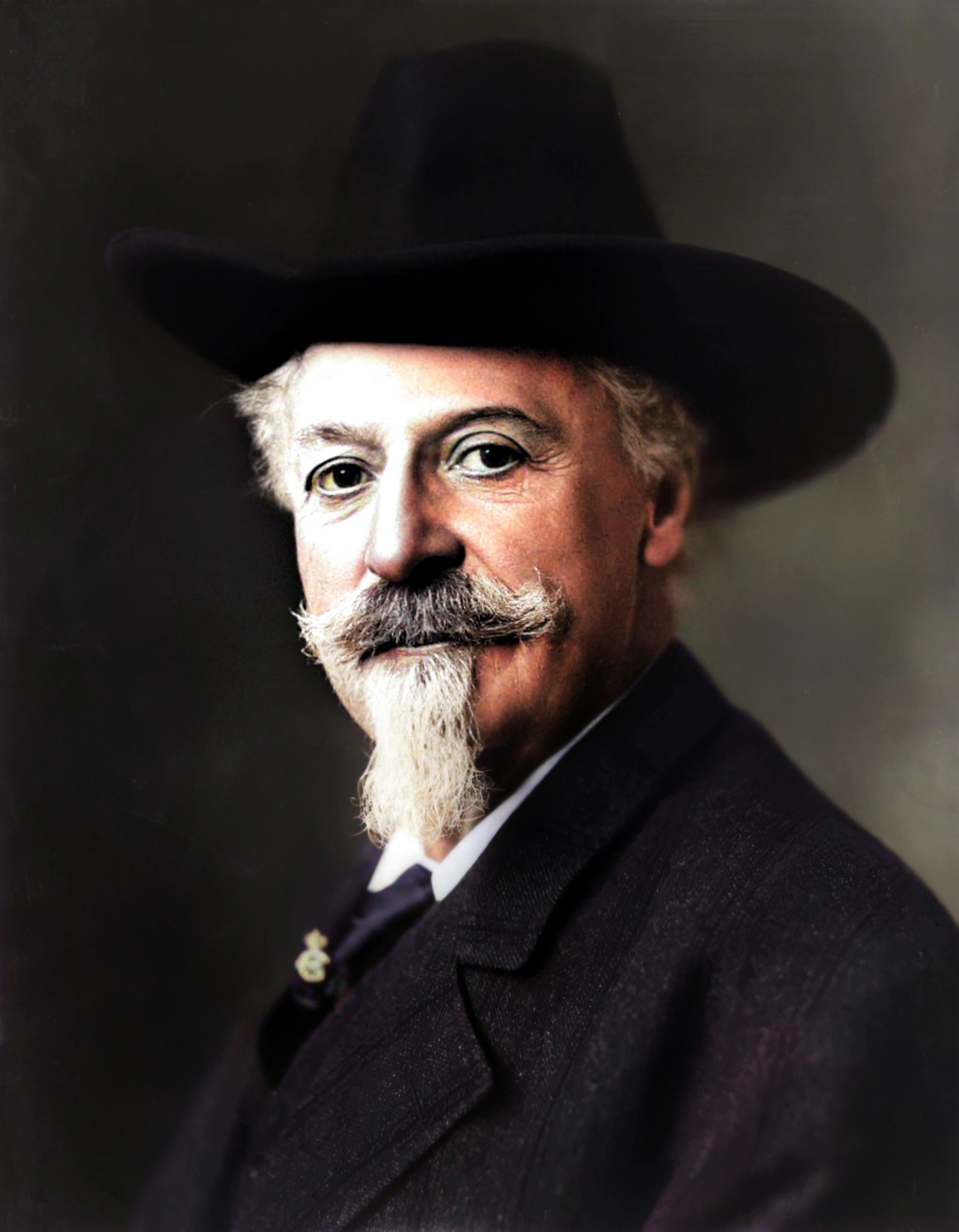
| 46 Quotes | |
| Born as | William Frederick Cody |
| Occup. | Celebrity |
| From | USA |
| Born | February 26, 1846 Le Claire, Iowa, USA |
| Died | January 10, 1917 Denver, Colorado, USA |
| Cause | Kidney failure |
| Aged | 70 years |
| Cite | |
Citation Formats
APA Style (7th ed.)
Buffalo bill biography, facts and quotes. (2026, February 27). FixQuotes. https://fixquotes.com/authors/buffalo-bill/
Chicago Style
"Buffalo Bill biography, facts and quotes." FixQuotes. February 27, 2026. https://fixquotes.com/authors/buffalo-bill/.
MLA Style (9th ed.)
"Buffalo Bill biography, facts and quotes." FixQuotes, 27 Feb. 2026, https://fixquotes.com/authors/buffalo-bill/. Accessed 26 Mar. 2026.
Early Life and Background
William Frederick "Buffalo Bill" Cody was born on February 26, 1846, in Scott County, Iowa Territory, and spent his earliest years in a nation expanding at speed and under strain. The Codys soon moved to the Kansas Territory, where the fight over slavery was not an abstraction but a daily menace. His father, Isaac Cody, was an anti-slavery settler; local violence, reprisals, and intimidation formed the backdrop of the boy's first memories, turning politics into personal fate.In 1857 Isaac Cody died after being stabbed during a dispute linked to the territorial crisis, leaving the family precarious and William prematurely adult. The loss pushed him toward the frontier labor market - messenger, teamster, rider, and guide - in a borderland economy where courage was currency and a reputation could be both shield and livelihood. Long before he was a showman, he learned that survival depended on nerves, speed, and reading other men.
Education and Formative Influences
Cody's schooling was brief and intermittent; his real education came from work and war. As a teenager he rode as a courier during the Civil War era and later claimed service as a scout, absorbing the habits of soldiers, freighters, and trappers in the Platte and Republican River corridors. He married Louisa Maud Frederici in 1866, a stabilizing counterweight to his centrifugal instincts, yet domestic life never fully displaced the lure of motion, risk, and public attention that the postwar West seemed to reward.Career, Major Works, and Turning Points
Cody's public identity formed in the late 1860s: he was hired as a scout for the US Army and gained the "Buffalo Bill" nickname in 1867-68 while supplying buffalo meat to railroad crews, a job that turned slaughter into legend. Dime novelists and reporters amplified him into a national type, and Cody leaned into the story by writing and dictating accounts such as The Life of Hon. William F. Cody (1879) and later The Wild West in England (1887). In 1883 he founded Buffalo Bill's Wild West, a touring spectacle that paired sharpshooting (including Annie Oakley), staged attacks, cavalry drills, and choreographed "frontier" scenes; it became a global entertainment machine, triumphant at the 1893 Chicago World's Columbian Exposition and widely toured in Britain and Europe. Financial reverses, lawsuits, and overexpansion dogged his later years, but he remained a celebrity until his death on January 10, 1917, in Denver, Colorado.Philosophy, Style, and Themes
Cody's inner life was a tug-of-war between the yearning for settled respectability and a compulsion to keep moving, a psychology he described with unusual candor: “My restless, roaming spirit would not allow me to remain at home very long”. That restlessness was not merely wanderlust; it was the engine of his self-invention, the impulse to convert labor into narrative and narrative into a career. He did not simply recount the West - he edited it into scenes that made danger legible to distant audiences, turning scouting, hunting, and war into a repertoire of recognizable images: the gallop, the ambush, the last-second rescue, the disciplined line of troops.Yet Cody's showmanship sat beside a consistent, if sometimes contradictory, moral commentary on US-Indian relations. He had fought in the Indian Wars and helped popularize stereotypes, but he also insisted on a root cause analysis that indicted federal policy: “Every Indian outbreak that I have ever known has resulted from broken promises and broken treaties by the government”. His memoir voice often tried to reconcile admiration for individual Native leaders and scouts with his role in the machinery of conquest, arguing for competence, negotiation, and restraint even while profiting from dramatized conflict. In that same vein he could praise specific intermediaries as the difference between bloodshed and order, as when he asserted, “Major North has had for years complete power over these Indians and can do more with them than any man living”. - a revealing faith in strong personal authority to solve systemic injustice.
Legacy and Influence
Cody endures less as a single historical actor than as a template for how America packages history into identity: part veteran-scout, part entrepreneur, part mythmaker. His Wild West helped standardize the iconography of the frontier for modern mass culture, shaping early film, popular illustration, and tourist memory while exporting a simplified drama of expansion to the world. At the same time, his own words preserve a more complicated figure - a man addicted to movement, proud of skill and spectacle, and intermittently troubled by the broken promises that underwrote the very victories he performed.Our collection contains 46 quotes written by Buffalo, under the main topics: Witty One-Liners - Art - Justice - Never Give Up - Friendship.
Other people related to Buffalo: Sitting Bull (Statesman)
Source / external links