
C. Northcote Parkinson Biography Quotes 17 Report mistakes
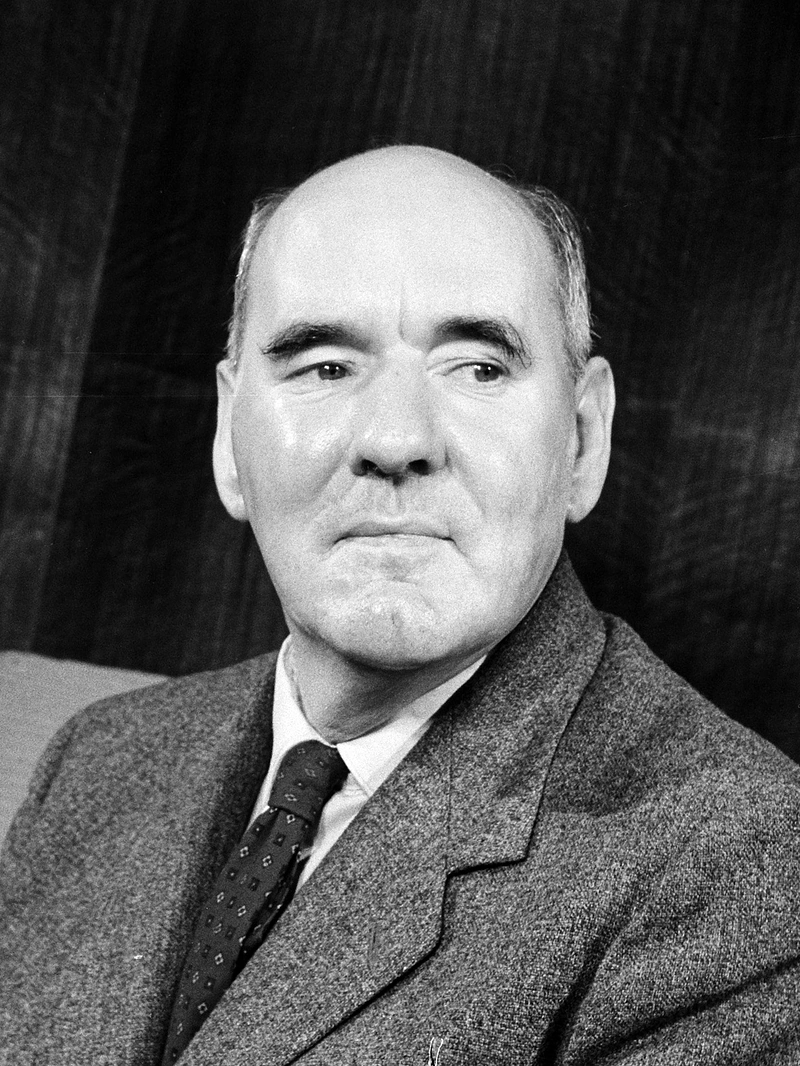
| 17 Quotes | |
| Born as | Cyril Northcote Parkinson |
| Occup. | Historian |
| From | United Kingdom |
| Born | June 30, 1909 Barnard Castle, England |
| Died | March 9, 1993 Canterbury, England |
| Aged | 83 years |
| Cite | |
Citation Formats
APA Style (7th ed.)
C. northcote parkinson biography, facts and quotes. (2026, February 11). FixQuotes. https://fixquotes.com/authors/c-northcote-parkinson/
Chicago Style
"C. Northcote Parkinson biography, facts and quotes." FixQuotes. February 11, 2026. https://fixquotes.com/authors/c-northcote-parkinson/.
MLA Style (9th ed.)
"C. Northcote Parkinson biography, facts and quotes." FixQuotes, 11 Feb. 2026, https://fixquotes.com/authors/c-northcote-parkinson/. Accessed 12 Feb. 2026.
Early Life and Background
Cyril Northcote Parkinson was born on June 30, 1909, in Barnard Castle, County Durham, England, into a lower-middle-class world shaped by the late Edwardian faith in institutions and the disorienting aftershocks of World War I. His father, a schoolmaster and artist, modeled the quiet authority of learning, and the household atmosphere encouraged books, order, and the habit of observing how rules are made and enforced. Parkinson grew up watching local civic life and the routines of public service at close range - a vantage point that later sharpened his satirical eye for administrative ritual.He came of age in an interwar Britain preoccupied with economic constraint, imperial identity, and the expanding machinery of the modern state. Those years cultivated in him a double sensibility: the historian's respect for archives and continuity, and the comic moralist's impatience with cant. The tension between these impulses would define his public persona: a serious scholar of naval history who became internationally known for diagnosing, with surgical wit, the bureaucratic mind.
Education and Formative Influences
Parkinson was educated at St. Peter's School, York, and then at Emmanuel College, Cambridge, where he read history and immersed himself in the documentary discipline of institutional research. He continued to graduate study at King's College London, taking a PhD that strengthened his lifelong fascination with how power actually functions - through committees, memoranda, and the slow accretion of procedure. The British historical tradition he absorbed prized administrative records and political narrative; Parkinson quietly added to it a skeptic's interest in incentives, status anxiety, and the ways organizations rewrite reality to justify themselves.Career, Major Works, and Turning Points
After early academic posts, Parkinson served during World War II in administrative roles (including work connected to the Ministry of War Transport), experiences that converted his archival understanding of institutions into lived knowledge of paperwork, hierarchy, and the strategic use of delay. He later taught at the University of Liverpool and, in 1950, became the first Raffles Professor of History at the University of Malaya in Singapore, an appointment that placed him inside the late-imperial world he studied. His scholarly reputation was anchored by naval and imperial history, notably "Trade in the Eastern Seas, 1793-1813" (1937) and later works such as "The Rise of the Port of Liverpool" (1952) and "The Evolution of Political Thought" (1958). His decisive public turning point came with a 1955 essay in "The Economist" that crystallized "Parkinson's Law" and, expanded as "Parkinson's Law: The Pursuit of Progress" (1958), made him a household name. In the 1960s and after, he wrote a stream of satirical and practical books - including "In-Laws and Outlaws" and "Parkinson's Law and Other Studies in Administration" - and eventually settled in the Channel Islands, continuing to write into old age until his death on March 9, 1993.Philosophy, Style, and Themes
Parkinson's central subject was not mere red tape but the psychology of organizations: how fear of judgment, hunger for status, and the craving for certainty generate needless work and self-protective complexity. His best-known formulation, "Work expands so as to fill the time available for its completion". , is less a joke than a behavioral insight: when outcomes are hard to measure, people measure effort, and effort metastasizes. In his portraits of committees and administrators, time becomes elastic, not because tasks are infinite, but because attention, prestige, and blame are distributed through process.He wrote like a historian who discovered that footnotes could be funny without ceasing to be true. His aphorisms reduce grand institutions to small motives: "Expansion means complexity and complexity decay". captures the way growing organizations treat multiplication of rules as a substitute for clear aims, until the structure itself becomes the mission. Likewise, "Time spent on any item of the agenda will be in inverse proportion to the sum involved". exposes how groups avoid the frighteningly consequential by obsessing over the safely trivial. Under the comedy sits a bleak compassion: Parkinson understood that many bureaucratic absurdities are coping mechanisms in systems where responsibility is diffuse and punishment arbitrary.
Legacy and Influence
Parkinson occupies an unusual place in 20th-century letters: a credentialed historian who permanently altered managerial language. "Parkinson's Law" entered everyday speech, shaping debates in civil-service reform, corporate governance, and project management, and anticipating later research on Parkinsonian time use, scope creep, and organizational drift. His satire endures because it is anchored in observation rather than ideology, and because it speaks to a condition that outlived the British Empire and the postwar state - the tendency of institutions, once created to serve a purpose, to evolve into systems devoted to their own continuation.Our collection contains 17 quotes written by Northcote Parkinson, under the main topics: Witty One-Liners - Motivational - Justice - Equality - Work.