
C. S. Lewis Biography Quotes 52 Report mistakes
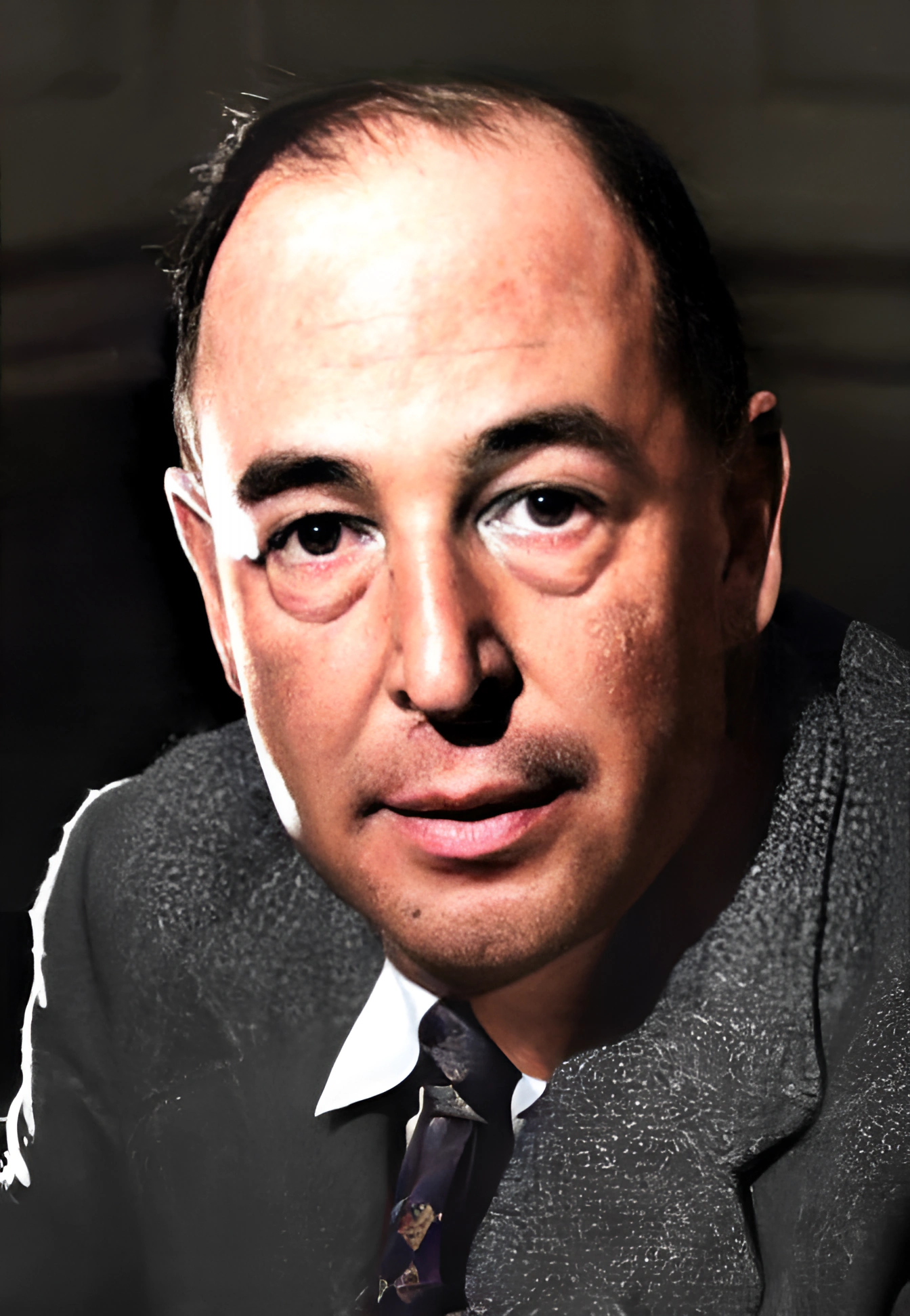
| 52 Quotes | |
| Born as | Clive Staples Lewis |
| Occup. | Author |
| From | United Kingdom |
| Born | November 29, 1898 Belfast, Northern Ireland, United Kingdom |
| Died | November 22, 1963 Oxford, England, United Kingdom |
| Cause | Renal Failure |
| Aged | 64 years |
| Cite | |
Citation Formats
APA Style (7th ed.)
C. s. lewis biography, facts and quotes. (2026, February 11). FixQuotes. https://fixquotes.com/authors/c-s-lewis/
Chicago Style
"C. S. Lewis biography, facts and quotes." FixQuotes. February 11, 2026. https://fixquotes.com/authors/c-s-lewis/.
MLA Style (9th ed.)
"C. S. Lewis biography, facts and quotes." FixQuotes, 11 Feb. 2026, https://fixquotes.com/authors/c-s-lewis/. Accessed 12 Feb. 2026.
Early Life and Background
Clive Staples Lewis was born on November 29, 1898, in Belfast, Ireland, then within the United Kingdom, to Albert Lewis, a solicitor, and Florence "Flora" Hamilton Lewis, the daughter of an Anglican clergyman. The household mixed brisk middle-class discipline with books, talk, and an early encouragement of imagination. Lewis and his older brother Warren created the private world of "Boxen", a child-made kingdom of animals and politics that foreshadowed the adult fusion of fantasy, satire, and moral seriousness that would later define his work.The emotional climate of his childhood shifted sharply when his mother died of cancer in 1908. Lewis later described this as the end of safety and the start of a long apprenticeship in grief, anger, and longing. Sent through a series of schools in England, he found much of them harsh, lonely, and spiritually arid. The First World War then arrived as a grim public counterpart to his private loss; Lewis was commissioned in the British Army and wounded in 1918 at Arras, experiences that hardened his distrust of easy rhetoric and pushed him toward clear, unsentimental prose.
Education and Formative Influences
Lewis was intensely tutored from 1914 by William T. Kirkpatrick, "the Great Knock", in Great Bookham, Surrey, a regimen of logic, classics, and relentless precision that trained him to argue like a solicitor and write like a classicist. He entered University College, Oxford, in 1917 (resuming after the war), winning high honors in classics, philosophy, and English literature, and absorbing Norse myth, medieval romance, and Dante alongside modern poetry. For a time he styled himself an atheist and materialist, yet remained haunted by "Joy" - a piercing, unsatisfied desire stirred by myth and beauty - which became the psychological thread connecting his imagination to his eventual theology.Career, Major Works, and Turning Points
Lewis became a Fellow and Tutor in English at Magdalen College, Oxford (1925-1954), building a reputation as a formidable lecturer and scholar while writing criticism such as The Allegory of Love (1936) and A Preface to Paradise Lost (1942). In the 1930s he moved from atheism to theism and then to Christianity, a transition shaped by friends including J. R. R. Tolkien and the Inklings circle, and crystallized in his apologetic classics: The Problem of Pain (1940), The Screwtape Letters (1942), Mere Christianity (broadcasts 1941-44; book 1952), and Miracles (1947). He also wrote the Space Trilogy (1938-45) and The Chronicles of Narnia (1950-56), bringing theological and moral argument into narrative form. In 1954 he accepted the chair of Medieval and Renaissance Literature at Cambridge. His late life was marked by his marriage to American writer Joy Davidman (1956), her death in 1960, and his own death on November 22, 1963.Philosophy, Style, and Themes
Lewis wrote from the conviction that the imagination is not the enemy of reason but its ally, a faculty that can carry moral truth past the defenses of pride. His essays and fiction return to the theme of desire: the aching sense that earthly pleasures are signposts, not destinations, and that the human person is made for something beyond the closed system of appetite, power, and self-justification. This explains his talent for depicting temptation as ordinary and incremental rather than melodramatic: "The safest road to hell is the gradual one - the gentle slope, soft underfoot, without sudden turnings, without milestones, without signposts". He understood sin less as a single scandal than as a slow education in rationalization, the mind turning in on itself until it cannot tell comfort from truth.His apologetics were sharpened by Kirkpatrick's logic and by wartime Britain, where suffering made pious vagueness intolerable. He refused "moderate" religion as a lifestyle accessory, insisting on the all-or-nothing character of the Christian claim: "Christianity, if false, is of no importance, and if true, of infinite importance. The only thing it cannot be is moderately important". Just as firmly, he distrusted sentimental consolation and treated truth as a discipline before it is a balm: "If you look for truth, you may find comfort in the end; if you look for comfort you will not get either comfort or truth only soft soap and wishful thinking to begin, and in the end, despair". Stylistically, this moral austerity is matched by plain diction, concrete images, and a voice that alternates between donnish clarity and pastoral directness, as if the lecture hall and the confessional shared the same grammar.
Legacy and Influence
Lewis remains one of the most read Christian writers of the 20th century and a rare figure whose scholarship, apologetics, and fantasy cross-pollinate audiences that seldom overlap. Narnia has shaped modern children's literature and popular theology alike, while Mere Christianity helped define postwar English-speaking evangelical thought and continues to attract skeptics who respect its intellectual candor. His influence persists not only in arguments but in a psychological map: a portrait of modern people tempted by gradual drift, protected by jargon, yet still pierced by longing. In an age wary of grand metaphysics, Lewis endures because he treated the inner life as evidence, not merely mood - and because his best work makes moral seriousness feel like an invitation rather than a scold.Our collection contains 52 quotes written by S. Lewis, under the main topics: Witty One-Liners - Ethics & Morality - Wisdom - Truth - Justice.
Other people related to S. Lewis: Dorothy L. Sayers (Author), Bede Griffiths (Clergyman), Claire Bloom (Actress), Adrian Mitchell (Poet), Austin Farrer (Theologian), John Betjeman (Poet), Diana Wynne Jones (Writer), Brian Sibley (Writer), Charles Williams (Editor)
C. S. Lewis Famous Works
- 1952 Mere Christianity (Book)
- 1950 The Chronicles of Narnia (Novel Series)
- 1945 The Great Divorce (Novel)
- 1942 The Screwtape Letters (Novel)
- 1940 The Problem of Pain (Book)
- 1938 The Space Trilogy (Novel Series)
Source / external links