
C. Wright Mills Biography Quotes 11 Report mistakes
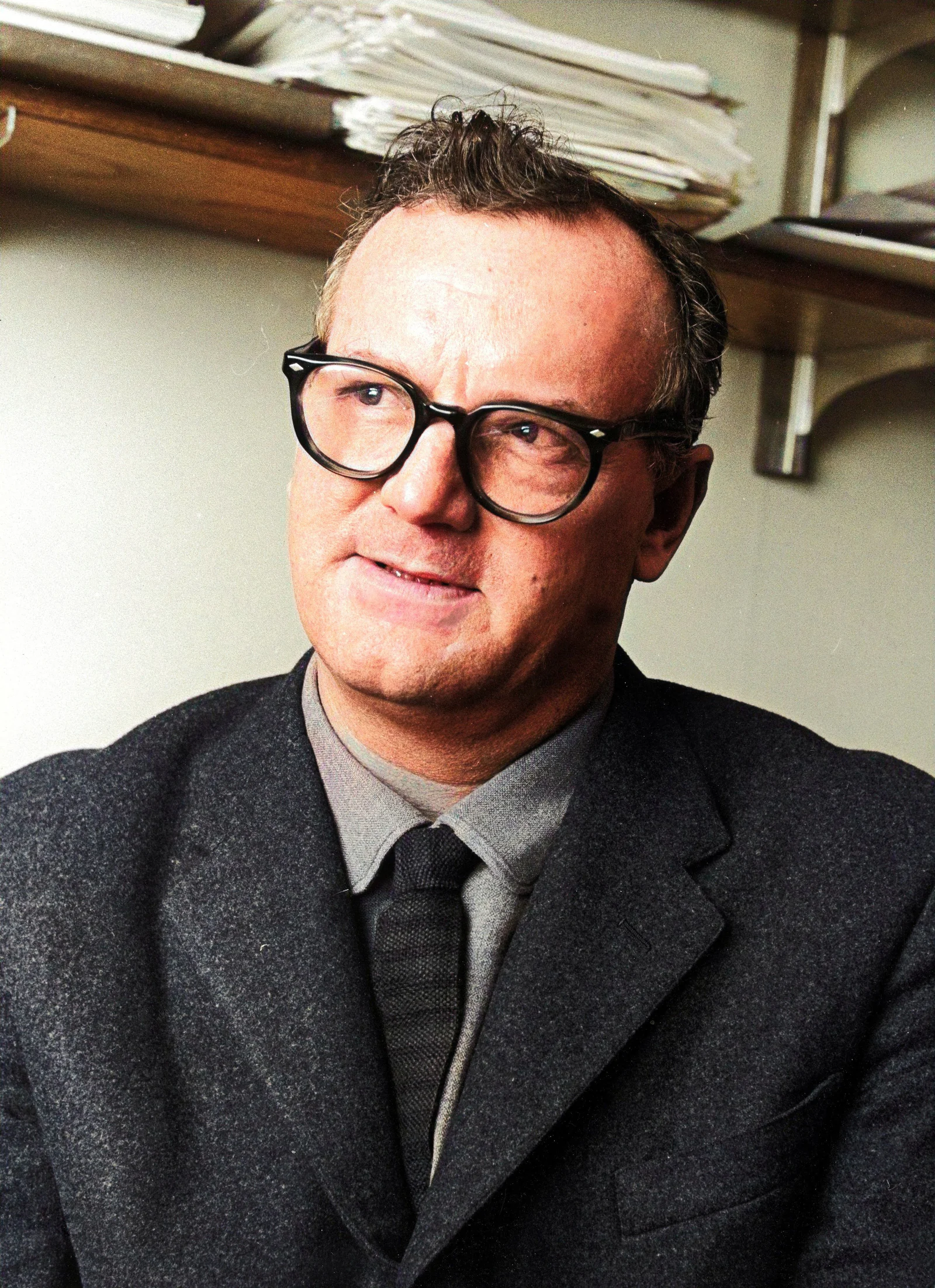
| 11 Quotes | |
| Born as | Charles Wright Mills |
| Occup. | Sociologist |
| From | USA |
| Spouses | Dorothy Helen Smith (1937-1947) Ruth Harper (1947-1959) Yaroslava Surmach (1959) |
| Born | May 28, 1916 Waco, Texas, USA |
| Died | March 20, 1962 West Nyack, New York, USA |
| Cause | Heart attack |
| Aged | 45 years |
| Cite | |
Citation Formats
APA Style (7th ed.)
C. wright mills biography, facts and quotes. (2026, February 2). FixQuotes. https://fixquotes.com/authors/c-wright-mills/
Chicago Style
"C. Wright Mills biography, facts and quotes." FixQuotes. February 2, 2026. https://fixquotes.com/authors/c-wright-mills/.
MLA Style (9th ed.)
"C. Wright Mills biography, facts and quotes." FixQuotes, 2 Feb. 2026, https://fixquotes.com/authors/c-wright-mills/. Accessed 25 Mar. 2026.
Early Life and Background
Charles Wright Mills was born on May 28, 1916, in Waco, Texas, into the uneasy social borderland of small-city respectability and the raw booster capitalism of the Southwest. His father, an insurance broker, moved the family repeatedly across Texas, and Mills grew up with a sharpened eye for status displays, civic rhetoric, and the quiet coercions of middle-class life. The restlessness of those moves mattered: it trained him to watch social worlds as constructed scenes rather than natural habitats, and it left him wary of settled hierarchies and the people who spoke for them.He came of age in the Great Depression and the New Deal, when talk of individual striving collided with mass unemployment and the growing presence of federal power. That historical pressure helped form his signature sensibility: private troubles were never merely private, and the American promise could be read as a set of institutions allocating risk, dignity, and opportunity. Mills married multiple times and pursued intense, sometimes turbulent relationships; he also cultivated a fiercely independent daily life, building motorcycles and working with his hands, as if to keep his intellect anchored to material reality rather than academic ceremony.
Education and Formative Influences
Mills studied at the University of Texas at Austin and completed his PhD at the University of Wisconsin-Madison in 1942, where he absorbed both American pragmatism and European social theory, reading Max Weber with particular seriousness. Early collaborations and disputes with figures such as Hans H. Gerth helped him turn Weber into an instrument for diagnosing modern power, bureaucracy, and legitimacy rather than a museum piece; their co-edited volume, From Max Weber: Essays in Sociology (1946), also modeled the craft Mills prized - translating big ideas into weapons for public understanding.Career, Major Works, and Turning Points
After posts that included the University of Maryland, Mills joined Columbia University in 1946, working in the orbit of Paul Lazarsfeld even as he resisted the era's rising faith in technocratic "abstracted empiricism". His major books arrived in a quickening sequence: White Collar (1951) anatomized the salaried middle classes and the new insecurities of corporate life; The Power Elite (1956) argued that corporate, military, and political leaders formed an interlocking directorate in a managerial age; The Sociological Imagination (1959) became his manifesto against moral drift and method fetishism; and The Causes of World War Three (1958) and Listen, Yankee (1960) positioned him as a public intellectual during the Cold War. A series of heart attacks in his forties intensified his urgency and compressed his timetable; he died in Nyack, New York, on March 20, 1962, at forty-five, leaving unfinished work but a completed stance - sociology as intellectual insurgency.Philosophy, Style, and Themes
Mills wrote as if scholarship were a form of civic witness. His core claim was methodological and moral at once: “Neither the life of an individual nor the history of a society can be understood without understanding both”. He treated biography and history as a single field of explanation, insisting that anxiety, job insecurity, and stalled ambition had institutional causes, and that institutions were maintained by ordinary habits of consent. This fusion made his prose unusually kinetic for sociology - compact, polemical, rich in concrete scenes - because he wanted readers to feel the connection between their daily lives and the architectures of power.His psychology as a thinker combined impatience with cant and an almost craftsmanlike respect for how institutions actually work. He dissected status as a derivative phenomenon, not a personal aura: “Prestige is the shadow of money and power”. That line captures his contempt for reputations detached from structural position, including academic prestige when it served as camouflage for political quietism. In Mills's account, modern inequality was less about individual villains than about gateways, committees, careers, and organizational choke points: “Power is not of a man. Wealth does not center in the person of the wealthy. Celebrity is not inherent in any personality. To be celebrated, to be wealthy, to have power requires access to major institutions”. The theme runs through his portraits of the corporate executive, the Pentagon planner, and the professional politician - types shaped by bureaucratic incentives and by the fear of exclusion from the circles where decisions congeal.
Legacy and Influence
Mills's influence endures because he offered both a diagnosis and a usable intellectual ethic: name the institutions, trace the consequences, refuse the consolations of jargon. He helped set the agenda for conflict theory, elite studies, public sociology, and later critiques of militarism and managerial politics; his arguments echo in analyses of lobbying networks, revolving doors, and media-driven legitimacy. For readers outside the academy, he remains a rare figure who made sociology feel like a personal instrument of clarity - a way to convert bewilderment into structured anger, and private unease into public questions.Our collection contains 11 quotes written by Wright Mills, under the main topics: Ethics & Morality - Justice - Freedom - Deep - Equality.
Other people related to Wright Mills: Robert Staughton Lynd (Sociologist)
Source / external links