
Calvin Coolidge Biography Quotes 48 Report mistakes
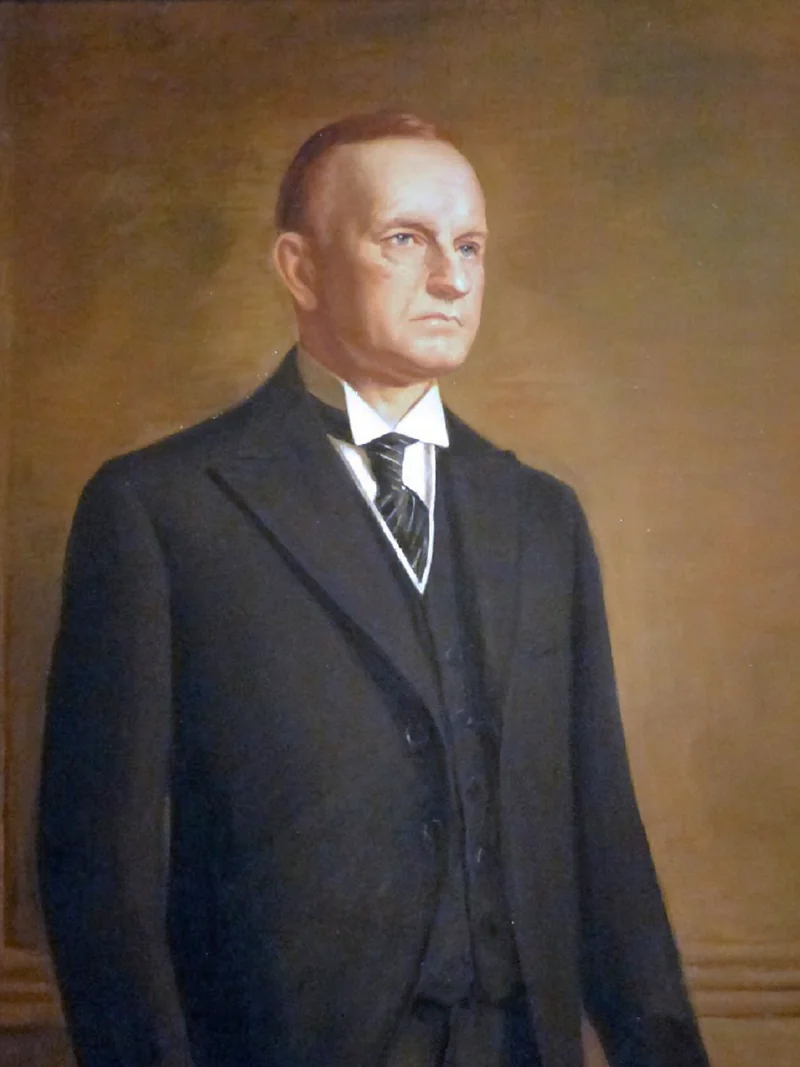
| 48 Quotes | |
| Occup. | President |
| From | USA |
| Born | July 4, 1872 Plymouth Notch, Vermont, U.S. |
| Died | January 5, 1933 Northampton, Massachusetts, U.S. |
| Cause | heart attack |
| Aged | 60 years |
| Cite | |
Citation Formats
APA Style (7th ed.)
Calvin coolidge biography, facts and quotes. (2026, February 11). FixQuotes. https://fixquotes.com/authors/calvin-coolidge/
Chicago Style
"Calvin Coolidge biography, facts and quotes." FixQuotes. February 11, 2026. https://fixquotes.com/authors/calvin-coolidge/.
MLA Style (9th ed.)
"Calvin Coolidge biography, facts and quotes." FixQuotes, 11 Feb. 2026, https://fixquotes.com/authors/calvin-coolidge/. Accessed 27 Mar. 2026.
Early Life and Background
John Calvin Coolidge Jr. was born on July 4, 1872, in Plymouth Notch, Vermont, a hamlet of hard weather and harder routines. His father, John Coolidge, was a storekeeper, farmer, and local official who embodied the New England habit of turning public duty into a neighborly obligation. The Coolidges lived close to the grain of necessity - thrift, self-command, and skepticism about display - and the son absorbed an ethic in which reputation was earned slowly and words were treated as a kind of currency.Coolidge's inner life was shaped as much by loss as by landscape. His mother, Victoria, died when he was twelve; his sister, Abigail, died a few years later. The family culture prized composure, and the boy learned to seal grief behind a disciplined exterior. That quiet did not mean emptiness so much as a guardedness: an instinct to observe, to measure, and to act only when the moment seemed unavoidable. From early on, he trusted steadiness more than brilliance, and privacy more than performance.
Education and Formative Influences
After local schooling and a preparatory year at Black River Academy in Ludlow, he entered Amherst College, graduating in 1895. Amherst in the late 19th century trained a certain civic stoicism - rhetoric, moral philosophy, and the conviction that character was a political asset - and Coolidge responded to its emphasis on order and restraint. He read widely but kept his ambitions practical: he apprenticed in law rather than chasing a grand intellectual career, and he carried forward the Yankee belief that institutions mattered because they disciplined human impulse.Career, Major Works, and Turning Points
Admitted to the bar in Massachusetts in 1897, Coolidge built a modest practice in Northampton and rose through city councilman, mayor, state legislator, and president of the Massachusetts Senate. He married Grace Goodhue in 1905, a lively presence who offset his reserve, and together they navigated the rituals of public life. His national emergence came with the 1919 Boston Police Strike: as governor, he backed public order and declared that no one had the right to strike against the public safety, a stance that made him a symbol of authority in a country jittery from war, labor unrest, and the Red Scare. Warren G. Harding chose him as vice president in 1920; Harding's sudden death in 1923 lifted Coolidge to the presidency, sworn in at his father's home by lamplight. As president (1923-1929) he pressed tax reductions (with Treasury Secretary Andrew Mellon), limited federal expansion, signed the Immigration Act of 1924, responded to the Mississippi Flood of 1927 with a cautious federal role, and became the public face of the booming, unequal "Roaring Twenties". Personal tragedy returned when his son Calvin Jr. died in 1924, a blow Coolidge later linked to the draining loneliness of the office; in 1927 he ended speculation with a terse decision not to seek another term.Philosophy, Style, and Themes
Coolidge's politics were an extension of temperament: minimalism as a moral posture. He distrusted rhetoric that promised salvation through government and preferred incremental choices that preserved stability. In his mind, self-government began with self-restraint; citizens were to build habits of lawfulness rather than rely on dramatic crackdowns after disorder erupted. His public style - the famously spare sentences and guarded press encounters - was not merely a gimmick but an attempt to make power less theatrical, even when celebrity politics was accelerating.Several of his best-known lines reveal the psychology beneath the silence. The quip “If you don't say anything, you won't be called on to repeat it”. is often treated as humor, but it also signals a lawyerly fear of improvisation - words, once loose, become liabilities. His counsel about anxiety - “If you see ten troubles coming down the road, you can be sure that nine will run into the ditch before they reach you”. - captures a conservative faith in social self-correction and a personal preference for patience over panic, especially in an era of headlines and market fervor. And when he declared, “The business of America is business”. , he was not simply cheerleading commerce; he was articulating a national creed he believed could anchor pluralistic modern life - productivity as a civic bond, prosperity as a substitute for ideological crusades, and enterprise as a realm where merit might appear measurable.
Legacy and Influence
Coolidge left office widely admired for probity and calm, then watched from private life as the system he trusted faltered; he died on January 5, 1933, as the Great Depression and Franklin D. Roosevelt's impending New Deal remade the presidency. His legacy remains contested: defenders credit him with restoring confidence after the scandals of the Harding years and with respecting constitutional limits; critics argue that his small-government certainty underestimated financial risk, inequality, and the need for federal leadership in crisis. Yet his influence endures in the American political imagination - the ideal of the restrained executive, the moral appeal of balanced budgets and tax cuts, and the belief that character and quiet competence can be a governing philosophy rather than a pose.Our collection contains 48 quotes written by Calvin, under the main topics: Witty One-Liners - Motivational - Ethics & Morality - Wisdom - Justice.
Other people related to Calvin: Herbert Hoover (President), Harlan Stone (Lawyer), J. Reuben Clark (Clergyman), Henry Cantwell Wallace (Politician), Dwight Morrow (Businessman)
Calvin Coolidge Famous Works
- 1929 The Autobiography of Calvin Coolidge (Autobiography)
- 1925 Inaugural Address (Second Inauguration) (Non-fiction)
- 1924 Acceptance Address at the Republican National Convention (Non-fiction)