
Camille Chamoun Biography Quotes 1 Report mistakes
| 1 Quotes | |
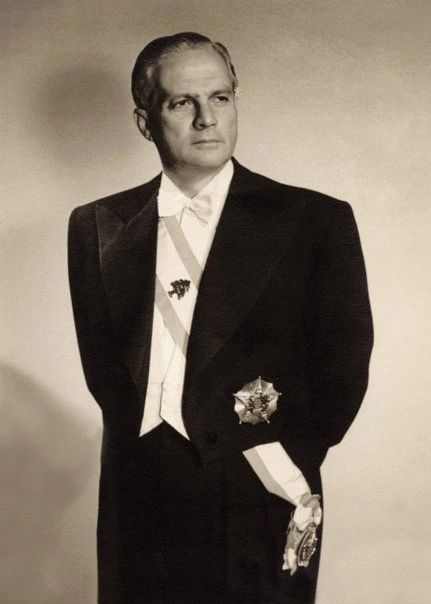
| Born as | Camille Nimr Chamoun |
| Occup. | Leader |
| From | Lebanon |
| Born | April 3, 1900 Deir el Qamar, Lebanon |
| Died | August 7, 1987 Beirut |
| Aged | 87 years |
| Cite | |
Citation Formats
APA Style (7th ed.)
Camille chamoun biography, facts and quotes. (2026, February 11). FixQuotes. https://fixquotes.com/authors/camille-chamoun/
Chicago Style
"Camille Chamoun biography, facts and quotes." FixQuotes. February 11, 2026. https://fixquotes.com/authors/camille-chamoun/.
MLA Style (9th ed.)
"Camille Chamoun biography, facts and quotes." FixQuotes, 11 Feb. 2026, https://fixquotes.com/authors/camille-chamoun/. Accessed 27 Mar. 2026.
Early Life and Formation
Camille Nimr Chamoun was born in 1900 in Deir al-Qamar, a historic town in the Chouf mountains of Mount Lebanon, into a Maronite family that valued learning, public service, and the traditions of local leadership. Trained as a lawyer, he entered public life at a young age, sharpening his skills as an orator and legislator during the final years of the French Mandate. The Chouf, with its mosaic of communities and long-standing political families, gave him early experience in coalition-building and negotiation, traits that would define his national career.Rise in Politics and the Road to Independence
Chamoun entered parliament in the 1930s and quickly became prominent among the coalition of figures pressing for Lebanese sovereignty. During the 1943 independence crisis, he was among the nationalist leaders detained by the French authorities alongside President Bechara El Khoury and Prime Minister Riad Al Solh, an episode that burnished his credentials as a champion of independence. With the restoration of constitutional life, he alternated between legislative duties, ministerial functions, and diplomatic assignments abroad, gaining a wide network of contacts and a reputation for direct, forceful political style.Ambition, Diplomacy, and National Visibility
In the 1940s and early 1950s, Chamoun broadened his portfolio through foreign postings and cabinet roles, which deepened his understanding of the strategic vulnerabilities of a small state in a turbulent region. He believed Lebanon could thrive as a commercial and financial hub, provided its institutions remained stable and its sovereignty protected from regional rivalries. His assertive manner earned both admiration and resistance, but his profile grew, and he emerged as a principal contender for the presidency during the upheavals of 1952.Access to the Presidency
In 1952, mass protests and elite defections forced Bechara El Khoury to resign. Parliament turned to Chamoun, who was elected president with a mandate to restore credibility to the state. He cultivated capable administrators and sought to strengthen the judiciary and civil service. Economically, he favored liberalization and private enterprise, encouraging banking and tourism while pursuing infrastructure and media openness that helped Beirut flourish as a crossroads of publishing, finance, and culture.Foreign Policy and Domestic Strains
Chamoun's foreign policy displayed an unapologetically pro-sovereignty outlook coupled with a tilt toward Western powers. As currents of Arab nationalism surged under Egyptian President Gamal Abdel Nasser, Chamoun resisted efforts that, in his view, could compromise Lebanon's independence or plural identity. He welcomed security guarantees from the West and amplified state authority at home. The 1957 parliamentary elections, conducted in a charged atmosphere, produced a legislature favorable to him but drew accusations of manipulation from opponents, intensifying polarization.The 1958 Crisis
Tensions erupted in 1958 as local grievances fused with pan-Arab politics. Anti-government protests and armed clashes broke out in Tripoli, Beirut, and the mountains, with figures such as Kamal Jumblatt emerging as central voices of opposition, while Prime Minister Rashid Karami's influence rose during mediation efforts. After the Iraqi revolution in July 1958, Chamoun invoked external support under prevailing doctrines, and United States Marines landed in Beirut to stabilize the situation. A negotiated settlement followed: Chamoun agreed not to seek another term, and the consensus figure, General Fuad Chehab, was elected to the presidency. The orderly handover helped avert state collapse, even as it left deep fissures within the political class.Founding a Party and Shaping the Opposition
Leaving office in 1958, Chamoun quickly reorganized his base by founding the National Liberal Party. Through the late 1950s and 1960s he led an identifiable current favoring a strong central state, economic openness, and cautious distance from regional entanglements. He allied at times with Pierre Gemayel of the Kataeb Party and Raymond Edde of the National Bloc, notably in the 1968 elections, forming a counterweight to the Chehabist administrative current and to leftist and Nasserist tendencies. Chamoun remained a tireless campaigner, often returning to parliament and using his seat to advocate for reforms and for what he cast as the authentic independence of Lebanon's decision-making.Civil War Leadership and the Lebanese Front
As the Lebanese state faltered in the mid-1970s, Chamoun was among the Christian leaders who rallied to form the Lebanese Front, a political umbrella that included Pierre Gemayel and other figures. Their aim was to coordinate a response to the leftist-Palestinian coalition aligned with Kamal Jumblatt and later to regional interventions that threatened to shatter Lebanon's balance. Chamoun's party maintained an armed wing during the war years, and his son Dany Chamoun rose to prominence as a militia commander. The violent intra-Christian confrontation at Safra in 1980, when forces aligned with Bashir Gemayel crushed the National Liberal Party's Tigers militia, marked a turning point. Chamoun, ever pragmatic, adjusted to the new military and political realities, supporting efforts to centralize command within the Lebanese Forces while insisting on preserving a political voice for his party.Late-Career Public Service
Even in his eighties, Chamoun remained active. During attempts to assemble national unity governments in the 1980s, he accepted senior cabinet responsibilities, including roles as deputy prime minister and in the financial portfolio, working with Prime Minister Rashid Karami under President Amin Gemayel. His participation signaled to many Lebanese that, despite decades of rivalry, the country's leaders could still seek common ground. He advocated reasserting state institutions, restraining militia rule, and rebuilding the economy, positions that reflected his lifelong convictions about sovereignty and order.Death and Legacy
Camille Chamoun died in 1987 after more than half a century at the center of Lebanon's political life. His legacy is complex. Admirers credit him with defending independence in 1943, revitalizing the state in the 1950s, and promoting an open economy that helped Beirut flourish. Critics fault his combative style and polarizing choices, especially during the 1958 crisis and the early phases of the civil war. Yet even detractors acknowledge his formidable energy, strategic clarity, and organizational talent.Assessment
Chamoun's career charts the trajectory of modern Lebanon: the struggle for independence, the experiment with liberal institutions, the strains of regional confrontation, and the tragedy of civil war. He worked closely and sometimes clashed with leaders such as Bechara El Khoury, Fuad Chehab, Riad Al Solh, Kamal Jumblatt, Pierre Gemayel, Raymond Edde, Bashir Gemayel, and Rashid Karami. Within his own family, figures like Dany Chamoun and Dory Chamoun carried forward elements of his political heritage. In the end, Chamoun embodied a vision of Lebanon as a sovereign, pluralist, commercially vibrant state anchored in strong institutions and a resolute foreign policy. Whether celebrated or contested, his imprint on the country's political architecture remains unmistakable.Our collection contains 1 quotes written by Camille, under the main topics: Peace.
Source / external links