
Camille Claudel Biography Quotes 26 Report mistakes
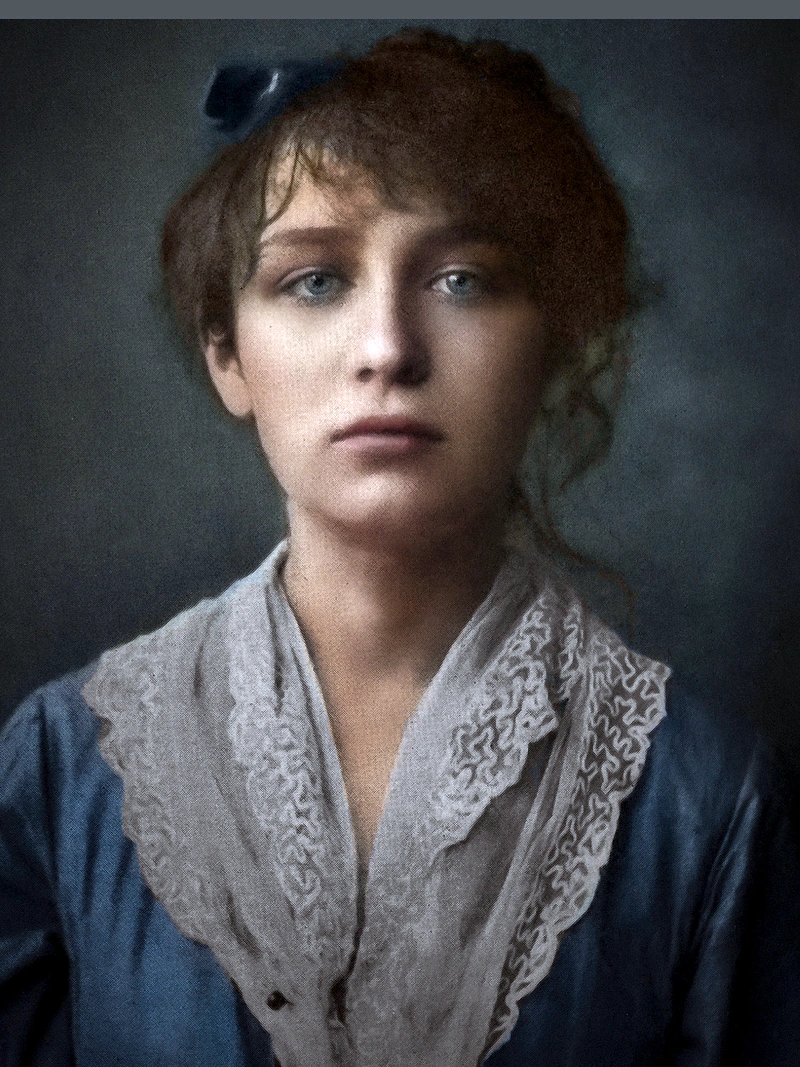
| 26 Quotes | |
| Born as | Camille Rosalie Claudel |
| Occup. | Sculptor |
| From | France |
| Born | December 8, 1864 Fère-en-Tardenois, Aisne, France |
| Died | October 19, 1943 Montdevergues, Vaucluse, France |
| Cause | Illness |
| Aged | 78 years |
| Cite | |
Citation Formats
APA Style (7th ed.)
Camille claudel biography, facts and quotes. (2026, February 11). FixQuotes. https://fixquotes.com/authors/camille-claudel/
Chicago Style
"Camille Claudel biography, facts and quotes." FixQuotes. February 11, 2026. https://fixquotes.com/authors/camille-claudel/.
MLA Style (9th ed.)
"Camille Claudel biography, facts and quotes." FixQuotes, 11 Feb. 2026, https://fixquotes.com/authors/camille-claudel/. Accessed 5 Mar. 2026.
Early Life and Background
Camille Rosalie Claudel was born on 1864-12-08 in Fere-en-Tardenois, Aisne, in northern France, into a provincial family shaped by the practical demands of the Third Republic. Her father, Louis-Prosper Claudel, worked as a civil servant whose postings moved the household across towns and landscapes; her mother, Louise-Athenais, was stricter, wary of bohemia and the social risk of an artistic daughter. Camille grew up quick to seize materials at hand, modeling figures in clay with a ferocity that family stories remembered as less pastime than compulsion.In the Claudel household, talent created friction. Camille's drive collided with bourgeois expectations of femininity, and the deeper she leaned into sculpture - the most physical, least "ladylike" of the arts - the more the family dynamic hardened into alliances and distance: a father who protected her vocation and a mother who regarded it as rebellion. Her younger brother Paul Claudel, later a major poet and diplomat, would carry a complicated awe of Camille's genius alongside the family's eventual withdrawal from her.
Education and Formative Influences
Denied entry to the Ecole des Beaux-Arts because women were excluded, Claudel trained in Paris in the early 1880s at the Academie Colarossi, one of the few places where women could study the nude model and learn the anatomy that sculpture required. She also worked under Alfred Boucher, whose encouragement was crucial; when Boucher left Paris, he introduced her to Auguste Rodin. Paris at the time was a furnace of modernity - the Salon system, the rise of independent exhibitions, the prestige of public monuments, and fierce debates over realism and symbolism - and Claudel absorbed it all while learning the studio discipline of modeling, casting, and carving.Career, Major Works, and Turning Points
From 1883 Claudel entered Rodin's orbit as student, assistant, and collaborator, contributing to his studio while sharpening her own voice; the relationship became intensely personal and professionally entangling. In the late 1880s and 1890s she produced the works that prove her stature: Sakuntala (also known as L'Abandon), the incandescent couple of The Waltz, and above all The Age of Maturity, a bitter allegory of a man pulled away by an older woman while a younger figure pleads behind him. These pieces show a sculptor capable of tenderness and cruelty in the same gesture, and they read, unavoidably, as a reckoning with Rodin, who never fully committed to her and remained tied to Rose Beuret. After years of precarious finances, intermittent patronage, and the exhaustion of fighting for authorship in a world eager to file her under "Rodin's muse", Claudel's isolation deepened after 1905; she destroyed works in fits, fled perceived enemies, and by 1913 her family had her committed to an asylum. She would spend the remaining three decades institutionalized, largely cut off from Paris, dying on 1943-10-19.Philosophy, Style, and Themes
Claudel's art is built on tactile truth: muscles under skin, weight shifting, hands that clutch or release, the body as a field where desire and power change shape. She moved between the naturalism of Rodin's generation and a more distilled, psychologically legible modeling, making narrative out of posture rather than props. Her best groups do not merely depict love - they anatomize it, showing attachment as gravity, separation as torque. Even when she turned to small bronzes and onyx and marble combinations, the ambition remained large: to compress emotional catastrophe into a few centimeters of space.Her letters and reported remarks expose a temperament that equated artistic worth with physical labor and personal sovereignty. “You find me at work; excuse the dust on my blouse. I sculpt my marble myself”. The sentence is more than pride - it is self-defense in a culture that treated women sculptors as decorative exceptions, not makers who could command a block and the masculine trade networks around it. Yet she also saw the gendered trap with cutting clarity: “I would prefer to have a more appealing job. If I could still change careers, I would prefer it. This unfortunate art is made for long beards and ugly faces rather than for a relatively well-endowed woman”. Her theme, again and again, is the cost of making - the way genius can turn private life into raw material, and the way dependence on patrons, lovers, and family can mutate into suspicion. In later paranoia, the fear that others controlled her fate hardened into an explanatory system: “Sir Rodin convinced my parents to have me committed; they are all in Paris to arrange it”. Whether accurate or delusional, the line shows how thoroughly she experienced abandonment as conspiracy.
Legacy and Influence
Claudel's posthumous reputation rose slowly, then decisively, as scholars and museums separated her achievement from the romance-and-tragedy frame that once contained it. Today she stands as one of France's major sculptors of the fin de siecle, not an appendix to Rodin but a rival intelligence whose work clarifies the era's obsession with eros, will, and fracture. Her survival in cultural memory - through exhibitions, biographies, and the Musee Camille Claudel in Nogent-sur-Seine - rests on the enduring voltage of her forms: bodies turning toward each other, away from each other, and toward the viewer, insisting that the inner life can be modeled in matter and made to last.Our collection contains 26 quotes written by Camille, under the main topics: Witty One-Liners - Art - Kindness - Mental Health - Long-Distance Relationship.
Frequently Asked Questions
- Camille Claudel movie streaming: Camille Claudel movies can be streamed on platforms like Amazon Prime Video or rented through services like Apple iTunes.
- Camille Claudel husband: Camille Claudel never married.
- Rodin and Camille Claudel movie: The film 'Camille Claudel' (1988) and 'Camille Claudel 1915' (2013) depict her life and relationship with Rodin.
- Camille Claudel cause of death: Camille Claudel died of unknown causes in 1943.
- Camille Claudel Rodin relationship: Camille Claudel was a student, muse, and lover of Auguste Rodin, a renowned sculptor.
- Camille Claudel movie Netflix: The movie 'Camille Claudel 1915' is occasionally available on Netflix, depending on regional availability.
- How old was Camille Claudel? She became 78 years old
Source / external links