
Cao Cao Biography Quotes 2 Report mistakes
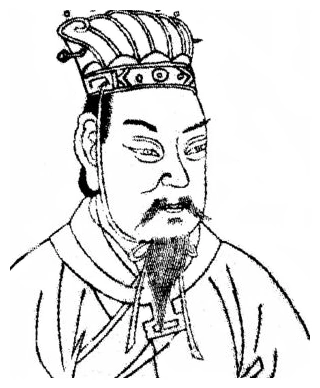
| 2 Quotes | |
| Occup. | Statesman |
| From | China |
| Born | 155 AC Bozhou, Anhui, China |
| Died | 220 AC Luoyang |
| Cause | Headache / brain tumor |
| Cite | |
Citation Formats
APA Style (7th ed.)
Cao cao biography, facts and quotes. (2026, February 11). FixQuotes. https://fixquotes.com/authors/cao-cao/
Chicago Style
"Cao Cao biography, facts and quotes." FixQuotes. February 11, 2026. https://fixquotes.com/authors/cao-cao/.
MLA Style (9th ed.)
"Cao Cao biography, facts and quotes." FixQuotes, 11 Feb. 2026, https://fixquotes.com/authors/cao-cao/. Accessed 12 Feb. 2026.
Early Life and Background
Cao Cao (Cao Mengde) was born around 155 in Qiao County, Pei Commandery (near modern Bozhou, Anhui), during the Eastern Han's long unraveling. His family stood close to the levers of power without belonging to the old, landed aristocracy: he was a grandson of Cao Teng, a palace eunuch who rose to high office through court service and adoption networks that both enabled mobility and bred suspicion. That origin left Cao Cao marked by the era's contradictions - talent rising through institutions already corroded by factionalism, eunuch influence, and a court that alternated between moralistic purges and cynical bargains.Later tradition paints him as sharp, unorthodox, and willing to violate decorum, a temperament that fit a world where decorum no longer restrained violence. The Han state's fiscal strain, frontier pressures, and recurring local rebellions created a generation for whom public life meant improvising order from collapse. Cao Cao grew up seeing how quickly official rank could become a death sentence when court factions shifted, and how swiftly the countryside could become a battlefield when central authority faltered.
Education and Formative Influences
Cao Cao received the standard classical training expected of a gentry youth, but his deeper education came from appointment and crisis: he served as Captain of the Northern District in Luoyang, gaining a reputation for strict enforcement, and moved through a bureaucracy where law, patronage, and military force were increasingly inseparable. The purge of the eunuchs and the chaos around 189-190, when warlords carved up the empire after the death of Emperor Ling and the rise of Dong Zhuo, taught him that legitimacy would not survive on ritual alone - it would require food, troops, and an administrative machine that could outlast panic.Career, Major Works, and Turning Points
After raising forces against Dong Zhuo, Cao Cao built a durable base in Yan Province and later at Xuchang, where he brought Emperor Xian under his "protection" and governed in the emperor's name, turning proximity to the throne into a weapon of command. His most consequential reforms were practical: the tuntian agricultural colonies to stabilize grain supply, strict but functional law, and a merit-minded recruitment that favored ability over pedigree, helping him absorb surrendered officers and displaced scholars. Victories over rivals such as Yuan Shao at Guandu (200) made him the dominant northern power; the defeat at Red Cliffs (208) checked his bid to unify China, but he consolidated the north and gradually tightened control over the central plains. In 213 he became Duke of Wei and in 216 King of Wei; he died in 220, leaving a state apparatus that his son Cao Pi would convert into the Cao Wei dynasty.Philosophy, Style, and Themes
Cao Cao's inner life is best read in the tension between fear of betrayal and the desire to impose a rational order on a collapsing world. Later memory condenses his ruthlessness into a single maxim: "I'd rather betray the world than let the world betray me". Whether or not the phrasing is precisely his, it captures a psychology shaped by court coups and shifting coalitions - a conviction that waiting to be tested was the same as losing. His governance reflected that suspicion: he centralized command, punished disloyalty harshly, and preferred systems that reduced reliance on personal virtue. Yet he also knew that terror alone could not hold the realm; his repeated amnesties, pragmatic appointments, and willingness to employ former enemies reveal a second instinct - to convert raw power into lasting institutions.His strategic thinking joined pessimism about fortune with confidence in calculation. "What is at a peak is certain to decline. He who shows his hand will surely be defeated. He who can prevail in battle by taking advantage of his enemy's doubts is invincible". The sentence reads like a self-portrait: alert to cycles, guarded in intention, and devoted to exploiting uncertainty as a resource. That approach shaped both battlefield and court - slow reveals, layered commands, cultivated ambiguity about succession and intent, and an emphasis on intelligence and logistics. As a poet of the Jian'an era, he wrote with a spare, martial gravity about short life and long disorder; in pieces like "Short Song Style" (Duan Ge Xing) and "Though the Tortoise Lives Long" (Gui Sui Shou), he pairs the fleetingness of human years with the stubborn drive to use them, a voice that turns private anxiety into public resolve.
Legacy and Influence
Cao Cao's legacy is double-edged because his achievements were foundational and his methods unsentimental: he helped end the Eastern Han's paralysis by building a war state that could feed armies, reward talent, and command loyalty through law and fear. Historians credit his tuntian system and administrative consolidation with stabilizing the north; later moralists condemned his manipulation of Emperor Xian and the costs of his campaigns. In literature and popular culture - most famously in the Romance of the Three Kingdoms - he becomes the archetypal "villain" politician, brilliant and dangerous, while scholarship restores him as a realist navigating an empire in fragments. His enduring influence lies in that unresolved portrait: the statesman as poet, the organizer as opportunist, and the builder of order whose very success exposes how thin the line is between legitimacy and power.Our collection contains 2 quotes written by Cao, under the main topics: Chinese Proverbs - Betrayal.
Source / external links