
Carl Clinton Van Doren Biography Quotes 12 Report mistakes
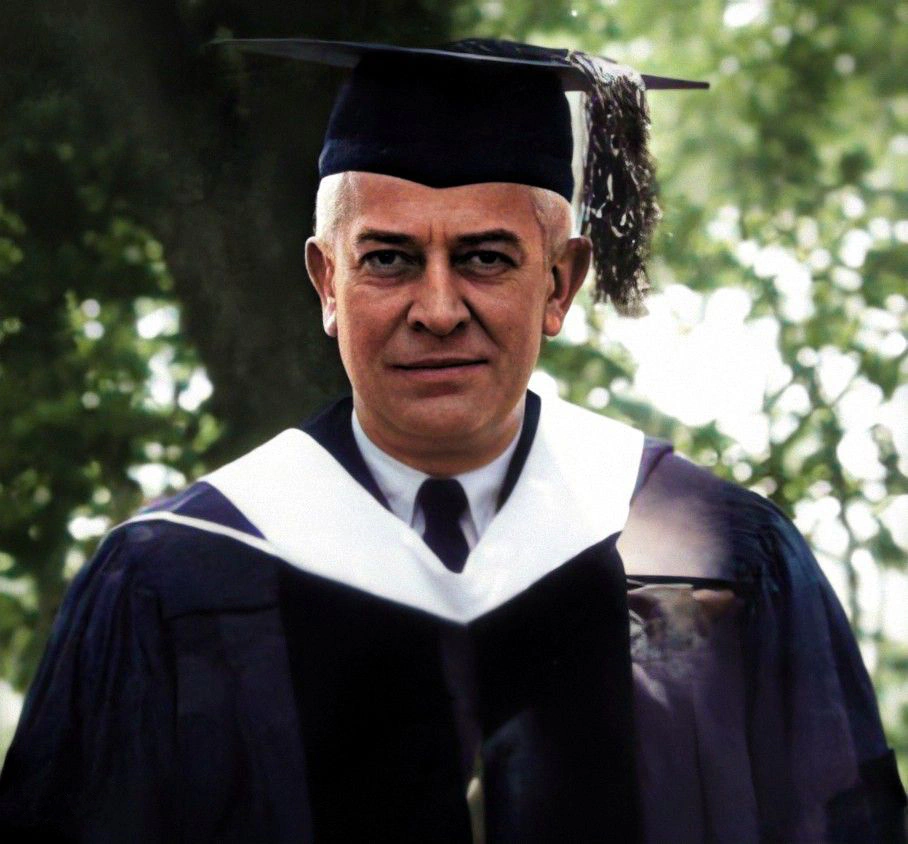
Attr: Louis Edward Nollau
| 12 Quotes | |
| Known as | Carl Van Doren |
| Occup. | Critic |
| From | USA |
| Born | September 10, 1885 Hope, Illinois, USA |
| Died | July 18, 1950 Torrington, Connecticut, USA |
| Aged | 64 years |
| Cite | |
Citation Formats
APA Style (7th ed.)
Carl clinton van doren biography, facts and quotes. (2026, March 7). FixQuotes. https://fixquotes.com/authors/carl-clinton-van-doren/
Chicago Style
"Carl Clinton Van Doren biography, facts and quotes." FixQuotes. March 7, 2026. https://fixquotes.com/authors/carl-clinton-van-doren/.
MLA Style (9th ed.)
"Carl Clinton Van Doren biography, facts and quotes." FixQuotes, 7 Mar. 2026, https://fixquotes.com/authors/carl-clinton-van-doren/. Accessed 24 Mar. 2026.
Early Life and Background
Carl Clinton Van Doren was born on September 10, 1885, at Hope, Illinois, into a Midwestern family shaped by Protestant seriousness, literacy, and social aspiration. He was one of three brothers who all entered American intellectual life: the poet and critic Mark Van Doren, and Irita Van Doren, who became an influential editor and critic through marriage and career. The Van Dorens grew up in a region where rural memory and national expansion still touched daily life, and that border between provincial experience and large cultural ambition stayed central to Carl's imagination. He would spend much of his career arguing that American literature had to be understood not as a minor branch of English writing but as the record of a society inventing itself.
His birth came in the Gilded Age, but his mature mind belonged to the first decades of the twentieth century, when universities, magazines, and publishing houses were consolidating a national literary culture. Van Doren's temperament fit that moment. He was not a bohemian critic or an academic recluse; he was a synthesizer, a historian of ideas, and a public man of letters who believed that scholarship should reach beyond seminar rooms. The tension in his life lay between institutional prestige and personal independence. That tension became acute in the 1920s, when his name was briefly entangled with the scandal surrounding his younger brother Charles Van Doren's rise and fall still decades away only by family prehistory - but Carl's own public ordeal came earlier through controversy at Columbia and in the literary world, where his reforming impatience made him admired and resisted.
Education and Formative Influences
Van Doren studied at the University of Illinois, where he absorbed both classical academic training and the newer historical study of literature, then earned his doctorate at Columbia University. At Columbia he joined the faculty in English and became associated with an insurgent generation that challenged genteel canon-making and narrow philology. The decisive influence on him was the idea that literature grows from the life of a people - from politics, religion, geography, commerce, speech, and myth - and must be narrated historically rather than merely judged by inherited taste. He wrote early criticism on American writing at a time when it was still often treated as inferior or local, and he became part of the movement later linked to the "new humanists" and anti-sterile academic reformers, though he never fit neatly into any school. Editors, archives, and the broad reading public mattered to him as much as classroom doctrine.
Career, Major Works, and Turning Points
Van Doren taught at Columbia from 1911 until 1930, but his deepest impact came through books that reinterpreted the American past for general readers. His early study "The American Novel" helped establish prose fiction as a serious field of national inquiry. He also wrote "Contemporary American Novelists" and, with Mark Van Doren, "American and British Literature Since 1890". Restless under academic constraints, he left Columbia and moved toward full-time authorship and editorial work, writing for major magazines and shaping public literary discussion. His largest achievement was "Benjamin Franklin" (1938), a biography that won the Pulitzer Prize and distilled years of archival labor into a portrait both humane and unsentimental. He also produced important historical and documentary work, notably "Secret History of the American Revolution" (1941), which edited previously unpublished papers of Edward Bancroft and revealed the Revolution as a theater not only of ideals but of espionage and divided loyalties. Across these projects, the turning point was his break from the professoriate into a wider republic of letters, where he could unite scholarship, narrative, and civic interpretation.
Philosophy, Style, and Themes
Van Doren's criticism was animated by a democratic premise: literary forms do not descend from abstract rules but emerge from collective need, pressure, and permission. He was drawn to moments when a culture authorizes itself to imagine more freely. Thus his history of fiction notices not just masterpieces but changes in public tolerance and appetite: “Although by 1851 tales of adventure had begun to seem antiquated, they had rendered a large service to the course of literature: they had removed the stigma, for the most part, from the word novel”. That sentence reveals his characteristic method - literary history as the history of legitimacy. He cared about reputations, readerships, genres, and moral climates because he believed books are social acts before they become monuments. Even his style mirrors that belief: lucid, compressed, wary of ornament, designed to move evidence into argument without losing narrative life.
Psychologically, Van Doren seems driven by disciplined sympathy - the wish to enter another writer's labor without surrendering critical distance. His finest judgments praise imagination grounded in fact, as when he writes of Melville: “Melville brought to the task a sound knowledge of actual whaling, much curious learning in the literature of the subject, and, above all, an imagination which worked with great power upon the facts of his own experience”. That is also a disguised self-portrait of the biographer-critic he wanted to be: learned, factual, but alive to transforming imagination. And behind his enormous productivity lay an almost moral view of authorship itself: “Yes, it's hard to write, but it's harder not to”. The line suggests not bravado but compulsion - writing as an inward necessity, an obligation of mind to form. Van Doren repeatedly returned to thresholds in American culture - between wilderness and settlement, romance and realism, pleasure and instruction - because he saw national literature as an argument over how experience becomes meaning.
Legacy and Influence
Carl Van Doren died on July 18, 1950, in Torrington, Connecticut, leaving behind a model of literary citizenship now rarer than in his day. He helped legitimize American literature as a coherent field for both scholars and general readers; he showed that criticism could be historical without being dull, and popular without becoming superficial. His Franklin remained influential because it treated a Founding Father not as a marble emblem but as an inventive, shrewd, socially adaptive human being. More broadly, Van Doren belongs to the generation that built the infrastructure of American letters - anthologies, biographies, documentary editions, magazine criticism, and narrative literary history. If later academic criticism became more theoretical, it often did so on foundations he and his peers had laid. His enduring achievement was to persuade readers that the nation's books are inseparable from the nation's becoming.
Our collection contains 12 quotes written by Carl, under the main topics: Wisdom - Writing - Book - Travel.
Source / external links